
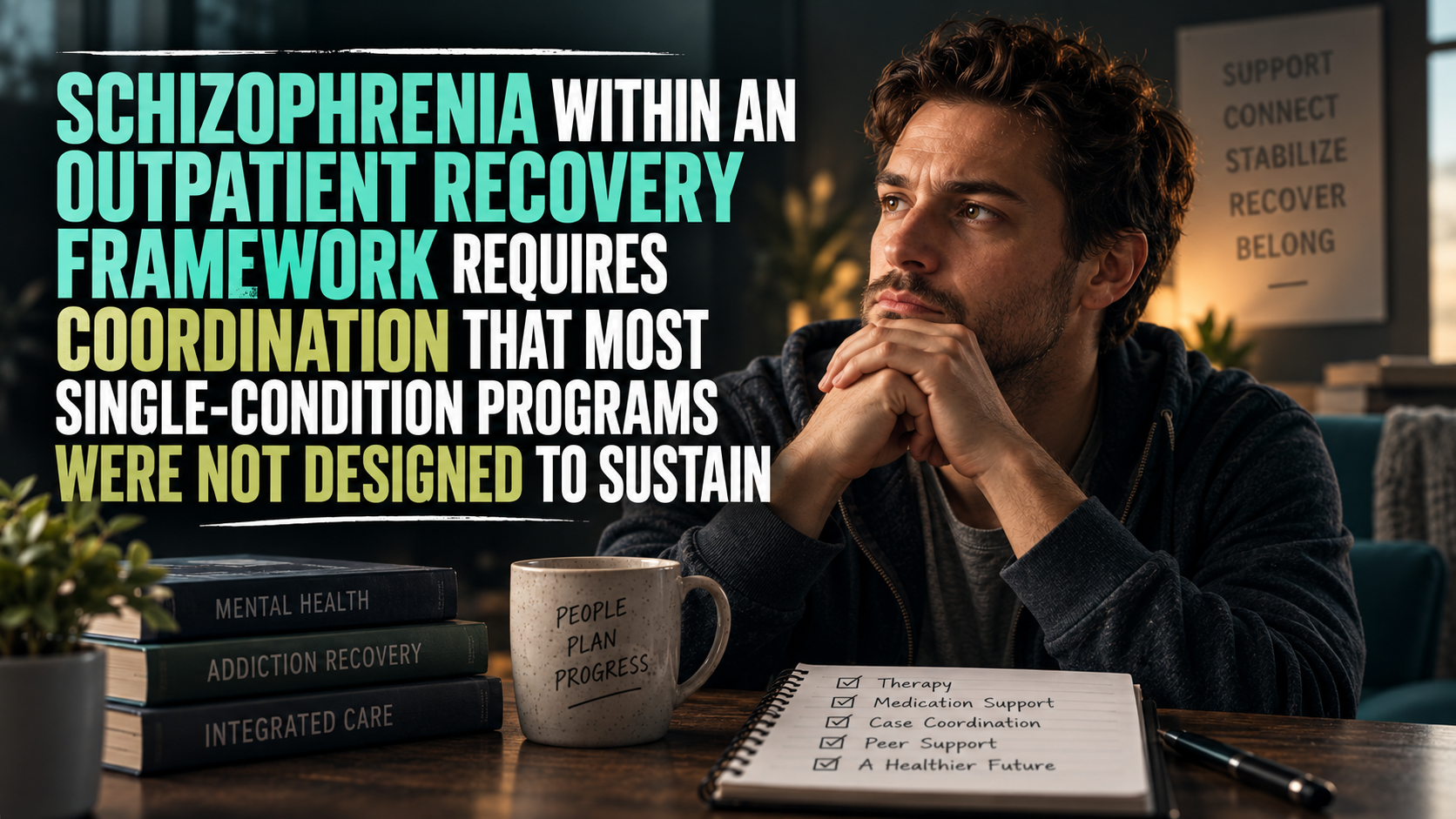
Schizophrenia within an outpatient recovery framework calls for a kind of ongoing coordination that many single-condition programs were never built to maintain. If you or someone you love is facing both schizophrenia and substance use, that sense of being pulled between two systems is real, and it is not your fault.
You may have watched one program treat the substance use while the symptoms of schizophrenia slipped through the cracks. Or you may have seen mental health care that never quite accounted for how substances complicated everything.
That gap does not mean recovery is out of reach. It often means the care was not designed to hold both conditions together over time. Understanding why steady coordination matters so much can bring real hope, and support is closer than it may feel right now.
What Does Schizophrenia Within an Outpatient Recovery Framework Involve?
Schizophrenia within an outpatient recovery framework involves treating both the mental health condition and substance use together while a person continues living at home. Instead of staying at a facility, you attend scheduled care and return to your own space afterward.
This approach blends psychiatric support, therapy, and substance use care into one connected plan. Each piece works alongside the others rather than in isolation.
Schizophrenia is a condition that affects how a person thinks, feels, and experiences reality. It needs consistent support, which becomes even more important when substance use is part of the picture.
Because outpatient care happens over time and at home, the coordination behind it has to stay strong between every session. That steadiness is what protects your progress.
Why Does Schizophrenia Within an Outpatient Recovery Framework Require So Much Coordination?
Schizophrenia within an outpatient recovery framework requires so much coordination because the two conditions constantly influence each other and need to be managed as one. When care is fragmented, important changes can go unnoticed until they grow into a crisis.
Substances can worsen symptoms, interfere with medication, or make it harder to tell which condition is driving what a person feels. This complexity calls for a team that communicates closely.
In outpatient care, you go home between visits. That means your providers need shared information and a clear plan, so nothing falls apart in the days between appointments.
How Do the Two Conditions Affect Each Other?
The two conditions affect each other by intensifying, masking, or mimicking one another in ways that make care harder to deliver. Treating one while ignoring the other rarely brings lasting stability.
Substance use can amplify hallucinations, delusions, or disorganized thinking. It can also disrupt how medication works, which affects symptom control.
At the same time, distressing symptoms may lead someone to use substances for relief. This back and forth keeps both conditions active unless they are treated together.
What Happens When Coordination Breaks Down?
When coordination breaks down, details slip between providers who never compare notes. A medication concern, a new trigger, or a shift in symptoms may never reach the right person in time.
You might find yourself repeating your story again and again to different teams. That is exhausting, and it can delay the care you actually need.
Uncoordinated care can also raise real risk. When substance use changes how medication works, a disconnected team may miss warning signs until things escalate.
Why Do Single-Condition Programs Struggle to Sustain This Care?
Single-condition programs struggle to sustain this care because they were designed to treat either mental health or substance use, not both together over time. When a program specializes in one, the other condition often goes underserved.
A substance use program may lack the ongoing psychiatric support that schizophrenia requires. A mental health program may not address the daily realities of active substance use.
This leaves a person moving between two separate systems. The result can feel fragmented, draining, and incomplete.
Why Is Consistency So Important Here?
Consistency is important because schizophrenia needs steady psychiatric care that does not work well in scattered pieces. Medication management and symptom monitoring depend on continuity.
When care is consistent, providers can notice small changes early. That early awareness helps prevent setbacks before they grow.
A program equipped for both conditions can adjust care as needs shift. That flexibility protects stability in a way disconnected services often cannot. For many people, integrated dual diagnosis care offers the steadiness that separate programs struggle to provide.
What Does Coordinated Dual Diagnosis Care Actually Look Like?
Coordinated dual diagnosis care looks like one team treating schizophrenia and substance use together within a single, unified plan. Instead of dividing your care, this approach keeps everything connected.
Care usually begins with a thorough assessment. This helps providers understand your history, symptoms, and substance use so the plan reflects the full picture.
From there, the team works as one. Psychiatric care, therapy, and substance use support all inform each other, so nothing important gets lost between providers.
What Therapies and Supports Are Involved?
The therapies and supports involved help stabilize symptoms while addressing substance use with compassion. Several evidence-based approaches often work together.
- Psychiatric care and medication support help manage the symptoms of schizophrenia safely and consistently.
- Individual therapy gives you a private space to explore triggers, emotions, and goals at a comfortable pace.
- Group therapy connects you with others who understand, easing shame and isolation.
- Family education helps loved ones respond with calm, clarity, and healthy support.
These pieces reinforce one another. Together, they treat the mental health condition and the substance use as connected parts of one journey.
How Does This Care Stay Steady Over Time?
This care stays steady over time by keeping communication open across the whole team, even between sessions. Shared notes and a single plan keep everyone aligned.
When your providers coordinate, a change in one area informs the rest of your care. That connection helps catch concerns early.
You are treated as a whole person, not a set of separate problems. This kind of coordinated support for co-occurring conditions often leads to steadier, more lasting results.
Who Benefits From This Level of Coordination?
Anyone living with schizophrenia and a substance use disorder benefits from this level of coordination, especially when past care has felt fragmented. You do not need to have everything figured out before reaching out.
Many people arrive unsure how their two conditions connect. That uncertainty is completely normal, and a coordinated team can help make sense of it.
You may recognize the value of coordinated care if any of these feel familiar for you or a loved one:
- Symptoms of schizophrenia worsen during or after substance use.
- Substances have interfered with medication or symptom stability.
- Past programs treated only one condition and left the other untouched.
- You feel caught between separate providers who never share information.
- Daily life feels harder to manage when both conditions collide.
Recognizing yourself here is not a reason for shame. It is a signal that compassionate, coordinated care could help you find steadier ground.
How Do You Know It Is Time to Seek Coordinated Support?
You may be ready to seek coordinated support if schizophrenia and substance use keep affecting each other in ways you cannot untangle alone. You do not need to wait for a crisis to reach out.
Consider connecting with a professional if any of these feel true for you or a loved one:
- Symptoms of schizophrenia grow harder to manage when substances are involved.
- Substance use has disrupted medication, therapy, or daily stability.
- Previous treatment addressed only one condition and left the other unresolved.
- You feel lost moving between separate providers who never coordinate.
- Both conditions together have made daily life feel overwhelming.
- People close to you have expressed concern about your symptoms or your use.
If even one of these resonates, that is reason enough to talk with a professional. Reaching out is not an overreaction. It is a meaningful step toward safety, stability, and hope.
Common Questions Before Starting Treatment
Can schizophrenia and addiction be treated together in an outpatient setting? Yes. Coordinated outpatient care treats both conditions within one connected plan while you live at home. Because the two so often influence each other, treating them together tends to produce steadier results than addressing either alone.
Why did my previous program not help with both conditions? Many programs specialize in either mental health or substance use, not both. When a program is not built to coordinate care over time, one condition can go underserved, which is why care designed for both matters so much.
Will my loved one be able to stay on medication during treatment? Coordinated care includes psychiatric support and medication management. A team that understands both conditions can monitor how substance use affects medication and adjust care safely as needs change.
Can this kind of care fit around daily life? Yes. Outpatient care is designed to fit around work, family, and personal responsibilities. Your care team will help you find an approach that supports both stability and daily living.
Take the Next Step Toward Coordinated Care
Schizophrenia within an outpatient recovery framework requires coordination that most single-condition programs were never designed to sustain, and recognizing that truth can bring real hope to you or someone you love. When both conditions are treated together over time, lasting stability becomes far more reachable.
You deserve care that sees the whole picture, honors your dignity, and meets you exactly where you are. Living with two connected conditions is not a weakness. It is simply the reason coordinated care exists.
If schizophrenia and substance use have been feeding each other, help is available whenever you are ready. Reach out to Impact IOP today to learn how our compassionate team can support you or your loved one with clear, personalized care and a path forward built around your needs.