
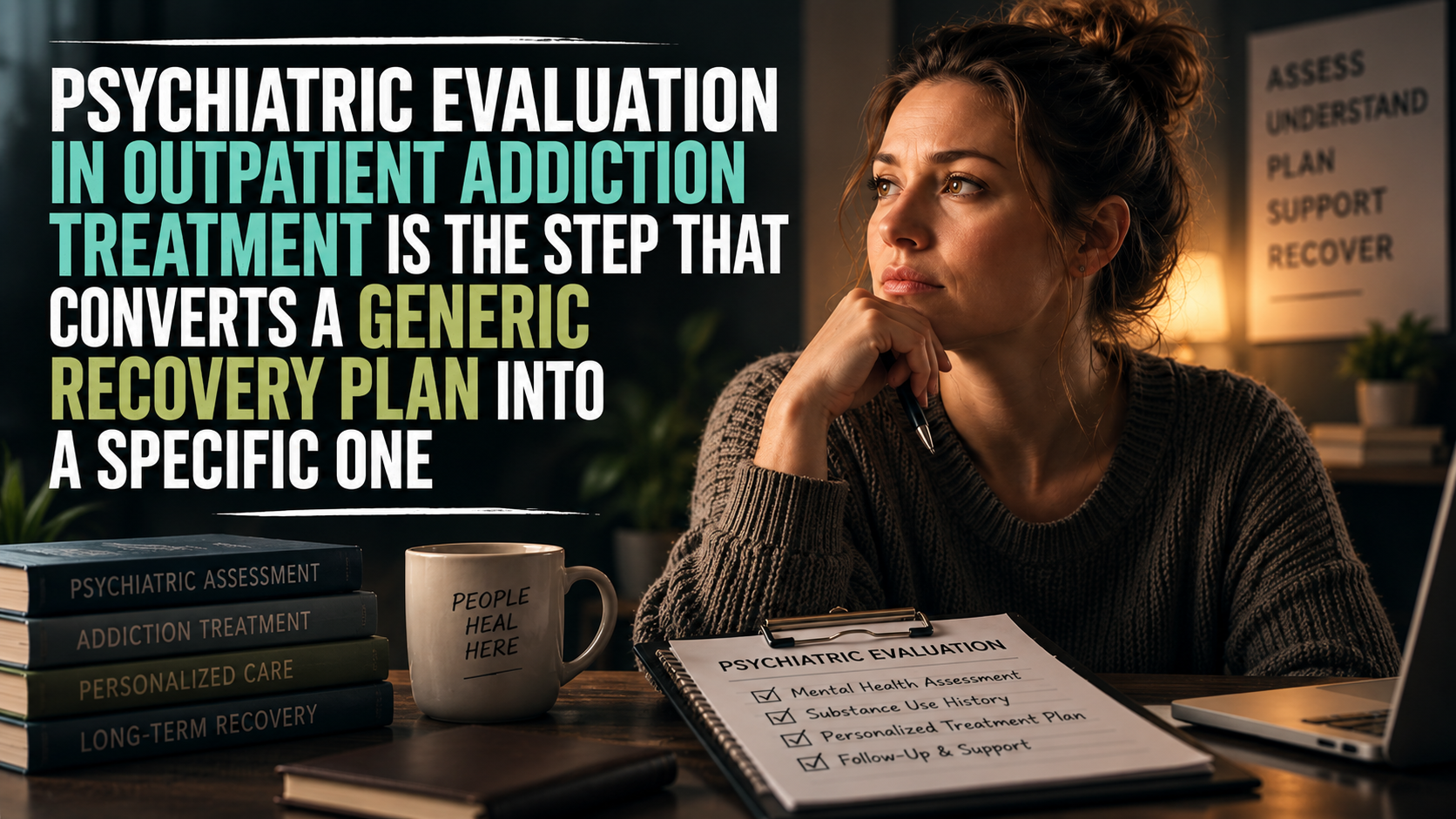
A psychiatric evaluation in outpatient addiction treatment is the step that turns a one-size-fits-all recovery plan into one built around who you actually are. If you or someone you love is starting treatment, this early assessment may matter more than you realize.
You may feel unsure about what an evaluation involves or worried about being reduced to a label. Those feelings are understandable, and they deserve a gentle, honest answer.
Recovery is deeply personal, and no two people arrive with the same story. A thorough evaluation honors that truth by looking at your full picture, not just the substance use on the surface. It asks what you have been through, what you are feeling, and what your body and mind truly need. Understanding how this step works can ease your worry and help you feel more prepared, and support is closer than it may seem right now.
What Is a Psychiatric Evaluation in Outpatient Addiction Treatment?
A psychiatric evaluation in outpatient addiction treatment is a thorough assessment of your mental health, history, and needs that shapes your entire recovery plan. It is a caring conversation with a trained professional, not a test you can pass or fail.
During this process, a provider gathers a full picture of your experiences. They explore your mental health history, your substance use, and how the two may connect.
The goal is understanding, not judgment. Every question helps build a plan that fits your real life rather than a generic template.
Think of it like a careful map before a long journey. The more accurately your starting point is understood, the clearer the path forward becomes.
Why Does a Psychiatric Evaluation in Outpatient Addiction Treatment Matter So Much?
A psychiatric evaluation in outpatient addiction treatment matters because it uncovers the specific factors driving substance use, so care can address them directly. Without it, treatment risks focusing on the surface while missing what lies beneath.
Substance use rarely stands alone. For many people, it connects to anxiety, depression, trauma, or other struggles that need their own attention.
When those underlying factors go unseen, recovery becomes harder to sustain. Treating the whole person, rather than a single behavior, gives you a far steadier foundation.
How Does It Turn a Generic Plan Into a Specific One?
A psychiatric evaluation in outpatient addiction treatment turns a generic plan into a specific one by identifying exactly what you need and adjusting care accordingly. Instead of applying the same approach to everyone, it tailors treatment to your unique situation.
Two people can share the same substance use yet need very different care. One may be managing untreated anxiety, while another may be carrying unhealed trauma.
The evaluation reveals those differences. It shapes which therapies, supports, and possible medications will actually help you, so your plan reflects you and no one else.
What Happens When This Step Is Skipped?
When a psychiatric evaluation is skipped, care can end up mismatched to the person it is meant to help. A plan built without understanding the full picture may miss the very things driving substance use.
This often leads to frustration. You might work hard yet feel like something important is being overlooked, because it is.
Skipping this step is one reason some people cycle through treatment without lasting relief. When the root causes stay hidden, they keep pulling progress backward.
What Does a Psychiatric Evaluation Assess?
A psychiatric evaluation assesses your mental health history, current symptoms, co-occurring conditions, and any medication needs. Together, these areas create a complete view of your situation.
Each part of the assessment adds an important piece. The provider listens closely, asks thoughtful questions, and works to understand your experiences with care.
How Does It Explore Mental Health History?
A psychiatric evaluation explores mental health history by asking about past and present emotional struggles, diagnoses, and family patterns. This helps reveal conditions that may be shaping your substance use.
You might be asked about periods of anxiety, low mood, sleep changes, or difficult experiences from your past. These questions are never meant to expose or shame you.
Instead, they help connect the dots. Understanding your history often explains patterns that once felt confusing or out of your control.
How Does It Identify Co-Occurring Conditions?
A psychiatric evaluation identifies co-occurring conditions by looking for mental health conditions that exist alongside substance use. This is central to effective, lasting recovery.
Many people live with both a mental health condition and a substance use disorder at the same time. When only one is treated, the other often keeps the cycle going.
Recognizing both opens the door to integrated dual diagnosis care, which treats them together as connected parts of one story. This coordinated approach tends to lead to steadier results than treating either one alone.
How Does It Determine Medication Needs?
A psychiatric evaluation determines medication needs by assessing whether medication could ease symptoms and support your recovery. This is always a thoughtful, personal decision.
For some people, medication helps stabilize anxiety, depression, or cravings enough to engage fully in therapy. For others, it may not be needed at all.
The evaluation guides this conversation with care. Any decision is made with professional guidance and shaped around your comfort, preferences, and health.
Who Benefits From a Psychiatric Evaluation?
Anyone entering outpatient addiction treatment benefits from a psychiatric evaluation, especially those who suspect other struggles beneath the surface. You do not need a formal diagnosis to gain from this step.
Many people arrive unsure how their emotions and substance use connect. That uncertainty is completely normal, and the evaluation helps make sense of it.
You may find this step especially valuable if any of these feel true for you or a loved one:
- You have struggled with anxiety, depression, or trauma alongside substance use.
- Past treatment focused only on the substance use and did not fully help.
- Your mood or emotions shift in ways that feel hard to manage.
- You have wondered whether an undiagnosed condition is part of the picture.
- You want care that reflects your full story, not a generic approach.
Recognizing yourself here is not a reason for concern. It is a sign that a personalized, whole-person approach could truly help.
How Does the Evaluation Connect to the Rest of Your Care?
The evaluation connects to the rest of your care by serving as the foundation every other part of treatment is built upon. It shapes your therapy, your support, and your path through different levels of care.
Once your needs are clear, your team can match you to the right level of support. This flexibility lets treatment grow and shift as you do.
Common levels of outpatient care include:
- Partial hospitalization offers structured treatment during the day while you return home in the evenings.
- Intensive outpatient care provides several therapy sessions each week, balancing strong support with flexibility.
- Standard outpatient care involves fewer weekly sessions, helping you maintain progress as you build independence.
Many people move through these levels gradually as they gain stability. A caring team can help you find flexible outpatient support that fits your needs and your daily life.
How Do You Know It Is Time to Seek Support?
You may be ready to seek support if substance use and emotional struggles keep affecting each other in ways you cannot untangle alone. You do not need to wait for a crisis to reach out.
Consider talking with a professional if any of these feel true for you or a loved one:
- You are beginning treatment and want care built around your specific needs.
- You suspect anxiety, depression, or trauma may be part of your story.
- Previous treatment overlooked the emotional side of your recovery.
- You want a clear, honest understanding of what you are facing.
- You are managing both a mental health condition and substance use.
- You feel ready to take a thoughtful first step toward lasting change.
If even one of these resonates, that is reason enough to talk with a professional. Reaching out is not a sign of weakness. It is a meaningful step toward care that truly fits.
Common Questions Before Starting Treatment
Is a psychiatric evaluation the same as being diagnosed? Not exactly. A psychiatric evaluation gathers a full picture of your mental health and needs. It may lead to a diagnosis, but its main purpose is to shape care that fits you, not to label you.
Will I have to take medication after an evaluation? Not necessarily. Medication is only one possible part of care, and it is always a personal decision made with professional guidance. Many people benefit from therapy and support without it.
How long does a psychiatric evaluation take? The length varies based on your history and needs, though it usually involves one or more thorough conversations. Your provider will take the time needed to understand your full situation.
What if I feel nervous about opening up? That nervousness is completely normal, and providers understand it well. The process is meant to feel safe and supportive, and you can share at a pace that feels comfortable to you.
Take the Next Step Toward Personalized Care
A psychiatric evaluation in outpatient addiction treatment is the step that transforms a generic recovery plan into one shaped around your real needs, your history, and your hopes for the future. When care reflects the whole person, lasting change becomes far more reachable.
You deserve support that sees your full story, honors your dignity, and meets you exactly where you are. Taking this step is not a sign that something is wrong with you. It is the beginning of care that finally fits.
If you or someone you love is ready for treatment built around real understanding, help is available whenever you are ready. Reach out to Louisville Addiction Treatment Center today to learn how our compassionate team can support you with clear, personalized care and a path forward built around your needs.