
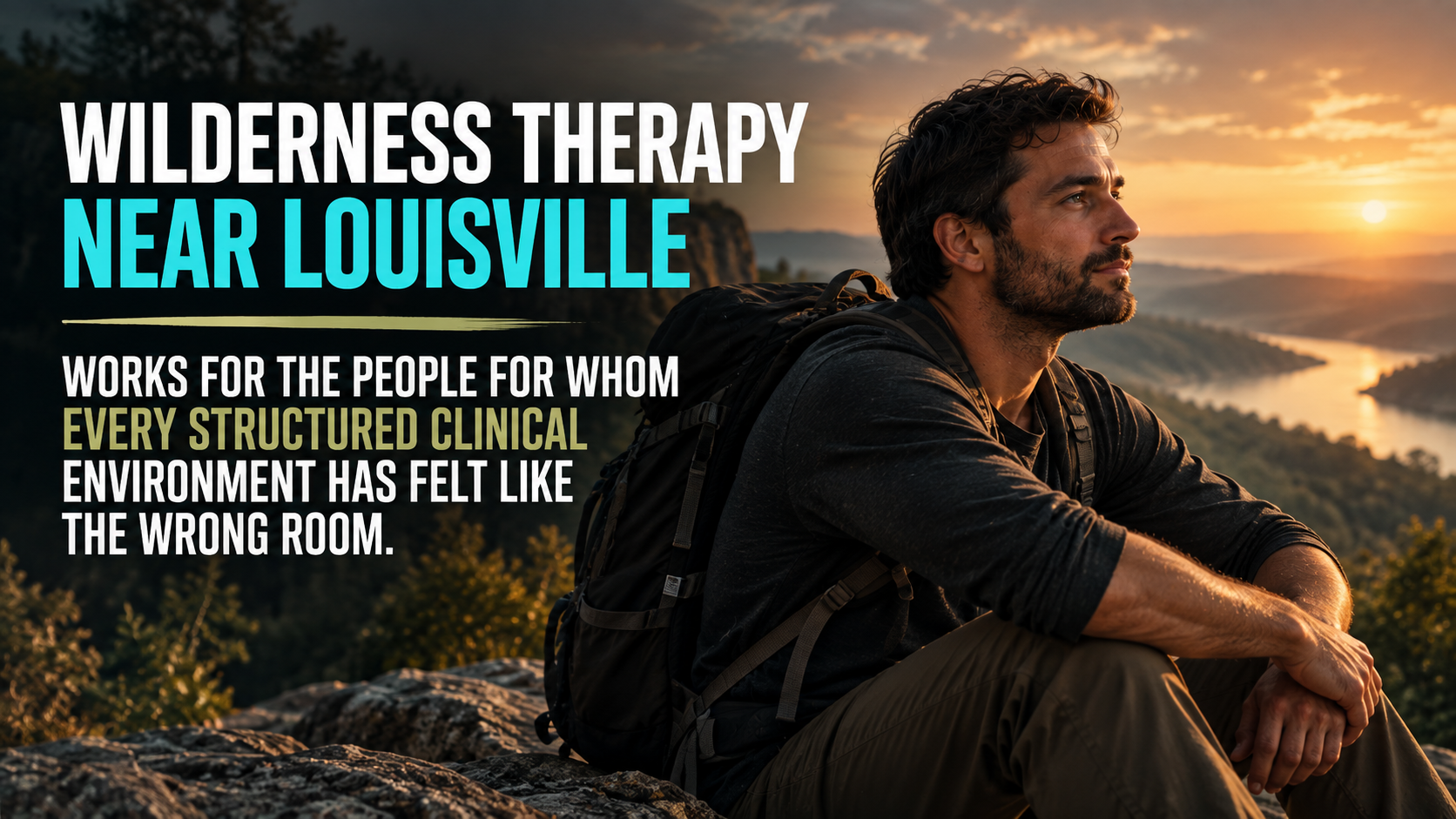
Wilderness therapy near Louisville offers a different kind of healing for people who have sat in traditional treatment rooms and felt like they simply did not belong. If you or someone you love has tried clinical care before and left feeling more shut down than supported, that experience matters.
You may have gone through the motions in a therapy office, answering questions while feeling disconnected from the whole process. Maybe the fluorescent lights, the quiet room, and the direct conversation made it harder to open up, not easier.
That does not mean you failed treatment, and it does not mean recovery is out of reach. Some people connect more deeply when healing happens through movement, nature, and shared experience rather than a chair across from a clinician. Understanding how this approach works can bring real hope, and support is closer than it may feel right now.
What Is Wilderness Therapy Near Louisville?
Wilderness therapy near Louisville is a therapeutic approach that uses outdoor experiences and nature-based activities to support emotional healing and recovery. It blends professional clinical care with the calming, grounding power of the natural world.
In this approach, a trained therapist guides the process while activities take place outdoors. These might include hiking, group challenges, reflection in nature, or hands-on tasks that build confidence.
The setting itself becomes part of the healing. Nature has a way of lowering stress, easing anxiety, and helping people feel safe enough to reflect and open up.
This is not a substitute for evidence-based treatment. It is a way of delivering that care in a setting that reaches people traditional rooms sometimes miss.
Why Do Traditional Clinical Settings Feel Like the Wrong Room for Some People?
Traditional clinical settings feel like the wrong room for some people because face-to-face conversation in a quiet office can feel exposing rather than safe. For those who freeze under direct focus, the standard format can quietly shut them down.
Picture sitting across from someone whose full attention is on you, waiting for you to speak about your deepest pain. For many people, that pressure makes honesty harder, not easier.
This is not stubbornness or resistance. It is a natural response, especially for people carrying shame, trauma, or years of feeling misunderstood.
Who Tends to Struggle in Standard Therapy Rooms?
The people who tend to struggle in standard therapy rooms are often those who feel guarded, restless, or overwhelmed by direct conversation. Recognizing these patterns can help you understand why past care may not have worked.
- You feel anxious or shut down the moment a session begins.
- Sitting still and talking for an hour feels unnatural or draining.
- Direct eye contact and focused attention make you want to withdraw.
- You process emotions better while moving or doing something active.
- Past treatment left you feeling like a case rather than a person.
Seeing yourself here is not a reason for shame. It simply means a different setting might help you feel safe enough to heal.
Why Does the Setting Matter So Much?
The setting matters because a person’s sense of safety shapes how much they can engage in treatment. When surroundings feel calming rather than clinical, the nervous system settles and honesty becomes possible.
A tense environment keeps the brain in a guarded state. In that mode, reflection and openness take a back seat to simply getting through the moment.
Nature helps quiet that alarm. When the body feels calmer, the mind becomes far more willing to do the deeper work of recovery.
What Makes Outdoor and Experiential Settings Therapeutically Effective?
Outdoor and experiential settings are therapeutically effective because they combine the calming influence of nature with active, hands-on learning. This pairing helps people access emotions and insights that talk alone sometimes cannot reach.
Time in nature is known to lower stress and lift mood. That physical shift creates a foundation where meaningful therapeutic work can happen.
Experiential activities add another layer. Instead of only discussing coping skills, you practice them in real situations that build genuine confidence.
How Does Nature Calm the Nervous System?
Nature calms the nervous system by easing the body out of a constant state of stress and alertness. Fresh air, natural light, and open space signal safety in a way that four walls often cannot.
Many people in recovery live with a nervous system stuck on high alert. That tension makes it hard to focus, rest, or reflect.
Being outdoors gently interrupts that pattern. As the body relaxes, space opens for healing, clarity, and connection.
How Does Learning Through Experience Build Lasting Change?
Learning through experience builds lasting change because skills practiced in real moments tend to stick better than skills only discussed. When you live a lesson, it becomes part of you.
Working through a challenge outdoors can teach patience, communication, and problem-solving in a tangible way. You feel the progress rather than just hearing about it.
These moments build real confidence. Each small success outdoors becomes proof that you can handle challenges in everyday life too.
Who Benefits Most From Wilderness Therapy Near Louisville?
The people who benefit most from wilderness therapy near Louisville are those who have felt disconnected or stuck in traditional treatment. It reaches people who learn, process, and heal best through movement and experience.
You do not need to be an outdoors expert or athlete to benefit. You simply need to be open to a different, more active way of healing.
You may find this approach especially helpful if any of these feel true for you or a loved one:
- Traditional talk therapy has left you feeling guarded or unseen.
- You process emotions more easily while active than while sitting still.
- You feel restless, disconnected, or shut down in clinical settings.
- You are working through trauma that words alone have not reached.
- You crave connection with others who understand your journey.
- You are managing both substance use and a mental health condition.
Recognizing yourself here is not a reason for shame. It is a sign that a more experiential path could help you feel safe enough to grow.
How Does Wilderness Therapy Connect to Dual Diagnosis and Integrated Care?
Wilderness therapy connects to dual diagnosis and integrated care by supporting emotional healing while both mental health and substance use are treated together. It works alongside proven clinical methods, not in place of them.
Many people turn to substances to quiet anxiety, depression, or painful memories. That relief is temporary, and substances often deepen those struggles once they wear off.
Treating both conditions together tends to produce steadier results. When conditions overlap, integrated dual diagnosis care addresses the substance use and the mental health condition as connected parts of one plan.
How Does It Support Trauma Healing?
Wilderness therapy supports trauma healing by calming a nervous system that has stayed on high alert. Trauma often lives in the body, not only in memory, which is why a grounding environment can reach it so well.
The steady rhythm of nature helps signal safety to the body. That physical reassurance can succeed where direct conversation sometimes struggles.
Once the body feels calmer, trauma-focused work becomes more accessible. Nature becomes a source of grounding you can return to whenever you need it.
How Does It Fit Into a Complete Treatment Plan?
Wilderness therapy fits into a complete treatment plan by complementing therapies like cognitive behavioral therapy and individual counseling. Each approach strengthens the others.
The outdoor experience helps ease anxiety and build trust. That openness makes the deeper clinical work more effective when it happens.
Woven into coordinated, whole-person care, this approach helps address the full picture rather than a single symptom.
How Do You Know It Is Time to Explore This Approach?
You may be ready to explore wilderness therapy if traditional clinical settings alone have not helped you feel safe enough to heal. You do not need to wait for a crisis to try a different path.
Consider reaching out to a professional if any of these feel true for you or a loved one:
- You have tried standard therapy but felt disconnected or stuck.
- You process emotions better through movement than through conversation.
- Clinical rooms make you feel anxious, guarded, or shut down.
- You want a more active, experiential way to engage in recovery.
- You are healing from trauma that talk alone has not reached.
- You are managing both substance use and a mental health condition.
If even one of these resonates, that is reason enough to talk with a professional. Choosing a different approach is not a sign of weakness. It is a thoughtful step toward finding care that finally fits.
Common Questions Before Starting Treatment
Do I need to be physically fit or experienced outdoors? No. Wilderness therapy is guided by trained professionals who meet you at your level. Activities are adapted to your comfort and abilities, so you do not need special skills or experience to benefit.
Does wilderness therapy replace traditional treatment? No. It works alongside proven approaches like counseling and cognitive behavioral therapy. By easing anxiety and building trust, it helps make the rest of your treatment more effective.
Can this help with both mental health and substance use? Yes. This approach supports emotional stability, which matters when both conditions are treated together. It fits naturally into integrated care that addresses the whole person.
What if I have felt like traditional therapy was not for me? That is exactly who this approach can help. Many people who felt disconnected in clinical rooms find that a more experiential setting helps them finally feel safe enough to open up.
Take the Next Step Toward Healing
Wilderness therapy near Louisville works for the people for whom every structured clinical environment has felt like the wrong room, and recognizing that truth can bring real hope to you or someone you love. When traditional care has not reached you, nature, movement, and shared experience can open a different door to healing.
You deserve care that meets you exactly where you are, honors your dignity, and helps you feel safe enough to grow. Needing a different path is not a weakness. It is a wise and caring first step.
If clinical rooms have never felt right, help is available whenever you are ready. Reach out to Impact IOP today to learn how our compassionate team can support you or your loved one with clear, personalized care and a path forward built around your needs.