

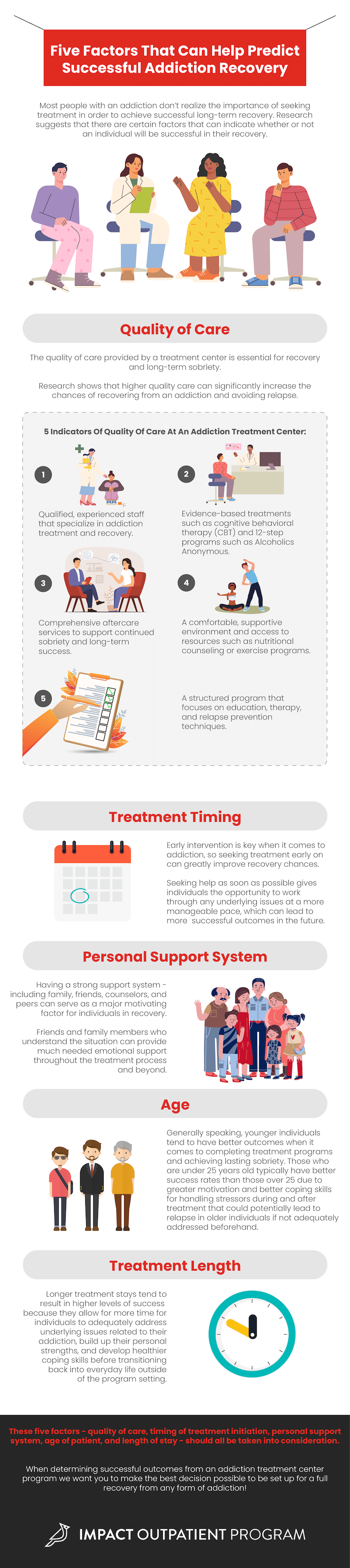
Five Factors That Can Help Predict Successful Addiction Recovery – Infographic

by | Mar 31, 2023

Addiction can be a challenging and isolating struggle, but it is important to remember that you are not alone. If you are seeking addiction treatment in Louisville, Kentucky, there is hope.

Five Factors That Can Help Predict Successful Addiction Recovery


Most people with an addiction don’t realize the importance of seeking treatment in order to achieve successful long-term recovery. Research suggests that there are certain factors that can indicate whether or not an individual will be successful in their recovery.

Quality of Care

  • The quality of care provided by a treatment center is essential for recovery and long-term sobriety. 
  • Research shows that higher-quality care can significantly increase the chances of recovering from an addiction and avoiding relapse.

5 Indicators Of Quality Of Care At An Addiction Treatment Center:

  • Qualified, experienced staff that specializes in addiction treatment and recovery.
  • Evidence-based treatments such as cognitive behavioral therapy (CBT) and 12-step programs such as Alcoholics Anonymous.
  • Comprehensive aftercare services to support continued sobriety and long-term success.
  • A comfortable, supportive environment and access to resources such as nutritional counseling or exercise programs.
  • A structured program that focuses on education, therapy, and relapse prevention techniques.

Treatment Timing

  • Early intervention is key when it comes to addiction, so seeking treatment early on can greatly improve recovery chances. 
  • Seeking help as soon as possible gives individuals the opportunity to work through any underlying issues at a more manageable pace, which can lead to more successful outcomes in the future.

Personal Support System: 

  • Having a strong support system – including family, friends, counselors, and peers can serve as a major motivating factor for individuals in recovery. 
  • Friends and family members who understand the situation can provide much-needed emotional support throughout the treatment process and beyond.

Age

  • Generally speaking, younger individuals tend to have better outcomes when it comes to completing treatment programs and achieving lasting sobriety. Those who are under 25 years old typically have better success rates than those over 25 due to greater motivation and better coping skills for handling stressors during and after treatment that could potentially lead to relapse in older individuals if not adequately addressed beforehand.

Treatment Length

  • Longer treatment stays tend to result in higher levels of success because they allow for more time for individuals to adequately address underlying issues related to their addiction, build up their personal strengths, and develop healthier coping skills before transitioning back into everyday life outside of the program setting.

These five factors – quality of care, timing of treatment initiation, personal support system, age of patient, and length of stay – should all be taken into consideration.

When determining successful outcomes from an addiction treatment center program we want you to make the best decision possible to be set up for a full recovery from any form of addiction!

Our Latest Posts

How Can I Get Checked-In Anonymously To An Addiction Treatment Center?

Seeking help for an addiction can be difficult, but admitting you have an addiction in the first place can be even tougher. Everyone who seeks help for their addiction has to go through the process of admitting they need help, which isn’t always easy to do. While...

What to Know Before Asking for Time Off Work for Addiction Treatment

You can get the addiction treatment you need and still keep your job. In fact, your employer may be very supportive of the process.  After all, if you’re a good employee, they’ll want to hold on to you. That said, it still helps to take the right...

Intensive Outpatient Drug Treatment In Louisville

When you need support to overcome drug and alcohol addiction but also want to keep living your normal life without lengthy stays in rehab, intensive outpatient drug treatment in Louisville is the answer. By providing the best of both worlds, our team of friendly and...

Outpatient Drug Treatment In Louisville

Although an inpatient residential treatment program will often be the best course of action when it comes to severe substance addiction, this is not going to be necessary for everyone. Those who have a mild substance abuse problem with alcohol or drugs may well...

Outpatient Drug Rehab in Louisville Works When the Person Is Committed and the Program Is Clinically Serious

Outpatient drug rehab in Louisville can lead to lasting recovery, but two things have to line up: a person who is ready to show up and a program that takes clinical care seriously. If you or someone you love is weighing this option, that pairing matters more than any...

Medication-Assisted Treatment in Lexington Removes the Physiological Barrier That Makes Early Recovery So Hard to Sustain

Medication-assisted treatment in Lexington gives you a way to steady your body during early recovery, when cravings and withdrawal can make even a strong commitment feel impossible to hold. If you or someone you love has tried to stop using opioids or alcohol only to...

Intensive Outpatient Drug Rehab in Lexington Keeps the Clinical Work Moving Without a Full Residential Commitment

Intensive outpatient drug rehab in Lexington gives you serious, structured clinical care while letting you stay connected to home, work, and the people who matter most. If you or someone you love needs more support than a weekly therapy session but cannot step away...

Outpatient Drug Rehab in Lexington Is Built for People Who Need Real Clinical Structure Without Leaving Their Lives Behind

Outpatient drug rehab in Lexington gives you real clinical support while letting you stay connected to work, family, and the daily life you have built. If you or someone you love has put off getting help because stepping away for weeks feels impossible, that...

Dual Diagnosis Is Not the Exception in Outpatient Treatment. It Is What the Majority of Patients Actually Present With.

Dual diagnosis outpatient treatment is often described as a special case, but in reality it reflects what most people in recovery are actually living with. If you or someone you love is facing both a mental health condition and substance use, that combination is not...

PTSD and Addiction Treated Separately Almost Always Leaves One Condition Working Against the Other

When PTSD and addiction are treated separately, one condition almost always undermines the progress made on the other. If you or someone you love has worked hard in treatment only to feel pulled back down, that frustration is real and it is not your fault. Maybe the...

Our Video’s

Call Now Button