
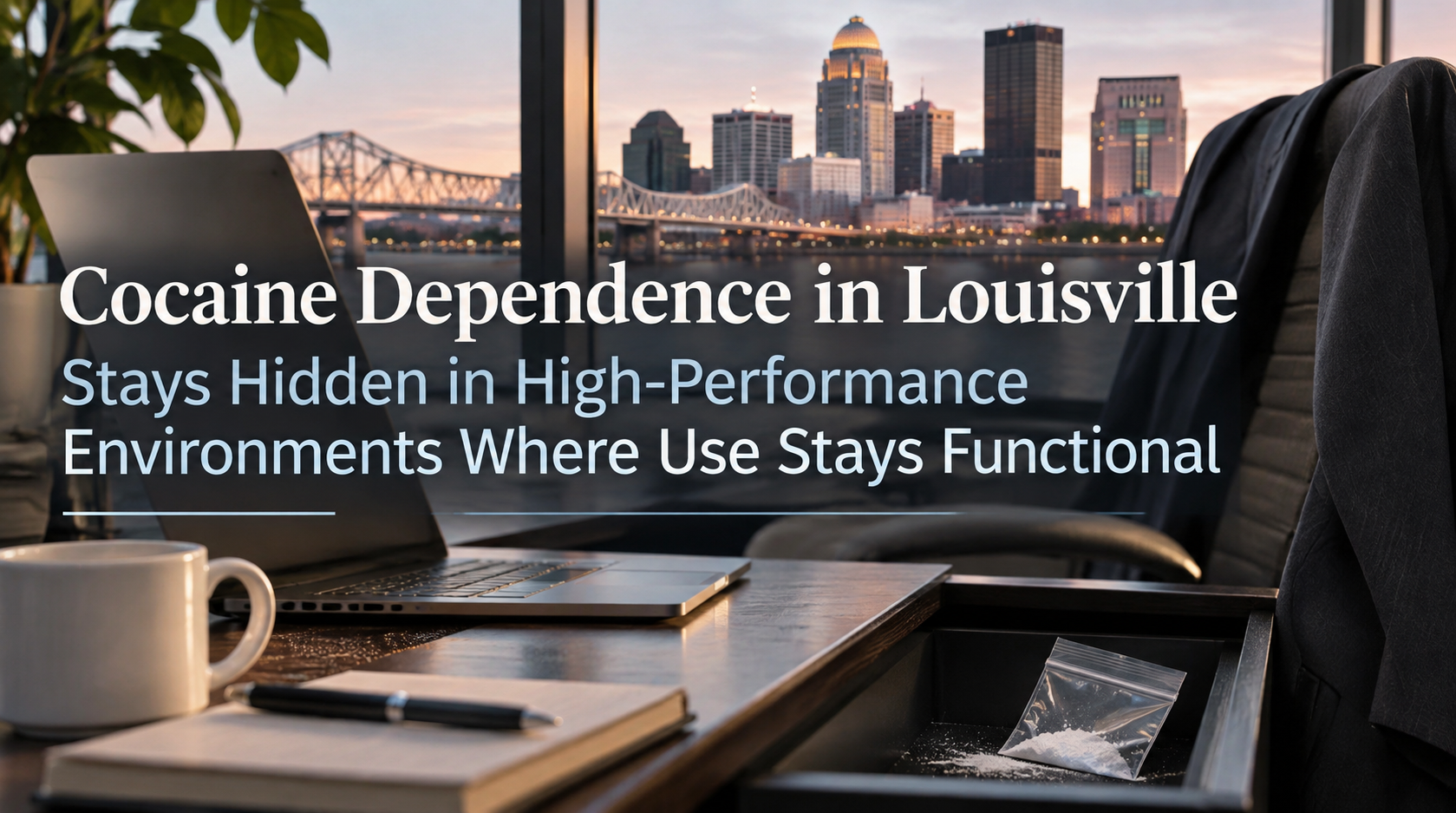
Cocaine dependence in Louisville often takes hold in places where long hours, high stakes and late nights already feel normal. If you or someone you love has started relying on cocaine to keep up at work, stay sharp through a double shift or feel at ease in a crowded room, you may be wondering when that pattern stopped feeling like a choice.
From the outside, life may still look like it is working. Deadlines get met, clients stay happy and weekend plans keep coming. That outward success can make it hard to admit that something underneath feels off.
Many people facing cocaine dependence in Louisville describe that exact feeling. If it sounds familiar, you are not weak and you have not failed. Cocaine changes how the brain handles energy, reward and stress, and those changes can build long before anyone else notices.
Functioning well does not mean the risk is small. It often means dependence has had more time to settle in quietly. Help is available, and asking questions now is a strong, caring step.
What Is Cocaine Dependence in Louisville and How Is It Different From Occasional Use?
Cocaine dependence in Louisville describes a pattern where the brain and body have adapted to regular cocaine use, so a person feels flat, tired or uneasy without it. Occasional use may not leave lasting changes. Dependence means cocaine has started to feel necessary just to function normally.
Cocaine is a stimulant. It boosts energy, focus and confidence for a short time, then leaves a crash that can include exhaustion and low mood.
With repeated use, the brain adjusts. It may take more cocaine to feel the same lift, which is called tolerance, and the crash between uses can grow heavier.
Is Cocaine Dependence the Same as Addiction?
Cocaine dependence and addiction overlap, but they are not always the same thing. Dependence describes how the body and brain have adapted. Addiction, which clinicians call cocaine use disorder, describes continued use despite harm to health, work or relationships.
In practice, the two often travel together. Many people seeking help for cocaine dependence in Louisville recognize signs of both, and an assessment can clarify where you are without labels that feel like judgment.
Where Does Cocaine Dependence in Louisville Stay Hidden?
Cocaine dependence in Louisville often stays hidden in professional, creative and social settings that reward stamina, boldness and constant energy. When the people around you use too, the pattern can blend in completely.
Louisville runs on industries that can put people under steady pressure. Each of these settings can make cocaine seem like a tool rather than a risk:
- Professional settings such as law, finance, health care and sales, where long hours and performance expectations rarely let up.
- Logistics and shift work, where overnight schedules and physical demands can make a stimulant feel like the only way to stay alert.
- Restaurants, bars and hospitality, where late closes and fast-paced service often blur into after-hours gatherings.
- Creative and music scenes, where irregular schedules and late shows make use feel ordinary.
- Social and event culture, from Derby season parties to weekend nights downtown, where cocaine may be offered as casually as a drink.
None of these environments cause dependence on their own. They simply make early warning signs of cocaine dependence in Louisville easier to explain away.
Why Does Functional Use Delay Recognition?
Functional use delays recognition because steady performance convinces everyone, including the person using, that things are under control. As long as work gets done and bills get paid, few people stop to ask questions.
This is one of the main reasons cocaine dependence in Louisville can go unnoticed for months or years. Comparing yourself to coworkers or friends who use the same way can feel like proof that nothing is wrong.
Alcohol often adds another layer. Many people drink to soften the comedown, and in a city known for bourbon, that habit rarely stands out.
What Does “Functional” Use Cost Behind the Scenes?
“Functional” use often costs more energy, money and peace of mind than it appears. Behind a polished outside, a person may be managing rising anxiety, broken sleep and a growing need for cocaine just to feel capable.
Over time, more effort goes into planning use, hiding it and recovering from it. Functional use usually stops being functional when consequences reach health, finances, relationships or the job itself.
For many people with cocaine dependence in Louisville, reaching that point feels like a failure. It is not. It is the moment the pattern becomes clear enough to address.
How Does Cocaine Change the Brain Over Time?
Cocaine changes the brain by blocking the normal recycling of dopamine, a chemical messenger tied to reward and motivation, which creates an intense but short-lived high. With repeated use, the brain becomes less responsive to everyday sources of pleasure.
Think of it like turning up the volume on a speaker again and again. Eventually, normal sounds seem too quiet to hear. In the same way, a good meal, a finished project or time with family can start to feel muted.
This adaptation sits at the core of cocaine dependence in Louisville and everywhere else. It is a health process, not a lack of discipline.
Why Do Cravings Feel So Strong After a Binge?
Cravings feel strong after a binge because the brain is in a dopamine slump while still remembering cocaine as the fastest fix. The crash can bring exhaustion, irritability, low mood and intense urges to use again.
Stress, payday, certain friends or the end of a long shift can become cues that trigger cravings in seconds. These urges start in parts of the brain that act faster than conscious choice. That is why care for cocaine dependence in Louisville pairs clinical support with practical coping skills.
What Warning Signs Point to Growing Dependence?
The warning signs of growing dependence include needing more cocaine, using more often and feeling worse between uses. You may notice some of these in yourself or a loved one:
- Using larger amounts or using more frequently than before
- Planning work events, shifts or weekends around access to cocaine
- Feeling exhausted, anxious or depressed the day after use
- Spending more money on cocaine than you intended
- Trying to cut back and finding it harder than expected
- Noticing a racing heart, chest discomfort or trouble sleeping
- Drinking to take the edge off the comedown
Spotting these signs does not define who you are. It shows that cocaine dependence in Louisville can affect capable, hardworking people who seem to have everything handled.
Safety matters too. Cocaine raises heart rate and blood pressure, and the illicit supply may contain fentanyl. Keeping naloxone, a medication that can reverse an opioid overdose, nearby is a simple protective step.
How Are Cocaine Dependence and Mental Health Treated Together?
Cocaine dependence and co-occurring mental health conditions are treated together through integrated dual diagnosis care, which uses one plan and one care team for both. This matters because anxiety, depression, attention-deficit/hyperactivity disorder (ADHD) and trauma often sit beneath stimulant use.
Some people use cocaine to push through low mood, focus problems or social anxiety. Others develop panic, anxiety or depression as cocaine affects the brain. Treating only one side often leaves the other pulling recovery backward.
At Louisville Addiction Treatment Center, integrated dual diagnosis care brings mental health support and addiction treatment into one coordinated plan. For people facing cocaine dependence in Louisville, that coordination helps the team see how stress, mood and use connect.
Which Therapies Help With Cocaine Dependence?
The therapies that help most focus on changing patterns, managing cravings and building healthier ways to handle pressure. The U.S. Food and Drug Administration (FDA) has not approved any medication specifically for cocaine use disorder, so behavioral therapies sit at the center of care for cocaine dependence in Louisville.
A personalized plan may include:
- Cognitive behavioral therapy (CBT) to spot the thoughts and triggers that lead to use, such as deadlines or late shifts.
- Contingency management, an evidence-based approach that reinforces progress with positive incentives.
- Individual counseling to explore stress, identity and goals beyond performance.
- Group therapy with peers who understand high-pressure work and social life.
- Psychiatric care for anxiety, depression, sleep or ADHD, with medication decisions made together with you.
- Relapse prevention planning for business trips, Derby season and other high-risk moments.
Which Outpatient Levels of Care Fit Cocaine Dependence in Louisville?
The outpatient levels of care that fit cocaine dependence in Louisville range from structured daily programming to lighter weekly sessions. Each level lets you live at home while receiving real clinical support.
- Partial hospitalization program (PHP) offers several hours of treatment most days of the week, with evenings at home.
- Intensive outpatient program (IOP) provides at least 9 hours of therapy each week, often with evening options around work.
- Standard outpatient care involves one or two sessions a week as stability and confidence grow.
Many people step down gradually as cravings ease. A caring team can help you choose among flexible outpatient programs that fit your schedule, your career and your needs.
How Do You Know It Is Time to Reach Out?
You may be ready to reach out if cocaine is taking more from your life than it gives back. You do not need to lose a job or a relationship before cocaine dependence in Louisville deserves attention.
Consider these signs as you weigh your next step:
- You rely on cocaine to get through work, shifts or social events.
- You have tried to cut back, and the urge to use returned quickly.
- You feel anxious, flat or hopeless on the days after using.
- Your use has grown in amount, frequency or cost.
- You hide how much you use from coworkers, friends or family.
- Someone close to you has gently shared concern.
If even one of these feels familiar, a confidential conversation with a professional is a reasonable next step. Asking for help with cocaine dependence in Louisville is a sign of strength and self-respect.
If you are having thoughts of suicide, call or text 988, or call 911 if you are in immediate danger.
Common Questions Before Starting Treatment
Can I have cocaine dependence if I still perform well at work? Yes. Cocaine dependence in Louisville is defined by how use affects your brain, health and sense of control, not by job performance. Many people keep functioning for a long time before consequences appear.
Will my employer find out if I seek treatment? Treatment is confidential, and federal privacy laws protect your health information. Many people attend evening IOP sessions without changing their work schedule.
Is cocaine withdrawal dangerous? Cocaine withdrawal is usually not physically life-threatening, but it can bring exhaustion, strong cravings and depression. Those symptoms deserve real clinical support, especially in the first weeks.
What if I also drink heavily? Integrated care can address both at the same time. Your team will review your alcohol use, and if withdrawal could be risky, medically supervised detox may come first.
Take the Next Step Toward Lasting Recovery
Cocaine dependence in Louisville often stays hidden in the same high-performance spaces where people work hardest to succeed. Recognizing that functional use can quietly become dependence is not a failure. It is the first step toward care that fits your life.
With integrated mental health support, practical therapy and flexible outpatient options, recovery is possible. You can keep your drive and still build a life that does not depend on cocaine.
If cocaine has started shaping your days, reach out to Louisville Addiction Treatment Center today. Our compassionate team can answer your questions confidentially and help you build a path forward around your needs.