
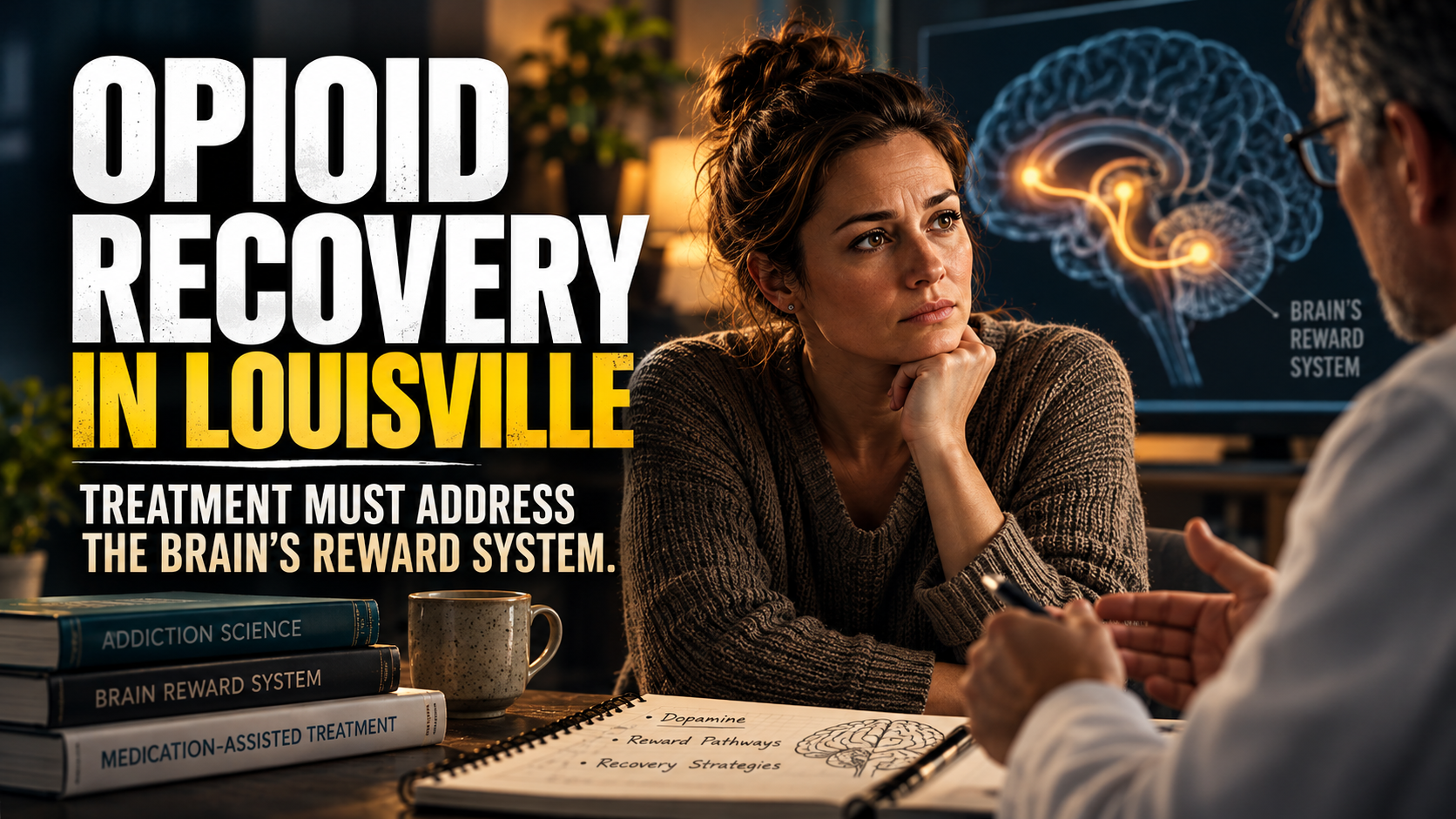
Opioid recovery in Louisville starts with one important fact. Opioids change how the brain experiences reward, motivation and relief. If you or someone you love has tried to stop and been pulled back again and again, that struggle does not reflect weak character.
Maybe opioid use started with a prescription after surgery or an injury. Maybe it began as a way to quiet pain that was harder to name. Either way, the brain adapted. Now ordinary life may feel flat while cravings feel loud.
That experience can bring guilt, frustration and fear. Many families across Kentucky know this story well, and many individuals in recovery have lived it firsthand.
The brain can heal. With medical support, therapy and steady care, the reward system can gradually rebalance. Opioid recovery in Louisville is possible, and you do not have to face it alone.
What Does Opioid Recovery in Louisville Need to Address in the Brain?
Opioid recovery in Louisville needs to address the way opioids reshape the brain’s reward system, which is the network that drives motivation, pleasure and learning. When treatment focuses only on behavior, people are often left fighting cravings they cannot explain.
Effective care looks at the whole person. It combines medical support, evidence-based therapy and mental health care so the brain has the time and stability it needs to recover.
What Is the Brain’s Reward System?
The brain’s reward system is a group of connected areas that release dopamine, a chemical messenger tied to motivation and pleasure. It is the reason you feel satisfied after a good meal, time with someone you love or finishing a hard task.
Its job is to teach the brain what is worth repeating. When something feels rewarding, the brain remembers it and nudges you to seek it again.
How Do Opioids Disrupt the Reward System?
Opioids disrupt the reward system by triggering a much larger dopamine surge than everyday activities produce. They attach to opioid receptors in the brain, which eases pain and creates strong feelings of relief or calm.
With repeated use, the brain adapts to protect itself. It turns down its own natural signaling and becomes less responsive to ordinary rewards. This adaptation is closely linked to tolerance.
Over time, the brain starts to treat opioids as necessary just to feel normal. For that reason, opioid recovery in Louisville has to focus on healing the brain, not only on stopping use.
Why Do Opioid Cravings Feel Biological Rather Than Moral?
Opioid cravings feel biological because they come from brain changes that signal an urgent, survival-level need. The brain has learned to link opioids with relief, and it sends strong messages when they are missing.
These urges can feel as powerful as hunger or thirst. They do not prove that someone has a weak will or loves their family any less.
Seeing cravings this way can lift a heavy layer of shame. When cravings are understood as symptoms of a health condition, opioid recovery in Louisville can focus on treatment instead of blame.
Why Is Willpower Alone Rarely Enough?
Willpower alone is rarely enough because cravings start in parts of the brain that act faster than conscious decisions. By the time you think about resisting, the urge may already feel overwhelming.
Stress, certain people, familiar places and even specific times of day can become cues that set off cravings. Strong opioid recovery in Louisville gives you tools that work alongside willpower, so you are not fighting the brain’s alarm system by yourself.
How Does Dopamine Dysregulation Drive Relapse Risk?
Dopamine dysregulation drives relapse risk because the brain becomes less able to feel pleasure while it still remembers opioids as the fastest source of relief. That combination can make early recovery feel flat and make the pull toward old habits feel strong.
Clinicians sometimes call this reduced ability to enjoy things anhedonia. For a while, a favorite song, a family dinner or a sunny afternoon may feel muted.
This is a normal part of the brain rebalancing. With time and support, many people find that everyday joys gradually return.
What Does Dysregulation Look Like Day to Day?
Dysregulation usually shows up as a mix of low mood, restlessness and sudden cravings. You may notice some of these signs in yourself or a loved one:
- Everyday activities feel dull or unrewarding.
- Energy and motivation stay low for weeks.
- Stress or reminders of past use trigger sudden, intense cravings.
- Sleep is restless or broken.
- Anxiety or irritability rises without a clear reason.
Recognizing these signs helps you respond with care instead of self-blame. They point to a brain that is healing and needs steady support during opioid recovery in Louisville.
Why Is the Period After Stopping Especially Vulnerable?
The period after stopping is especially vulnerable because tolerance drops while cravings can stay strong. An amount a person once used may now be far more dangerous to the body.
This is one reason ongoing support matters so much. Many families also keep naloxone on hand. Naloxone is a medication that can reverse an opioid overdose, and having it nearby is a simple safety step.
Structured care during this window is one of the most protective parts of opioid recovery in Louisville.
Why Do MAT and Integrated Dual Diagnosis Care Matter for Opioid Recovery in Louisville?
Medication-assisted treatment (MAT) and integrated dual diagnosis care matter because together they address both the brain changes and the mental health concerns that often come with opioid use. This combination gives opioid recovery in Louisville a steadier foundation.
MAT pairs approved medications with counseling and behavioral therapy. Dual diagnosis care treats substance use and conditions like anxiety, depression or trauma within one coordinated plan.
How Does MAT Help Steady the Reward System?
MAT helps steady the reward system by reducing withdrawal symptoms and cravings so the brain can begin to heal. Some of these medications work on the same receptors opioids affect, but in a safer and more controlled way.
Buprenorphine and methadone ease cravings and withdrawal. Naltrexone blocks the effects of opioids, so using brings no reward. A provider will help you decide which option fits your needs, or whether medication is right for you at all.
Using medication does not mean trading one addiction for another. MAT is a recognized, evidence-based approach that gives you the stability to fully engage in therapy. A caring team can help you explore medication-assisted treatment and therapy as part of one personalized plan.
Why Should Mental Health Be Treated at the Same Time?
Mental health should be treated at the same time because many people first turned to opioids to quiet emotional pain, not only physical pain. When anxiety, depression or trauma go untreated, they can keep driving the urge to use.
When the two are treated separately, one condition often pulls the other backward. Integrated dual diagnosis care brings both into one plan with one team, which is why it plays such a central role in opioid recovery in Louisville.
Cognitive behavioral therapy (CBT) is one approach that helps. It teaches you to notice triggers, reshape unhelpful thoughts and build healthier ways to cope.
What Do Flexible Outpatient Levels of Care Look Like?
Flexible outpatient levels of care range from structured daily programming to lighter weekly sessions, and each level matches a different stage of opioid recovery in Louisville. You receive real clinical support while living at home and staying connected to work, school and family.
- Partial hospitalization program (PHP) offers several hours of treatment most days of the week, and you return home each evening.
- Intensive outpatient program (IOP) provides multiple therapy sessions each week, often scheduled around daily responsibilities.
- Standard outpatient care involves fewer weekly sessions as your stability grows.
Many people step down gradually as cravings ease and coping skills get stronger. If withdrawal is severe or home feels unsafe, medical detox or another higher level of care may be the right place to start.
A caring team can help you find flexible outpatient programs that fit your needs and schedule.
How Do You Know It Is Time to Seek Support for Opioid Recovery in Louisville?
You may be ready to seek support if opioid use has become harder to control than it once was. You do not need to reach a crisis point to deserve care.
Consider these signs as you think about your next step:
- You need more opioids than before to feel the same relief.
- You feel sick, anxious or restless when you go without them.
- You have tried to cut back or stop, but cravings pulled you back.
- Everyday activities no longer feel enjoyable.
- You use opioids to cope with stress, sadness or painful memories.
- People close to you have expressed concern about your health or your use.
If even one of these feels familiar, it makes sense to talk with a professional about opioid recovery in Louisville. Reaching out is not a sign of failure. It is a courageous choice for your health.
Common Questions Before Starting Treatment
Will my brain’s reward system ever return to normal? For many people, it gradually does. The brain can heal, and with sustained recovery and support, the ability to enjoy everyday life often improves over time. The timeline is different for each person.
Does using MAT mean I am not really in recovery? No. MAT is an evidence-based part of recovery. It steadies the brain so you can take part fully in therapy and rebuild your life.
Can I keep working during opioid recovery in Louisville? Yes, in many cases. Intensive outpatient and standard outpatient programs are designed to fit around work, school and family responsibilities.
Is it safe to stop opioids on my own? Stopping suddenly can bring intense withdrawal and raise the risk of relapse. Medical guidance helps you move through this stage more safely and comfortably.
Take the Next Step Toward Lasting Recovery
Opioid recovery in Louisville works best when it addresses what opioids have done to the brain’s reward system. Cravings, low mood and lost motivation are real symptoms of a health condition, and they can be treated with compassion and evidence-based care.
With medication support, integrated mental health care and flexible outpatient options, the brain can begin to heal. Recovery takes time, and every step forward matters.
If opioids have been shaping your days, help is available whenever you are ready. Reach out to Louisville Addiction Treatment Center today to talk with our caring team and find a path forward built around your needs.