
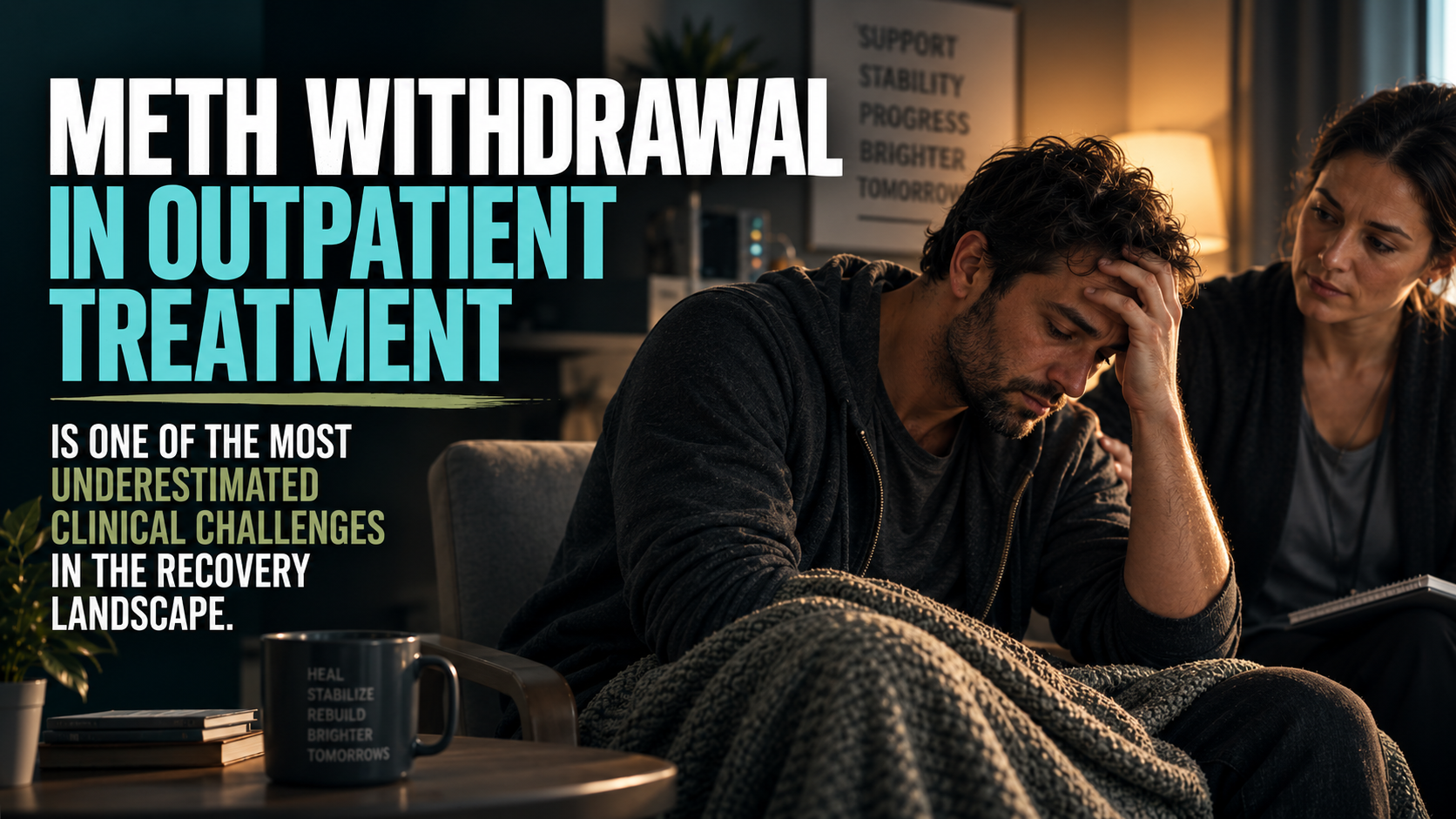
Meth withdrawal in outpatient treatment is far more demanding than many people expect, and underestimating it can quietly put recovery at risk. If you or someone you love is facing this process, that fear and uncertainty make complete sense.
You may have heard that meth withdrawal is not physically dangerous, so it should be easy to manage at home. That message leaves out the hardest part.
The truth is that the physical symptoms often pale next to the psychological ones. Deep exhaustion, heavy depression, and powerful cravings can arrive in waves that feel impossible to ride out alone. That does not mean recovery is out of reach. It means this process deserves real clinical support and genuine compassion. Understanding what to expect can replace fear with clarity, and help is closer than it may feel right now.
What Does Meth Withdrawal in Outpatient Treatment Actually Involve?
Meth withdrawal in outpatient treatment involves managing intense physical fatigue and difficult emotional symptoms while a person continues living at home. It is a structured, supported process, not something you simply wait out on your own.
The physical side often shows up first. Many people feel an overwhelming need to sleep, along with increased appetite, body aches, and a heavy sense of exhaustion.
The psychological side tends to run deeper. Depression, anxiety, irritability, and strong cravings can linger well after the body starts to settle.
In an outpatient setting, a care team helps you move through these stages safely. You attend scheduled sessions for support and monitoring, then return home between them.
Why Is Meth Withdrawal So Often Underestimated?
Meth withdrawal is so often underestimated because it rarely causes the dramatic physical dangers seen with alcohol or certain sedatives. Since seizures and life-threatening symptoms are uncommon, people assume the whole process is mild.
That assumption misses the real challenge. The hardest symptoms are emotional and mental, and they can be just as destabilizing as physical ones.
A person may look fine on the outside while struggling deeply inside. That gap between appearance and experience is exactly what makes this process so easy to overlook.
What Do the Psychological Symptoms Look Like?
The psychological symptoms of meth withdrawal include depression, exhaustion, and cravings that can feel relentless. These are the symptoms most likely to derail recovery without proper support.
You may notice some of these patterns in yourself or a loved one:
- Deep, lasting fatigue that sleep does not seem to fix
- Depression, hopelessness, or a flat, empty mood
- Anxiety, irritability, or restlessness
- Trouble focusing, thinking clearly, or feeling motivated
- Intense cravings that come in unexpected waves
- Loss of pleasure in things that once felt enjoyable
Noticing these signs does not mean something is wrong with who you are. It means your brain is healing and needs steady support during a vulnerable time.
Why Do These Symptoms Last So Long?
These symptoms last so long because meth changes how the brain produces and manages feel-good chemicals. Recovery of those systems takes time, often longer than people expect.
During use, the brain floods with dopamine, the chemical tied to pleasure and motivation. When meth is removed, the brain struggles to produce it naturally for a while.
This is why low mood and cravings can persist for weeks. It is a sign of the brain rebalancing, not a sign of failure or weakness.
Why Do Outpatient Settings Face Unique Challenges With Meth Withdrawal?
Outpatient settings face unique challenges with meth withdrawal because a person returns home each day, back into an environment that may hold triggers and easy access. The support of a session can fade quickly once someone is alone with difficult symptoms.
This is not a flaw in outpatient care. It simply reflects the reality that recovery happens in real life, where cravings and stress do not follow a schedule.
The emotional weight of withdrawal adds to this. When depression and exhaustion hit at home between sessions, the pull toward using again can feel especially strong.
How Do Cravings Complicate Outpatient Recovery?
Cravings complicate outpatient recovery because they can strike suddenly and intensely when clinical support is not immediately present. A wave of craving at home can feel overwhelming without tools to manage it.
This is why skill-building matters so much. Learning to recognize triggers and respond to cravings gives you something to reach for in hard moments.
A strong outpatient program prepares you for exactly these situations. You practice coping strategies during sessions, then apply them where you actually live.
Why Does the Right Level of Care Matter So Much?
The right level of care matters because meth withdrawal affects each person differently, and support needs to match the intensity of the symptoms. Choosing well can be the difference between a steady start and an early setback.
Someone with strong support at home and milder symptoms may do well in standard outpatient care. Another person may need more structure to stay safe and steady.
A thorough assessment helps sort this out. A caring team can guide you toward flexible outpatient support that fits your situation rather than a one-size-fits-all plan.
Who Benefits From Each Level of Outpatient Care?
The people who benefit from each level of outpatient care are matched based on their symptoms, home environment, and support system. Recovery works best when the level of care fits the person, not the other way around.
Understanding these options can make the path forward feel clearer and less overwhelming. Here is a simple overview:
- Partial hospitalization offers structured treatment during the day while you return home in the evenings, providing significant daily support.
- Intensive outpatient care provides several therapy sessions each week, balancing strong support with the flexibility to keep up with daily life.
- Standard outpatient care involves fewer weekly sessions, helping you maintain progress as you build independence.
Many people move through these levels gradually, stepping down as they gain stability. A caring team can help you find the level of personalized outpatient support that fits your needs and your schedule.
When Is a Higher Level of Support the Safer Choice?
A higher level of support is the safer choice when symptoms feel overwhelming or the home environment carries strong triggers. More structure can protect your progress during the hardest early days.
You may benefit from more intensive care if any of these feel true for you or a loved one:
- Depression or cravings feel too heavy to manage alone at home.
- Your living environment includes access to meth or people connected to use.
- Past attempts at recovery ended soon after returning home.
- You are also managing a mental health condition alongside withdrawal.
Choosing more support is not a sign of weakness. It is a wise, self-aware step toward a steadier foundation.
How Do Co-Occurring Mental Health Conditions Complicate the Picture?
Co-occurring mental health conditions complicate meth withdrawal because depression, anxiety, and trauma can intensify the emotional symptoms already present. When these conditions overlap, the challenge becomes deeper and more layered.
Many people use meth to cope with emotional pain, low mood, or difficult memories. When the meth is removed, that underlying pain often rises to the surface.
Withdrawal can then blur together with the mental health condition. It becomes hard to tell where one ends and the other begins, which makes careful, coordinated care essential.
Why Does Treating Both Together Work Better?
Treating both together works better because addressing only the withdrawal leaves the underlying condition in place. When depression or trauma go untreated, they can keep driving the urge to use.
Picture trying to calm a storm while one source of it stays active. Real relief requires addressing everything fueling the struggle.
When both are treated at once, recovery becomes far steadier. This kind of integrated dual diagnosis care treats the substance use and the mental health condition as connected parts of one story.
What Therapies Support This Kind of Recovery?
The therapies that support this kind of recovery help you understand your patterns and build healthier ways to cope. Several evidence-based approaches often work together.
- Cognitive behavioral therapy helps you notice and reshape the thoughts that fuel cravings and low mood.
- Individual counseling gives you a private space to explore triggers, emotions, and goals at a safe pace.
- Group therapy connects you with others who understand, easing shame and isolation.
- Relapse prevention planning helps you recognize warning signs and respond with confidence.
These pieces reinforce one another. Together, they treat the withdrawal and any underlying struggles as connected parts of one journey.
How Do You Know It Is Time to Seek Support?
You may be ready to seek support if meth withdrawal feels harder to manage than you expected, or if you worry about facing it alone. You do not need to reach a crisis point to deserve compassionate care.
Consider reaching out if any of these feel true for you or a loved one:
- Exhaustion, depression, or cravings have made it hard to stop on your own.
- You have tried to quit before but returned to use during withdrawal.
- Your home environment makes staying substance-free difficult.
- Low mood or hopelessness has grown heavy since stopping.
- You are managing both meth use and a mental health condition.
- You want structured support that fits around your daily life.
If even one of these resonates, that is reason enough to talk with a professional. Reaching out is not a sign of failure. It is a caring, courageous step toward steadier ground.
Common Questions Before Starting Treatment
Is meth withdrawal dangerous? Meth withdrawal rarely causes the life-threatening physical symptoms seen with some other substances, but that does not make it easy. The emotional symptoms, especially deep depression and cravings, can be serious and deserve real clinical support.
How long does meth withdrawal last? The most intense symptoms often ease within a couple of weeks, though low mood and cravings can linger longer as the brain heals. A care team can give you a clearer picture after understanding your history and needs.
Can meth withdrawal really be managed in an outpatient setting? Yes, for many people, especially with the right level of care and support at home. A thorough assessment helps determine whether outpatient care fits your situation or whether more structure would keep you safer.
What if I also struggle with depression or anxiety? Integrated treatment can address both at the same time. Treating your mental health and substance use together often works better than treating either one alone, because they frequently influence each other.
Take the Next Step Toward Lasting Recovery
Meth withdrawal in outpatient treatment is one of the most underestimated clinical challenges in recovery, and recognizing that truth can help you or someone you love approach it with the support it truly requires. The emotional weight of this process is real, and facing it with a caring team makes all the difference.
You deserve care that takes your experience seriously, honors your dignity, and meets you exactly where you are. Needing support through withdrawal is not a weakness. It is a wise and hopeful first step.
If the road through withdrawal has felt heavier than you expected, help is available whenever you are ready. Reach out to Impact IOP today to learn how our compassionate team can support you or your loved one with clear, personalized care and a path forward built around your needs.