
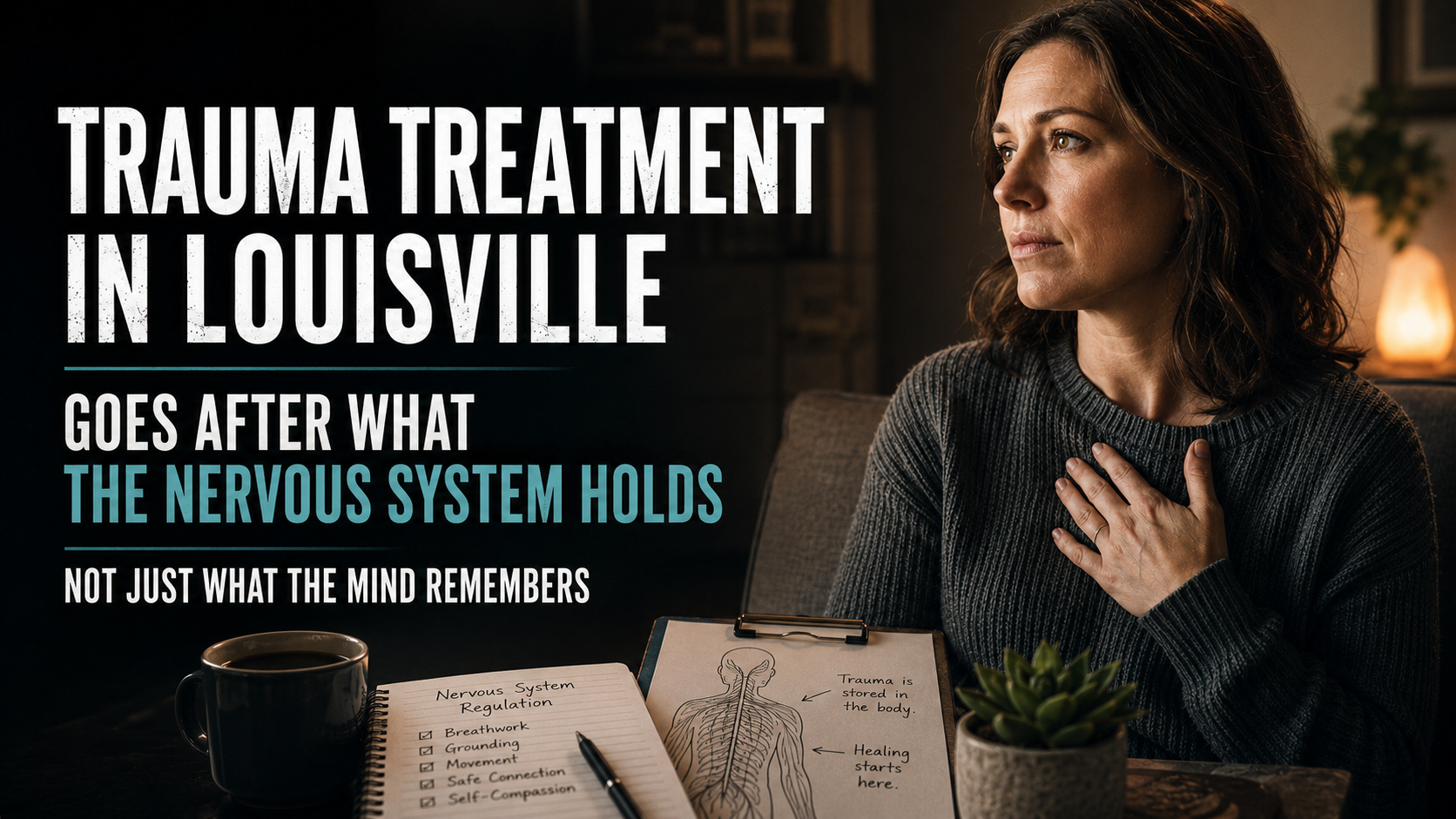
Trauma treatment in Louisville works because it addresses what your body holds onto, not just the memories your mind can recall. If you or someone you love has tried to “think through” trauma without relief, that struggle makes complete sense.
You may have talked about what happened, understood it clearly, and still felt your body react as if the danger were happening right now. That is not a failure of effort or willpower.
Trauma lives in the nervous system, not only in memory. This is why lasting healing requires care that reaches the body, calms the alarm system, and helps you feel safe again. Understanding how this works can replace frustration with hope, and support is closer than it may feel right now.
What Does It Mean That the Nervous System Holds Trauma?
The nervous system holds trauma by staying locked in a state of alarm long after the danger has passed. Your body learned to protect you during a frightening experience, and sometimes it does not switch that protection off.
This is a survival response, not a weakness. When something overwhelming happens, your brain and body react instantly to keep you safe.
The problem comes when that response stays active. Your nervous system may keep scanning for threat, keeping you tense, exhausted, or on edge even in calm, safe moments.
How Is This Different From What the Mind Remembers?
What the mind remembers is the story, while what the body holds is the reaction. You might recall an event calmly, yet still feel your heart race or your muscles tighten when something reminds you of it.
This gap is why talking alone often is not enough. You can understand your trauma completely and still feel unsafe in your own body.
Effective care bridges that gap. It helps your nervous system learn that the threat is over, so your body can finally match what your mind already knows.
Why Does Trauma Treatment in Louisville Focus on the Body?
Trauma treatment in Louisville focuses on the body because trauma symptoms live in the nervous system, where thoughts alone cannot always reach. Healing happens when care calms the body’s alarm response, not just when it explains the past.
Traditional talk therapy has real value. Still, for many people, understanding trauma does not stop the physical reactions it triggers.
Body-based approaches address those reactions directly. They help you notice sensations, release stored tension, and teach your nervous system how to return to a sense of calm.
What Do Nervous System Trauma Responses Look Like?
Nervous system trauma responses show up as physical and emotional patterns that feel automatic and hard to control. You may recognize some of these in yourself or a loved one.
- You feel constantly on guard, tense, or easily startled.
- Your heart races or your chest tightens without a clear reason.
- You feel numb, frozen, or disconnected from your surroundings.
- You struggle to sleep, or you wake feeling unrested.
- You react strongly to sounds, places, or situations tied to the past.
- You feel exhausted from staying alert for so long.
Noticing these patterns does not mean something is wrong with you. It means your body learned to survive something painful and needs support to feel safe again.
What Trauma-Focused Therapies Actually Help?
The trauma-focused therapies that help most are approaches designed to calm the nervous system and process painful memories safely, rather than forcing you to relive them. Good care always moves at a pace that supports stability.
Several evidence-based options work well together. Your care team will help you find the ones that fit your needs.
How Does EMDR Support Healing?
EMDR helps by allowing your brain to process traumatic memories so they lose their intense emotional grip. The full name is Eye Movement Desensitization and Reprocessing, and it uses guided techniques to support that process.
During EMDR, you focus briefly on a difficult memory while following a simple, repeated movement or sound. This helps your brain file the memory as something from the past rather than an ongoing threat.
Many people find that memories feel less overwhelming afterward. The event still happened, but it no longer commands the same physical reaction.
What Role Do Somatic Practices Play?
Somatic practices help by working directly with the body to release stored tension and restore a sense of safety. These body-based tools calm a nervous system that has stayed on high alert.
Grounding exercises, breathing techniques, and mindful movement all fall into this category. They help you reconnect with the present moment when your body wants to react to the past.
Over time, these practices retrain your nervous system. Your body slowly learns that it is safe to relax, which makes everyday life feel steadier.
How Does Cognitive Behavioral Therapy Fit In?
Cognitive behavioral therapy helps by giving you tools to notice and reshape the thoughts that keep fear and shame in place. It works alongside body-based approaches to support the whole person.
Trauma often creates beliefs like “I am not safe” or “it was my fault.” This kind of therapy helps you gently examine those thoughts and replace them with ones grounded in reality.
Combined with somatic care, it addresses both the story and the reaction. Together, these approaches help you feel steadier in your mind and your body.
Why Are Trauma and Substance Use So Often Connected?
Trauma and substance use are so often connected because people frequently turn to alcohol or other substances to quiet an overwhelmed nervous system. A drink to fall asleep or a substance to numb a flashback can feel like relief at first.
That relief rarely lasts. Many substances worsen anxiety, disrupt sleep, and intensify trauma symptoms once they wear off.
This can create a cycle that feels difficult to break. Trauma fuels substance use, substance use deepens the trauma, and each one makes the other harder to treat alone.
When only the substance use is treated, the unresolved trauma often stays active beneath the surface. That is one of the most common reasons people return to substances after treatment. Treating both together tends to produce steadier results, and integrated dual diagnosis care coordinates your trauma care and substance use support within one plan.
What Flexible Outpatient Care Is Available in Louisville?
Flexible outpatient care in Louisville lets you receive real clinical support while continuing to live at home and manage daily responsibilities. You do not have to step away from your entire life to heal.
Outpatient care offers meaningful structure without requiring a residential stay. You attend scheduled sessions, then return to your own space to practice new skills where you actually live.
This approach keeps you connected to work, school, and the people who matter to you. That connection can strengthen recovery, because you build calming skills in the settings where you need them most.
At Impact Outpatient Program, flexible outpatient and intensive outpatient options help you find a level of support that fits your needs, your schedule, and your goals. When mental health and substance use overlap, integrated care for co-occurring conditions addresses both as one connected plan.
How Do You Know It Is Time to Seek Trauma Support?
You may be ready to seek trauma support if your body keeps reacting to the past even when your mind knows you are safe. You do not need to wait until things feel unbearable, and you do not need anyone’s permission to take your experience seriously.
Consider reaching out if any of these feel true for you or a loved one:
- Your body reacts with tension, panic, or numbness that you cannot easily control.
- You relive a distressing event through flashbacks, nightmares, or intrusive thoughts.
- You avoid people, places, or activities that remind you of what happened.
- You feel constantly on edge or unable to relax, even in calm settings.
- Sleep, focus, mood, or relationships have suffered for weeks or months.
- You have leaned on alcohol or other substances to quiet the distress.
If even one of these resonates, that is reason enough to talk with a professional. Reaching out is not an overreaction. It is a courageous step toward feeling safe in your own body again.
Common Questions Before Starting Treatment
Why has talking about my trauma not been enough? Talking helps you understand your trauma, but it does not always calm the physical reactions your nervous system holds. Body-based approaches address those reactions directly, which is why combining them with talk therapy often works better.
Will trauma treatment force me to relive what happened? No. Effective trauma care moves at a pace you can handle and focuses on safety first. The goal is to help you process memories gradually, not to overwhelm you.
Can I get trauma care while keeping up with work and family? Yes. Flexible outpatient programs are designed for people who need real clinical support without leaving daily life behind. You attend scheduled sessions and return home afterward.
What if I have both trauma and a substance use concern? Integrated treatment can address both at the same time. Treating trauma and substance use together often leads to steadier, more lasting recovery than treating either one alone.
Take the Next Step Toward Healing
Trauma treatment in Louisville works because it reaches what the nervous system holds, not only what the mind remembers, and recognizing that truth can free you or someone you love from years of frustration. Your body learned to protect you, and with the right care, it can learn to feel safe again.
You deserve to feel grounded, calm, and present in your own life. Trauma is treatable, and meaningful support is available whenever you are ready to take that first step.
If your body keeps holding onto the past, help is closer than you think. Reach out to Impact Outpatient Program today to learn how our compassionate team can support you or your loved one with clear, personalized care and a path forward built around your needs.