PTSD and addiction often develop together, and once they connect, each condition can keep the other going. If you or someone you love has tried to heal from trauma while also trying to stop drinking or using, you may know how exhausting that cycle feels.
Post-traumatic stress disorder (PTSD) can develop after a frightening, harmful or life-threatening experience. Nightmares, flashbacks and a body that never fully relaxes can turn each day into a fight. Alcohol or drugs may have offered a few hours of quiet when nothing else did.
Reaching for that relief made sense at the time. It does not mean you are weak or that you failed. It means you were trying to survive pain that felt bigger than the tools you had.
Over time, though, the relief fades and the pain often returns stronger. You may feel stuck between two struggles that keep feeding each other. That loop can be broken, and you do not have to break it alone.
What Is the Feedback Loop Between PTSD and Addiction?
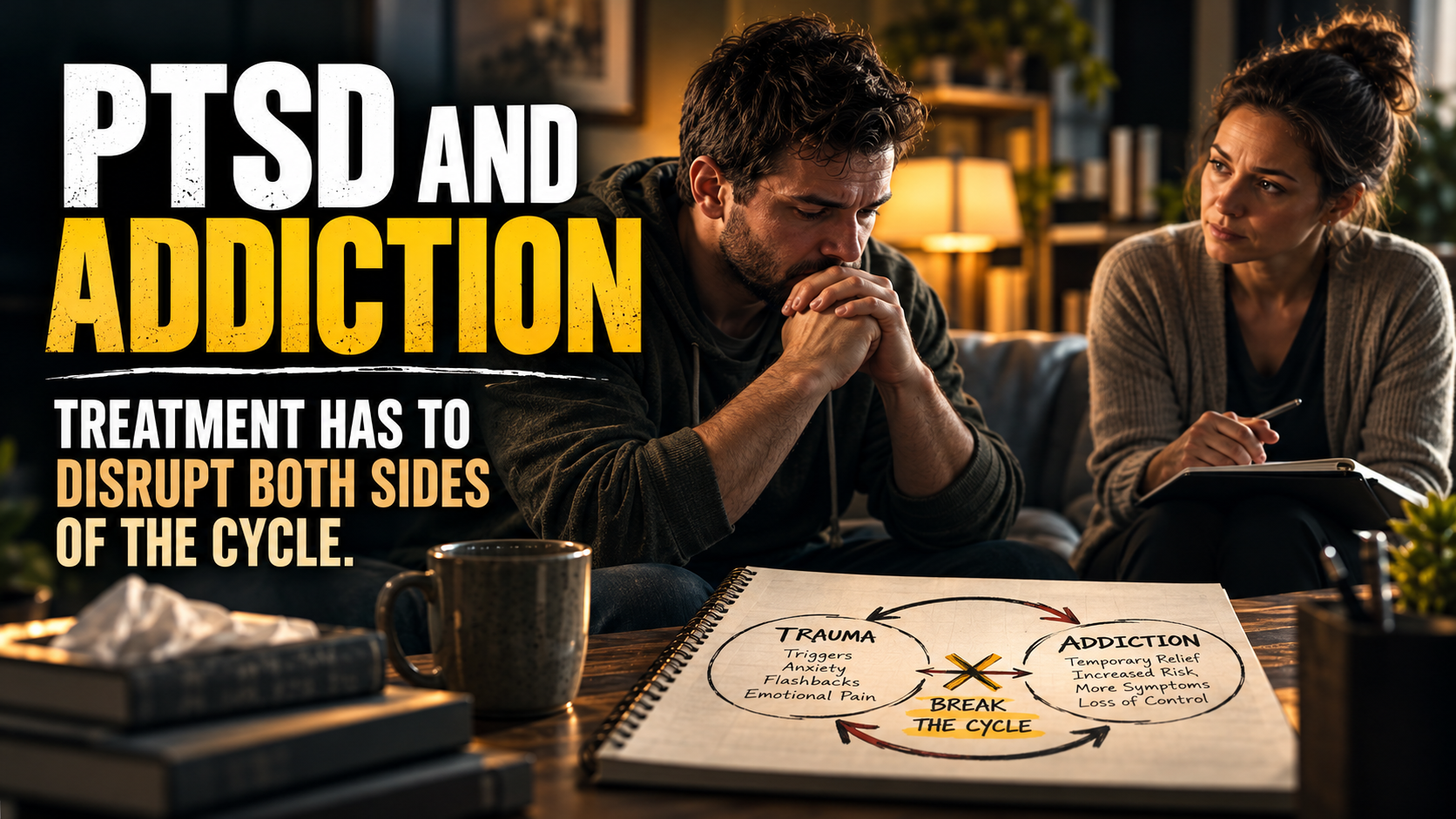
The feedback loop between PTSD and addiction is a cycle in which trauma symptoms drive substance use and substance use then makes trauma symptoms worse. Each condition strengthens the other with every turn.
Many people first reach for alcohol or drugs to sleep, calm panic or quiet intrusive memories. That relief is real, but it is short. As the substance wears off, the nervous system often rebounds with more anxiety, worse sleep and sharper reactions.
Those stronger symptoms create a stronger urge to use. Over weeks and months, the cycle tightens until PTSD and addiction feel like one tangled problem rather than two separate ones.
What Does the Loop Look Like Day to Day?
The loop looks like a steady trade between overwhelming symptoms and temporary escape. You may recognize this pattern in yourself or a loved one:
- A trigger such as a sound, smell or anniversary sets off fear or a flashback.
- Alcohol or another substance dulls the alarm for a few hours.
- The effect fades, and anxiety, irritability and poor sleep return.
- Exhaustion lowers the ability to cope with the next trigger.
- The urge to use grows, and the cycle starts again.
Seeing yourself in this pattern is not a reason for shame. It is useful information that points toward the kind of care that can help.
How Does Each Condition Make the Other Worse?
Each condition makes the other worse because PTSD keeps the body in a state of threat while substances disrupt the systems that help the body calm down. Understanding both directions of the loop explains why PTSD and addiction are so hard to untangle on your own.
How Does PTSD Drive Substance Use?
PTSD drives substance use by leaving the nervous system on high alert, which makes rest, focus and calm hard to reach. Hypervigilance, nightmares and emotional numbness are draining to live with every day.
Substances can seem like the fastest way to turn that alarm down. Some people drink to fall asleep. Others use to feel something again after weeks of numbness.
How Does Substance Use Intensify PTSD Symptoms?
Substance use intensifies PTSD symptoms by disrupting sleep, deepening low mood and triggering withdrawal that feels a lot like trauma-related anxiety. Alcohol, for example, may help someone fall asleep but often breaks up deeper sleep later in the night.
Withdrawal can bring a racing heart, sweating and restlessness. For a person living with PTSD and addiction, those sensations can mirror the body’s trauma response and set off even more fear.
Substances can also block the emotional processing that healing requires. When feelings stay numbed, the brain has fewer chances to learn that the danger has passed.
Why Does Treating PTSD and Addiction One at a Time Fall Short?
Treating PTSD and addiction one at a time often falls short because the untreated condition keeps pulling the treated one backward. Disrupting only one side of the loop leaves the other side running.
Many people have been told to get sober first and deal with trauma later. Others have worked on trauma while drinking or drug use continued in the background. Both paths leave important work undone.
What Happens When Only the Substance Use Is Treated?
When only the substance use is treated, trauma symptoms often rise as soon as the substance is gone. Nightmares, flashbacks and panic may feel louder in early sobriety because nothing is muffling them anymore.
Without tools to manage those symptoms, the old coping habit can feel like the only option. That is not a failure of willpower. It is a predictable result of leaving trauma unaddressed.
What Happens When Only the PTSD Is Treated?
When only the PTSD is treated, ongoing substance use keeps interrupting the healing process. Hangovers, withdrawal and poor sleep make it hard to attend sessions and practice new skills.
Progress made in one session can slip away before the next. This is why lasting recovery from PTSD and addiction usually depends on care that works on both at once.
What Does Integrated Outpatient Treatment for PTSD and Addiction Look Like?
Integrated outpatient treatment for PTSD and addiction means one coordinated team treats trauma and substance use at the same time, within one shared plan. Nothing important gets lost between separate providers.
Care usually begins with a thorough assessment of trauma history, substance use, physical health and daily stressors. That picture shapes a plan built around you rather than a generic template.
At Louisville Addiction Treatment Center, integrated dual diagnosis care brings trauma support and addiction treatment together. Your providers share one view of how your symptoms connect, so you are not repeating your story to teams that never compare notes.
Which Therapies Help Disrupt Both Sides of the Loop?
The therapies that help most combine safe trauma processing with practical skills for managing cravings and distress. A personalized plan for PTSD and addiction may include:
- Cognitive behavioral therapy (CBT) helps you notice and reshape thoughts like “I am never safe” that fuel both fear and cravings.
- Eye movement desensitization and reprocessing (EMDR) uses guided eye movements or sounds to help the brain file traumatic memories as part of the past.
- Seeking Safety, an approach designed for trauma and substance use together, focuses on present-day coping and safety.
- Dialectical behavior therapy (DBT) skills teach ways to ride out intense emotions without turning to substances.
- Grounding and breathing practices help the body return to calm when a trigger hits.
- Relapse prevention planning maps trauma triggers and substance triggers side by side.
Good trauma care moves at a pace you can handle. Safety and stability come first, and memory processing happens gradually.
Where Does Medication Fit In?
Medication can support recovery when it eases symptoms enough for therapy to take hold. A psychiatric provider may discuss options for sleep, mood or anxiety, along with medication-assisted treatment (MAT) for opioid or alcohol use disorders when appropriate.
These decisions are always made together with you. Because some medications carry their own dependence risks, a team that understands both conditions can weigh choices carefully.
What Outpatient Levels of Care Support PTSD and Addiction Recovery?
Outpatient levels of care for PTSD and addiction range from structured daily programming to lighter weekly sessions, and many people move between them as they heal. Each level matches a different stage of recovery.
- Partial hospitalization program (PHP) offers several hours of treatment most days of the week while you return home each evening.
- Intensive outpatient program (IOP) provides multiple therapy sessions each week, often scheduled around work, school or family.
- Standard outpatient care involves fewer weekly sessions as symptoms ease and coping skills become more reliable.
Outpatient care lets you practice calming skills in the same places where triggers actually appear. A caring team can help you choose among flexible outpatient programs and adjust your care as you grow stronger.
If withdrawal could be dangerous, such as with alcohol or benzodiazepines, medical detox may be the safest first step. If you are having thoughts of suicide, call or text 988, or call 911 if you are in immediate danger.
How Do You Know It Is Time to Seek Help for PTSD and Addiction?
You may be ready to seek help if trauma symptoms and substance use keep affecting each other in ways you cannot untangle alone. You do not need to wait for a crisis to deserve care.
Consider these signs as you think about your next step:
- You use alcohol or drugs to sleep, calm panic or stop painful memories.
- Your trauma symptoms feel stronger on the days after you drink or use.
- Nightmares or flashbacks grew louder when you tried to quit on your own.
- Past treatment addressed only trauma or only substance use and left the other untouched.
- You avoid people, places or conversations that remind you of what happened.
- Someone close to you has shared concern about your safety or your use.
If even one of these feels familiar, talking with a professional is a reasonable next step. Reaching out is not an overreaction. It is a courageous choice to stop carrying this by yourself.
Common Questions Before Starting Treatment
Do I have to stop using before I can get trauma treatment? No. Integrated care treats PTSD and addiction at the same time, so you do not have to wait for one to resolve before addressing the other. Your team will help you build stability while trauma work begins gradually.
Will I have to talk about my trauma in detail right away? No. Effective care starts with safety and coping skills. Processing happens slowly and only when you feel ready.
Why do my symptoms feel worse since I stopped drinking? Substances may have been muffling trauma symptoms, so they can surface more clearly in early sobriety. This is common and treatable, and it is a key reason both conditions need care together.
Can I keep working during outpatient treatment? Yes, in many cases. Intensive outpatient and standard outpatient programs are designed to fit around work, school and family schedules.
Take the Next Step Toward Breaking the Cycle
PTSD and addiction share a feedback loop, but that loop can be disrupted when outpatient treatment addresses both sides together. When trauma and substance use are treated as connected parts of one story, the cycle that once felt unbreakable can begin to loosen.
Your body learned to protect you, and your coping made sense. With compassionate, coordinated care, you can build new ways to feel safe and steady. Healing takes time, and every step forward matters.
If trauma and substance use have been feeding each other, help is available whenever you are ready. Reach out to Louisville Addiction Treatment Center today to talk with our caring team about your options and a path forward built around your needs.