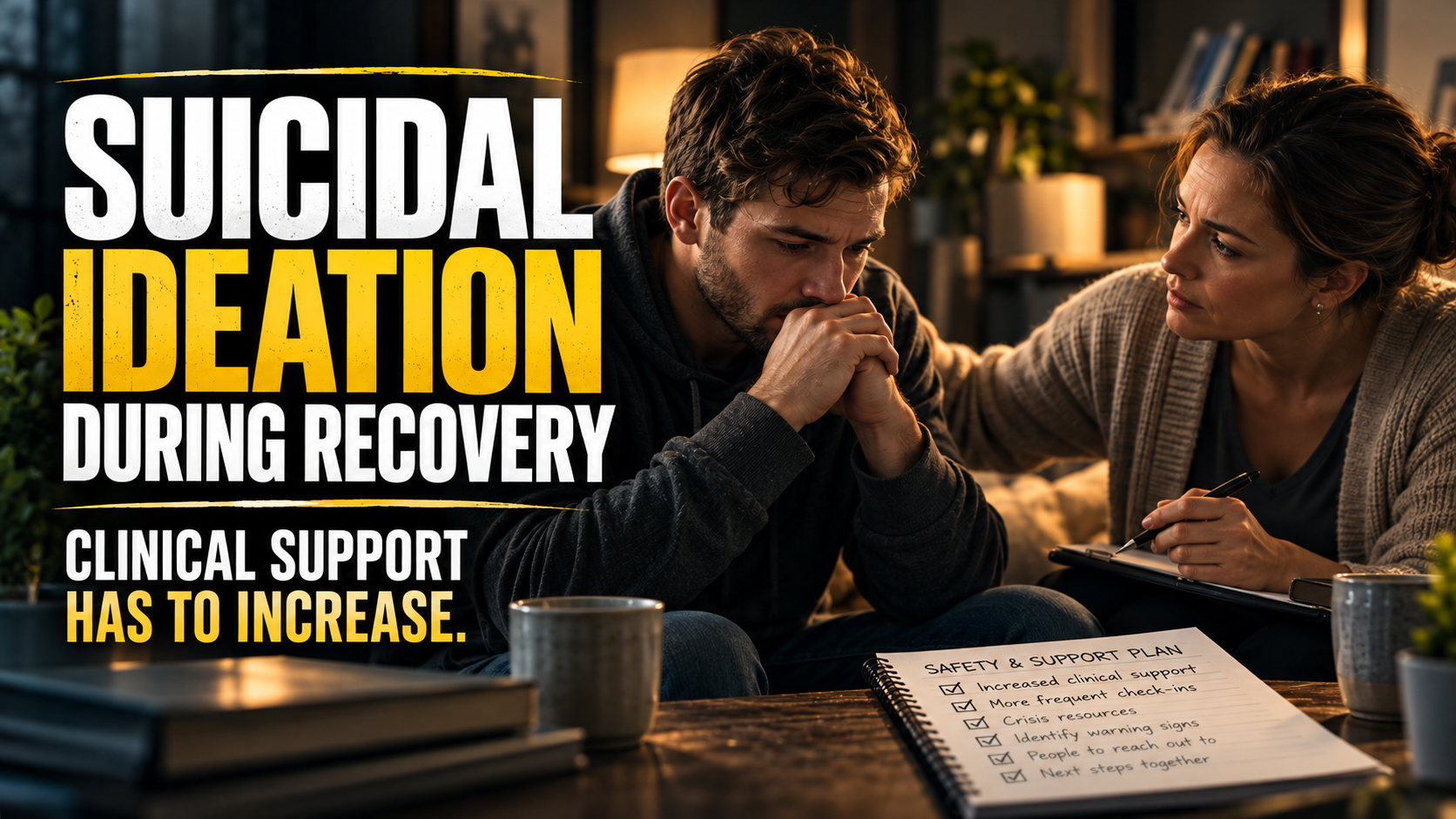
Suicidal ideation during recovery can feel confusing and frightening, especially when you expected stopping alcohol or drugs to bring relief. If you or someone you love is having thoughts of suicide after getting sober, these thoughts are a signal that more care is needed. They are not a sign that you have failed.
If you are in immediate danger, call 911. You can also call or text 988 to reach the 988 Suicide and Crisis Lifeline any time, day or night.
Early recovery asks a lot of a person. Feelings that substances once muffled can return all at once, and sleep, mood and energy may take time to settle. Some people hide these thoughts because they fear being judged or worry they will be seen as going backward.
You are not going backward. Your brain and body are healing, and the pain you feel deserves a real clinical response. With the right support, these thoughts can ease, and you do not have to face them alone.
What Does Suicidal Ideation During Recovery Look Like?
Suicidal ideation during recovery includes any thoughts about death, dying or ending your life that show up after you have reduced or stopped substance use. These thoughts can be quiet and passing, or they can be specific and persistent.
Some people describe a wish to not wake up. Others feel like a burden to the people trying to help them. Some begin thinking about how or when they might act.
What Signs Might You Notice?
The signs often show up in words, behavior and mood. You may notice some of these in yourself or a loved one:
- Talking about feeling hopeless, trapped or like a burden
- Pulling away from meetings, sessions or supportive people
- Sharp changes in sleep, appetite or energy
- Strong cravings paired with thoughts of “what’s the point”
- Giving away belongings or saying goodbye
- A sudden calm after weeks of deep distress
Any of these signs of suicidal ideation during recovery is reason to reach out. Asking someone directly about suicide does not plant the idea, and for many people it brings relief.
Why Does Suicidal Ideation During Recovery Mean Clinical Support Has to Increase?
Suicidal ideation during recovery means clinical support has to increase because risk can rise quickly, and the current plan was not built for this level of distress. Keeping care at the same level treats a changing situation as if nothing has changed.
A treatment plan reflects what a person needed when it was written. When suicidal thoughts appear, the clinical picture has shifted, and the plan should shift with it.
Why Is Keeping Care Level Not Enough?
Keeping care level is not enough because noting the thoughts and waiting for the next appointment leaves long gaps without support. In early recovery, a few days alone with hopelessness, poor sleep and cravings can feel very long.
Observation tracks pain. Engagement treats it. Suicidal ideation during recovery calls for engagement.
What Does Increased Support Include?
Increased support includes more frequent clinical contact, a written safety plan and a review of whether a higher level of care is needed. It often looks like this:
- A suicide risk assessment gently explores your thoughts, history and current stressors.
- A personalized safety plan lists your warning signs, coping steps, trusted contacts and crisis numbers.
- Safety steps at home, such as securing medications and firearms, often involve help from family.
- More sessions or a higher level of care add structure during a vulnerable stretch.
- A psychiatric evaluation looks for depression, trauma or other conditions underneath.
How Are Substance Withdrawal and Suicidal Thoughts Connected?
Substance withdrawal and suicidal thoughts are connected because withdrawal can disrupt the brain’s mood, stress and reward systems for weeks or longer. Those changes can bring depression, anxiety and hopelessness that make suicidal thoughts feel louder.
Substance use disorders are recognized risk factors for suicide. For many people, alcohol or drugs first became a way to quiet the same pain that now returns without them. This is one reason suicidal ideation during recovery often appears in the first weeks and months.
Which Substances Carry Added Emotional Risk?
Several substances can bring a heavy emotional crash when use stops:
- Alcohol can leave lingering low mood, anxiety and broken sleep as the brain rebalances.
- Stimulants like methamphetamine and cocaine often bring a crash marked by exhaustion and deep depression.
- Opioids can cause restlessness, anxiety and a flat, joyless mood during and after withdrawal.
- Benzodiazepines can bring intense anxiety and insomnia, and stopping them suddenly can be medically dangerous.
Alcohol and benzodiazepine withdrawal should always happen with medical supervision.
Why Can Suicidal Thoughts Appear Weeks After Stopping?
Suicidal thoughts can appear weeks after stopping because some withdrawal symptoms last well beyond the first few days. This longer stretch is often called post-acute withdrawal syndrome (PAWS), and it can include low mood, irritability and trouble feeling pleasure.
That timing surprises many people. Suicidal ideation during recovery is not proof that recovery is failing. It is a sign that the healing brain needs more support right now.
How Does Integrated Dual Diagnosis Care Respond to Suicidal Ideation During Recovery?
Integrated dual diagnosis care responds by treating suicidal thoughts, mental health conditions and substance use together, within one plan and one team. When these are handled on separate tracks, important warning signs can fall between providers.
Depression, trauma and anxiety often sit beneath both substance use and suicidal ideation during recovery. Treating only the drinking or drug use can leave that pain untouched.
At Louisville Addiction Treatment Center, integrated dual diagnosis care brings these supports into one coordinated plan:
- Cognitive behavioral therapy (CBT) helps you challenge hopeless thoughts and build coping skills.
- Dialectical behavior therapy (DBT) teaches skills for getting through intense emotions without acting on them.
- Medication management with a psychiatric provider supports mood, always as a shared decision.
- Relapse prevention planning addresses both cravings and suicidal warning signs.
- Family involvement helps loved ones know what to watch for and how to respond.
Because one team sees the whole picture, care for suicidal ideation during recovery can step up the moment risk changes.
Which Levels of Care Fit Each Stage of Risk?
The right level of care depends on how intense suicidal ideation during recovery has become and whether a person can stay safe at home. Care should move up quickly when risk rises and step down gradually as stability returns.
When Is Emergency or Inpatient Care Needed?
Emergency or inpatient psychiatric care is needed when someone cannot stay safe, has a specific plan or has both intent and access to lethal means. In these moments, call 911 or go to the nearest emergency room. Choosing this level of support is a protective step, not a failure.
How Do Outpatient Levels of Care Increase Support?
Outpatient levels of care increase support by adding clinical contact while you continue living at home. Louisville Addiction Treatment Center offers several options:
- Partial hospitalization program (PHP) provides several hours of structured treatment most days of the week.
- Intensive outpatient program (IOP) offers multiple therapy sessions each week around work, school or family.
- Standard outpatient care includes fewer weekly sessions once coping skills feel steadier.
Someone in standard outpatient care who develops suicidal ideation during recovery may benefit from moving into IOP or PHP for a time. A caring team can help you choose among flexible outpatient programs and adjust your care as safety improves.
How Do You Know It Is Time to Increase Support?
It is time to increase support the moment suicidal thoughts appear, even if they feel familiar or mild. You do not need to wait until things feel unbearable.
Consider these signs as you weigh your next step:
- You have had thoughts of not wanting to be alive since you stopped using.
- Your thoughts of suicide have become more frequent or more specific.
- Your mood has dropped sharply in the weeks after withdrawal.
- Cravings and hopelessness are showing up together.
- Your current program checks in on these thoughts but has not changed your care.
- Someone close to you has shared worry about your safety.
If even one of these feels true, talk with your care team today. Speaking up about suicidal ideation during recovery is an act of courage and a real step toward safety.
What Families Often Ask
Will asking about suicide make my loved one more likely to act? No. Asking directly and calmly shows you care and does not increase risk. Listen without judgment, then help them connect with 988 or their care team.
Does suicidal ideation during recovery mean treatment is not working? No. It means the plan needs more support right now. Increasing care early helps protect both safety and sobriety.
Can my loved one stay in outpatient treatment? Often, yes, if the program can add frequent contact and safety planning. If they cannot stay safe at home, a higher level of care comes first.
Take the Next Step Toward Safety and Steadier Days
Suicidal ideation during recovery is a clinical signal that support has to increase, not stay level. When suicidal thoughts, mental health and substance use are treated together, many people find relief and renewed reasons to keep going.
Your pain matters, and so does your recovery. Help is available, and you do not have to carry this alone.
If you are in crisis, call or text 988 now, or call 911. When you are ready to talk about ongoing care, reach out to Louisville Addiction Treatment Center. Our compassionate team can help you find the right level of support and build a path forward around your needs.