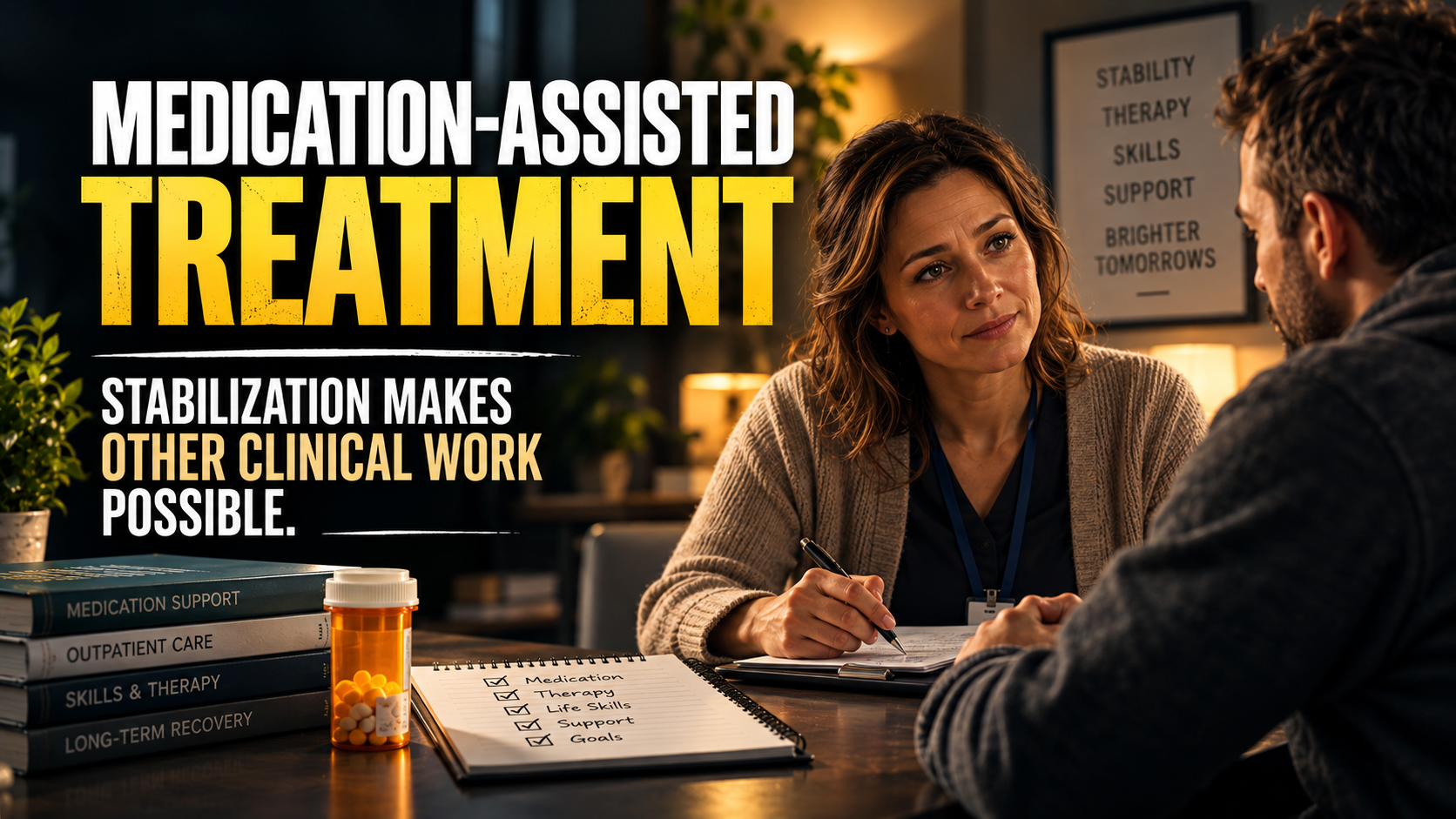
Medication-assisted treatment (MAT) gives many people in outpatient care the steady footing they need to do the deeper work of recovery. If you or someone you love has tried to stop using opioids or alcohol and been pulled back by withdrawal or cravings, you know how hard it is to focus on anything else.
You may have sat in a counseling session while your body ached and your mind kept circling back to using. You may have wondered why therapy did not seem to stick, or why willpower kept running out.
That struggle is not a sign of weakness. Withdrawal and cravings come from real changes in the brain, and they can crowd out the focus that therapy requires. When medication eases those symptoms, there is finally room to learn, reflect and rebuild. Help is available, and you do not have to face this alone.
What Is Medication-Assisted Treatment and How Does It Work?
Medication-assisted treatment combines approved medications with counseling and behavioral therapy to treat opioid use disorder and alcohol use disorder. The medication steadies the body and brain, and the therapy helps you build lasting skills.
Think of it like a cast on a broken leg. The cast does not heal the bone by itself. It holds things steady so healing can happen.
Medication-assisted treatment works the same way. It reduces the physical pull of withdrawal and cravings so you can take part fully in your care.
Which Medications Are Commonly Used?
The three most common medications for opioid use disorder are buprenorphine, methadone and naltrexone. Each works a little differently:
- Buprenorphine partially activates opioid receptors, which eases withdrawal and cravings with a lower risk of misuse than full opioids.
- Methadone fully activates opioid receptors in a slow, steady way and is dispensed through federally certified opioid treatment programs.
- Naltrexone blocks the effects of opioids and alcohol, so using brings little or no reward. It usually requires a period without opioids before starting, often 7 to 10 days.
For alcohol use disorder, naltrexone and acamprosate are also approved options. A provider helps you decide which medication fits your history, health and goals, or whether medication is right for you at all.
Why Does Medication-Assisted Treatment Make Other Clinical Work Possible?
Medication-assisted treatment makes other clinical work possible because it quiets the withdrawal symptoms and cravings that otherwise consume a person’s attention. When the body is no longer in distress, the mind can engage with therapy.
Recovery involves learning new ways to think, cope and respond to stress. That kind of learning is very hard when your nervous system is in survival mode.
How Do Withdrawal and Cravings Block Therapy?
Withdrawal and cravings block therapy by keeping the brain focused on relief instead of reflection. Opioid withdrawal can bring aches, nausea, sweating, anxiety and poor sleep, and cravings can arrive in sudden, powerful waves.
During those moments, it is nearly impossible to practice a coping skill or explore a painful memory. Many people miss sessions entirely because they feel too sick to come.
What Changes When the Brain Is Stable?
When the brain is stable, a person can show up consistently, think clearly and practice new skills between sessions. Sleep often improves, mood steadies and daily life becomes more manageable.
This is the stability medication-assisted treatment is designed to create. From there, approaches like cognitive behavioral therapy (CBT) can do what they do best, which is helping you notice triggers, reshape unhelpful thoughts and respond to cravings in healthier ways.
Who Benefits Most From Medication-Assisted Treatment in Outpatient Care?
People living with opioid use disorder or alcohol use disorder who struggle with ongoing cravings or past relapse often benefit most from medication-assisted treatment in outpatient care. You do not need to hit a crisis point to explore it.
You may find this approach helpful if any of these feel familiar:
- You have tried to stop on your own, and withdrawal or cravings pulled you back.
- You feel too sick or distracted to focus during therapy sessions.
- You have returned to use after a period of not using.
- You want to keep working or caring for family while you get treatment.
- You are managing both substance use and a mental health condition.
Seeing yourself here is not a reason for shame. It simply means medication may help you build a stronger foundation.
How Does Medication-Assisted Treatment Fit Into Outpatient Levels of Care?
Medication-assisted treatment fits into every outpatient level of care, from structured daily programming to lighter weekly sessions. Medication management continues as you move between levels, so your stability travels with you.
Here is how it can work at each stage:
- Partial hospitalization program (PHP) offers several hours of treatment most days of the week. It suits people who need strong daily structure while medication begins to take effect.
- Intensive outpatient program (IOP) provides multiple therapy sessions each week, often scheduled around work, school or family.
- Standard outpatient care involves fewer weekly sessions as stability and coping skills grow.
Outpatient care lets you practice new skills in the same places where triggers actually appear. A caring team can help you choose among flexible outpatient programs and adjust your plan as you progress.
If withdrawal could be dangerous, especially from alcohol or benzodiazepines, medical detox may be the safest first step before outpatient care begins.
How Does Medication-Assisted Treatment Support Dual Diagnosis Care?
Medication-assisted treatment supports dual diagnosis care by steadying substance use so mental health conditions like anxiety, depression or trauma can be treated more clearly. Many people first turned to opioids or alcohol to quiet emotional pain.
When cravings and withdrawal settle, it becomes easier to see which symptoms come from substance use and which reflect a separate condition. That clarity helps your care team build a more precise plan.
Treating both at once also closes a common gap. When mental health goes untreated, it can quietly drive a return to use. Through integrated dual diagnosis care, Louisville Addiction Treatment Center brings medication support, therapy and psychiatric care into one coordinated plan with one team.
Why Is Medication-Assisted Treatment Considered Evidence-Based?
Medication-assisted treatment is considered evidence-based because decades of research support its use for opioid and alcohol use disorders. Major health authorities, including the National Institute on Drug Abuse and the Substance Abuse and Mental Health Services Administration, recognize these medications as effective treatment.
The World Health Organization also lists methadone and buprenorphine as essential medicines. Research links medication for opioid use disorder with better treatment retention and a lower risk of overdose death.
Using medication is not trading one addiction for another. Dependence on a prescribed, monitored medication is different from addiction, which involves compulsive use despite harm.
How Do You Know It Is Time to Explore Medication-Assisted Treatment?
You may be ready to explore medication-assisted treatment if withdrawal or cravings keep getting in the way of the recovery you want. Consider these signs as you think about your next step:
- You have tried therapy alone, and cravings kept pulling your focus away.
- Withdrawal symptoms make it hard to attend sessions or get through the day.
- You have returned to opioids or alcohol after trying to stop.
- You worry about overdose risk if you return to use after a break.
- You want treatment that fits around work, school or family responsibilities.
- You are managing a mental health condition alongside substance use.
If even one of these feels true, a conversation with a provider can help clarify your options. Asking about medication is a thoughtful health decision, not a shortcut.
Common Questions Before Starting Treatment
How long will I need to take medication? The length varies from person to person. Some people use medication for months, while others benefit from longer-term support, and your provider will review this with you regularly.
Will I feel high on these medications? When taken as prescribed, buprenorphine and methadone are designed to steady you, not produce a high. Naltrexone has no opioid effect at all.
Can I keep working during medication-assisted treatment? Yes, in many cases. Intensive outpatient and standard outpatient programs are built to fit around work and family schedules.
Do I still need therapy if I take medication? Yes. Medication creates stability, and therapy builds the skills that protect recovery over time. The two work best together.
Take the Next Step Toward Steadier Recovery
Medication-assisted treatment works in outpatient settings because it stabilizes the withdrawal and cravings that make other clinical work so hard. With a steadier foundation, therapy, mental health care and daily life can finally move forward together.
Needing medication support is not a weakness. It is a proven, compassionate way to give your recovery a stronger chance to take hold.
If cravings or withdrawal have been standing between you and the life you want, help is available whenever you are ready. Reach out to Louisville Addiction Treatment Center today to talk with our caring team about your options and a path forward built around your needs.