
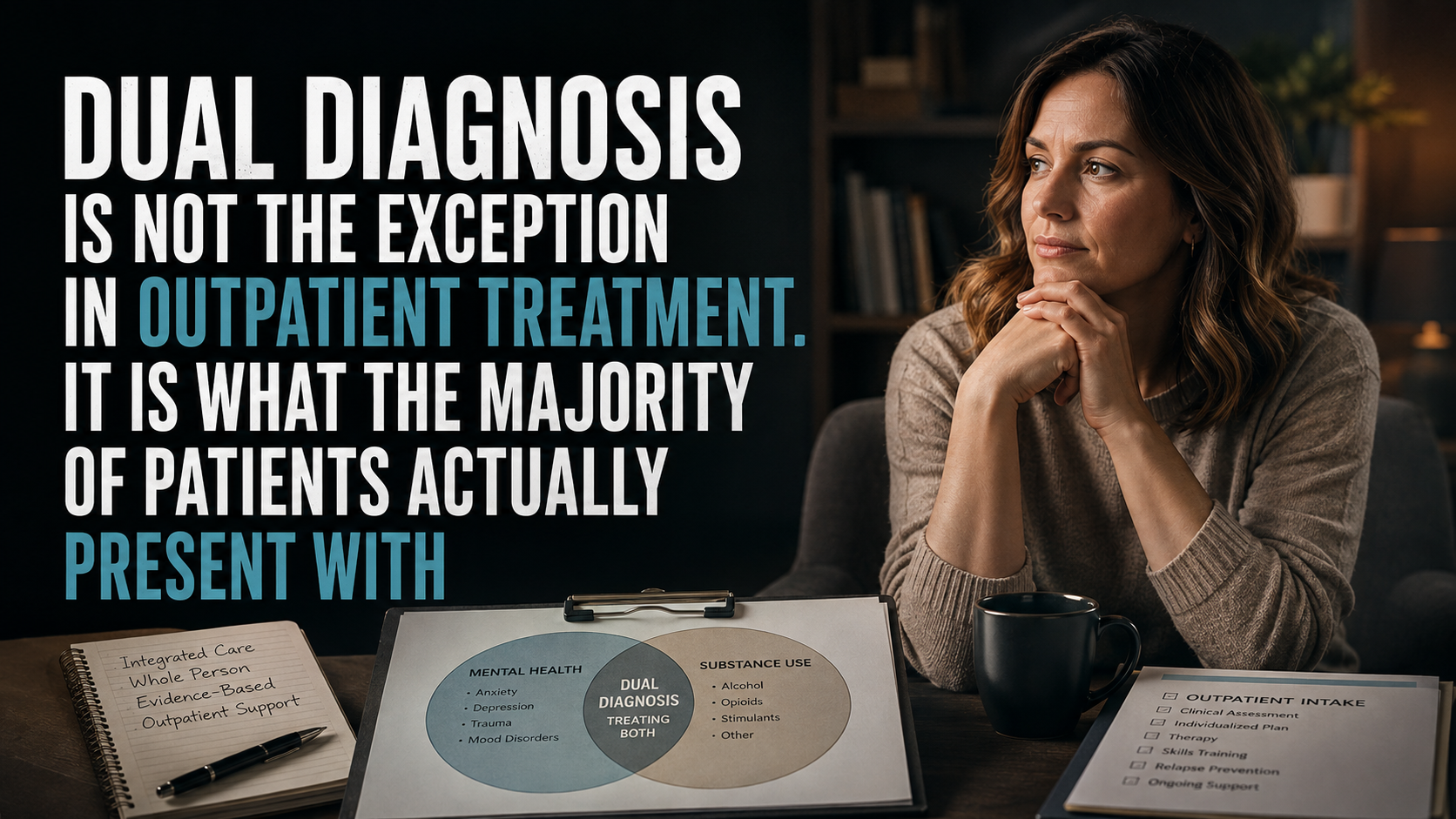
Dual diagnosis outpatient treatment is often described as a special case, but in reality it reflects what most people in recovery are actually living with. If you or someone you love is facing both a mental health condition and substance use, that combination is not unusual. It is common, and it deserves care built around that truth.
You may have felt like an exception before, someone whose situation was too complicated for a standard program. That feeling is understandable, and it is not accurate.
Living with two connected conditions does not make your recovery harder to reach. It simply means the right care needs to treat both, not just one. Understanding why this pattern is the norm can ease a great deal of worry, and help is closer than it may feel right now.
What Does Dual Diagnosis Mean in Outpatient Treatment?
Dual diagnosis in outpatient treatment means a person is living with both a mental health condition and a substance use disorder while receiving care they can attend from home. Instead of staying at a facility, you attend scheduled sessions and return to your own life afterward.
The term “dual diagnosis” simply describes having two connected conditions at once. You may also hear it called co-occurring disorders.
In an outpatient setting, both conditions are treated within one coordinated plan. This might include therapy for anxiety, depression, or trauma alongside support for substance use.
Because it happens outside a residential facility, this care fits around work, school, and family. You get meaningful clinical support while staying connected to the people and routines that matter to you.
Why Is Dual Diagnosis the Norm Rather Than the Exception?
Dual diagnosis is the norm rather than the exception because mental health conditions and substance use so often develop together. Research on addiction and mental health consistently shows that co-occurring conditions are widespread, not rare.
This makes sense when you look at how the two connect. Emotional pain frequently leads people toward substances for relief, and substance use can deepen or trigger mental health struggles over time.
For many people, one condition simply came first and quietly shaped the other. That pattern is far more common than the idea of a single, isolated problem.
What Does the Prevalence Actually Tell Us?
The prevalence tells us that treating substance use alone often misses part of the story. National health research groups have long reported that a large share of people with a substance use disorder also live with a mental health condition, and the reverse is true as well.
This overlap is not a coincidence. It reflects how deeply mood, stress, trauma, and coping are tied to substance use.
When care is designed for this reality, it fits most people better. That is why dual diagnosis outpatient treatment is built to address the whole person, not a single symptom.
How Do Co-Occurring Conditions Interact With Each Other?
Co-occurring conditions interact by feeding each other in a cycle that keeps both in motion. Each one can trigger, mask, or worsen the other, which is why treating just one side rarely brings lasting relief.
This connection is not a personal weakness. It is a well-documented pattern that affects capable, caring people every day.
How Does One Condition Fuel the Other?
One condition fuels the other by creating a loop where relief and distress keep trading places. Anxiety may lead someone to drink for calm, and that drinking may heighten anxiety once it wears off.
Depression can drain motivation and hope, making substances feel like the only source of comfort. Over time, many substances deepen low mood, which strengthens the urge to keep using.
Trauma adds another layer. A nervous system stuck on high alert can make numbing feel necessary, even when it causes harm.
What Does This Cycle Look Like Day to Day?
This cycle looks like a steady back and forth between emotional pain and temporary escape. Recognizing the pattern can help you understand what you or a loved one may be experiencing.
- A difficult emotion or memory rises and feels overwhelming.
- Substances offer brief relief from that discomfort.
- The relief fades, and the emotional pain returns, often stronger.
- Sleep, mood, and focus suffer, which deepens the distress.
- The urge to use grows just to feel steady again.
Seeing yourself in this pattern is not a reason for shame. It is a sign that both conditions deserve care as one connected story.
Why Does Integrated Care Outperform Siloed Treatment?
Integrated care outperforms siloed treatment because it addresses both conditions at the same time, closing the gap where progress usually slips away. When one condition goes untreated, it quietly pulls recovery backward.
Siloed treatment handles one issue while ignoring the other. Someone might complete substance use care while their untreated anxiety sets the stage for relapse.
Integrated care removes that gap. A single team coordinates support for both conditions, so nothing important falls through the cracks.
How Does Coordinated Care Help You Personally?
Coordinated care helps you by treating you as a whole person rather than a set of separate problems. You do not have to repeat your story to different providers who never share notes.
Your care team understands how your conditions influence each other. That shared insight means warning signs get noticed early, before they grow into a setback.
When conditions overlap, integrated dual diagnosis care treats them within one plan. This approach tends to lead to steadier, more lasting results than treating either condition alone.
What Therapies Support Dual Diagnosis Recovery?
The therapies that support dual diagnosis recovery help you understand your patterns and build healthier ways to cope. Several evidence-based approaches often work together.
- Cognitive behavioral therapy helps you notice and reshape the thoughts that fuel both distress and substance use.
- Individual counseling gives you a private space to explore trauma, emotions, and triggers at a safe pace.
- Group therapy connects you with others who understand, easing shame and isolation.
- Family education helps loved ones respond with support and healthy boundaries.
These pieces reinforce one another. Together, they treat your mental health and substance use as connected parts of the same journey.
What Do Flexible Outpatient Options Look Like?
Flexible outpatient options let you receive real clinical support while continuing to work, study, and care for your family. You do not have to step away from your entire life to get help.
Outpatient care offers meaningful structure without a residential stay. You attend scheduled sessions, then return home to practice new skills where you actually live.
The levels of care range from more intensive daytime support to lighter weekly sessions, each matched to a different stage of recovery. Here is a simple overview:
- Partial hospitalization offers structured treatment during the day while you return home in the evenings.
- Intensive outpatient care provides several therapy sessions each week, balancing strong support with flexibility.
- Standard outpatient care involves fewer weekly sessions as you build independence.
Many people move through these levels gradually, stepping down as they gain stability. At Impact Outpatient Program, flexible outpatient and intensive outpatient options help you find the level of support that fits your needs and your schedule.
How Do You Know Dual Diagnosis Care Is Right for You?
You may be ready for dual diagnosis care if a mental health condition and substance use keep affecting each other in ways you cannot untangle alone. You do not need to wait for a crisis to reach out.
Consider connecting with a professional if any of these feel true for you or a loved one:
- You use substances to manage anxiety, sadness, or racing thoughts.
- Your mood shifts seem tied to when you drink or use.
- Previous treatment addressed only one condition and left the other untouched.
- Sleep, focus, or relationships suffer from both mental health and substance use.
- You feel caught in a loop where progress in one area keeps collapsing in another.
- You have felt like an exception whose situation was too complex for a standard program.
If even one of these resonates, that is reason enough to talk with a professional. Reaching out is not a sign of failure. It is a meaningful step toward relief and stability.
Common Questions Before Starting Treatment
Is dual diagnosis really that common? Yes. Living with both a mental health condition and substance use is one of the most common experiences people bring to treatment. Care designed for co-occurring conditions fits the majority of people, not a small exception.
Which condition gets treated first? Both are treated together, not one after the other. Integrated care addresses your mental health and substance use at the same time, because progress in one area supports progress in the other.
Can I get dual diagnosis care without pausing my whole life? Yes. Outpatient and intensive outpatient programs are built for flexibility, so support can fit alongside work, school, and family responsibilities.
Do I need a formal mental health diagnosis before starting? No. A thorough assessment at the start of treatment helps clarify what you are experiencing. You do not need to have everything figured out before reaching out for help.
Take the Next Step Toward Whole-Person Healing
Dual diagnosis outpatient treatment reflects what most people in recovery are actually facing, and recognizing that truth can free you or someone you love from feeling like a complicated exception. When both conditions are treated together, lasting stability becomes far more reachable.
You deserve care that sees the whole picture, honors your dignity, and meets you exactly where you are. Living with two connected conditions is not a weakness. It is simply the reason integrated care exists.
If a mental health condition and substance use have been feeding each other, help is available whenever you are ready. Reach out to Impact Outpatient Program today to learn how our compassionate team can support you or your loved one with clear, personalized care and a path forward built around your needs.