
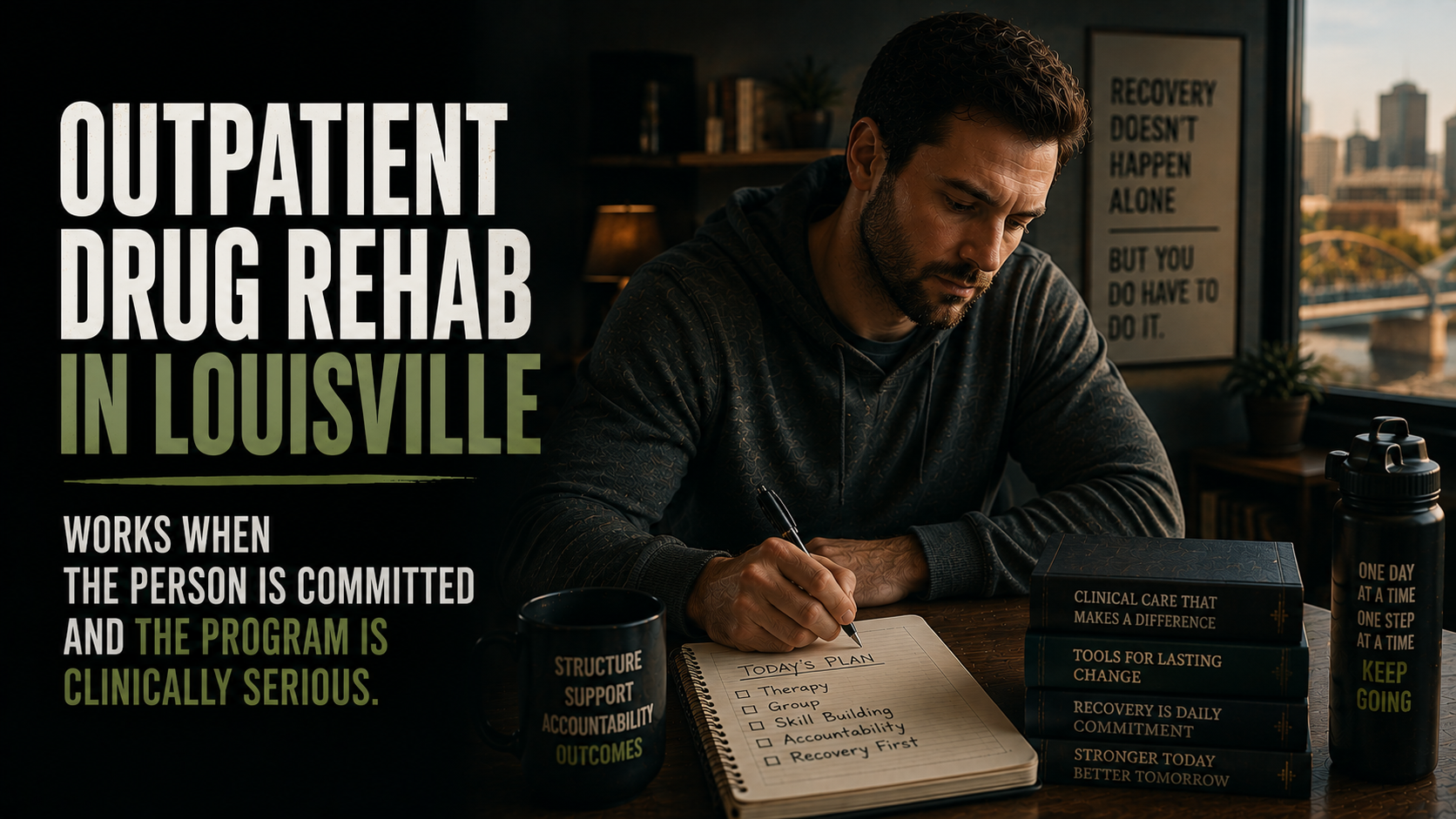
Outpatient drug rehab in Louisville can lead to lasting recovery, but two things have to line up: a person who is ready to show up and a program that takes clinical care seriously. If you or someone you love is weighing this option, that pairing matters more than any single feature of a program.
You may have heard that outpatient care is somehow “less than” residential treatment. That belief leaves out an important truth.
When a committed person meets a serious clinical program, outpatient care can be deeply effective. It offers real structure, real accountability, and real healing while you stay connected to daily life. Understanding what makes that combination work can help you choose with confidence, and support is closer than it may feel right now.
What Does Outpatient Drug Rehab in Louisville Involve?
Outpatient drug rehab in Louisville involves structured treatment you attend on a schedule while continuing to live at home. Instead of staying at a facility, you come in for therapy and support, then return to your own space afterward.
This approach blends professional care with real-world practice. You build recovery skills during sessions, then use them in the setting where you actually live, work, and connect with others.
Care usually includes individual therapy, group sessions, and support for any mental health conditions. The schedule depends on your needs, from a few hours each week to more intensive daily programming.
Because it fits around your life, this care lets you keep working, studying, or caring for your family. That flexibility is one of its greatest strengths.
What Makes an Outpatient Program Clinically Serious?
A clinically serious program follows an evidence-based treatment plan guided by trained professionals, not casual check-ins. This is the difference between a program that simply offers appointments and one that actively moves you toward lasting change.
Serious clinical care rests on proven methods. It uses approaches backed by research, tracks your progress, and adjusts your plan as your needs shift.
What Should You Look For in a Serious Program?
The signs of a clinically serious program show up in its structure, staff, and standards. Knowing what to look for helps you choose with confidence.
- Evidence-based therapies like cognitive behavioral therapy that have strong research behind them.
- Qualified, credentialed staff who bring real training and experience to your care.
- Individualized treatment plans built around your history, goals, and needs.
- Support for co-occurring conditions so mental health and substance use are treated together.
- Clear structure and accountability that keep your recovery moving forward.
- Coordinated levels of care that adjust as you grow stronger.
Each of these signals a program that takes your recovery seriously. Together, they create the foundation that makes outpatient care effective.
Why Does Personal Commitment Matter So Much?
Personal commitment matters because outpatient care asks you to practice recovery in the same environment where triggers still exist. You are not stepping away from daily life. You are learning to stay steady within it.
This is where your effort makes a real difference. A serious program provides the tools, structure, and support, and your commitment turns those into lasting change.
That does not mean doing it alone. Commitment means showing up, being honest, and reaching for support before a hard moment turns into a setback.
What Does Commitment Look Like Day to Day?
Commitment looks like small, consistent actions that add up over time. These daily choices build the foundation of lasting recovery.
- Showing up to scheduled sessions, even on hard days
- Practicing coping skills in real situations, not just discussing them
- Being honest with your care team about cravings and struggles
- Reaching out for support instead of isolating
- Building a daily routine that protects your health
None of these are easy at first. Yet each one strengthens your ability to manage life without substances, which is the heart of recovery.
Who Is Outpatient Drug Rehab in Louisville Right For?
Outpatient drug rehab in Louisville is right for people who have a stable living environment and enough support to practice recovery outside a facility. It works best when your daily surroundings feel safe enough to build on.
This level of care fits many situations, though it is not the right starting point for everyone. Understanding the difference helps you make a confident, informed choice.
You may find outpatient care well suited to your situation if any of these feel true for you or a loved one:
- You have a stable, substance-free place to live.
- You have completed detox or a higher level of care and are ready to step down.
- Your work, school, or family responsibilities make residential treatment difficult.
- You have supportive people around you who encourage your recovery.
- You feel ready to take an active role in your own healing.
Recognizing yourself here is a hopeful sign. It suggests you may be ready for the structure and flexibility that outpatient care offers.
If your home feels unsafe, or if withdrawal poses medical risks, a higher level of care may help first. Choosing the right starting point is a sign of wisdom, not weakness.
How Does Outpatient Rehab Treat Co-Occurring Mental Health Conditions?
Outpatient rehab treats co-occurring mental health conditions by addressing them alongside substance use, as connected parts of one story. This matters because the two so often overlap.
Many people reach for substances to quiet anxiety, depression, or painful memories. That relief is temporary, and many substances deepen those struggles once their effects wear off.
This can create a cycle that feels hard to break. Emotional pain fuels substance use, substance use worsens the pain, and each one makes the other harder to treat alone.
When both are addressed at the same time, recovery becomes far steadier. Untreated emotional pain is one of the most common reasons people return to substances, so treating the whole person protects your progress.
At Impact Outpatient Program®, integrated dual diagnosis care treats mental health and substance use within one coordinated plan. This approach often leads to more lasting results than treating either condition on its own.
What Levels of Outpatient Care Are Available in Louisville?
The levels of outpatient care available in Louisville range from intensive daytime programming to lighter weekly support, each matched to a different stage of recovery. This flexibility lets treatment grow with you.
Understanding these options can make the path forward feel clearer and less overwhelming. Here is a simple overview:
- Partial hospitalization offers structured treatment during the day while you return home in the evenings, providing significant clinical support.
- Intensive outpatient care provides several therapy sessions each week, balancing strong support with the flexibility to work or care for family.
- Standard outpatient care involves fewer weekly sessions, helping you maintain progress as you build independence.
Many people move through these levels gradually, stepping down as they gain confidence and stability. At Impact Outpatient Program, flexible outpatient and intensive outpatient options help you find the level of support that fits your needs and your schedule.
How Do You Know It Is Time to Seek Support?
You may be ready for outpatient drug rehab if you have enough stability at home and feel ready to take an active role in recovery. You do not need to have everything figured out before reaching out.
Consider talking with a professional about outpatient care if any of these feel true for you or a loved one:
- You have a safe, supportive place to live during recovery.
- You have completed detox or another program and want to continue care.
- You need treatment that fits around work, school, or family.
- You feel ready to commit to the work recovery requires.
- You are managing both substance use and a mental health condition.
- Substance use has started to affect your health, relationships, or daily life.
If even one of these resonates, that is reason enough to talk with a professional. Choosing outpatient care is not settling for less. It is stepping into a level of care that trusts your strength and supports your growth.
Common Questions Before Starting Treatment
Is outpatient drug rehab as effective as residential treatment? Outpatient care can be highly effective, especially when your home environment supports your progress and you are committed to the work. Practicing recovery in real life helps build durable skills, and a clinically serious program strengthens your ability to handle challenges over time.
How do I know if a program is clinically serious? Look for evidence-based therapies, credentialed staff, individualized treatment plans, and support for co-occurring conditions. A serious program tracks your progress and adjusts your care as your needs change.
Can I keep working while in outpatient treatment? Yes. Outpatient programs are designed to fit around work, school, and family responsibilities. Many people attend sessions in the morning or evening so they can maintain their daily commitments.
What if I have both substance use and mental health concerns? Integrated treatment can address both at the same time. Treating them together often works better than treating either one alone, because they frequently influence each other.
Take the Next Step Toward Lasting Recovery
Outpatient drug rehab in Louisville works when a committed person meets a clinically serious program, and recognizing that truth can help you or someone you love choose with real confidence. This level of care offers structure, accountability, and healing while you stay connected to the life that matters to you.
You deserve support that respects your strength, honors your commitments, and meets you exactly where you are. Choosing outpatient care is not a sign that your struggle is small. It is a sign that you are ready to move forward.
If you or someone you love is ready to build recovery within daily life, help is available whenever you are ready. Reach out to Impact Outpatient Program today to learn how our compassionate team can support you with clear, personalized care and a path forward built around your needs.