
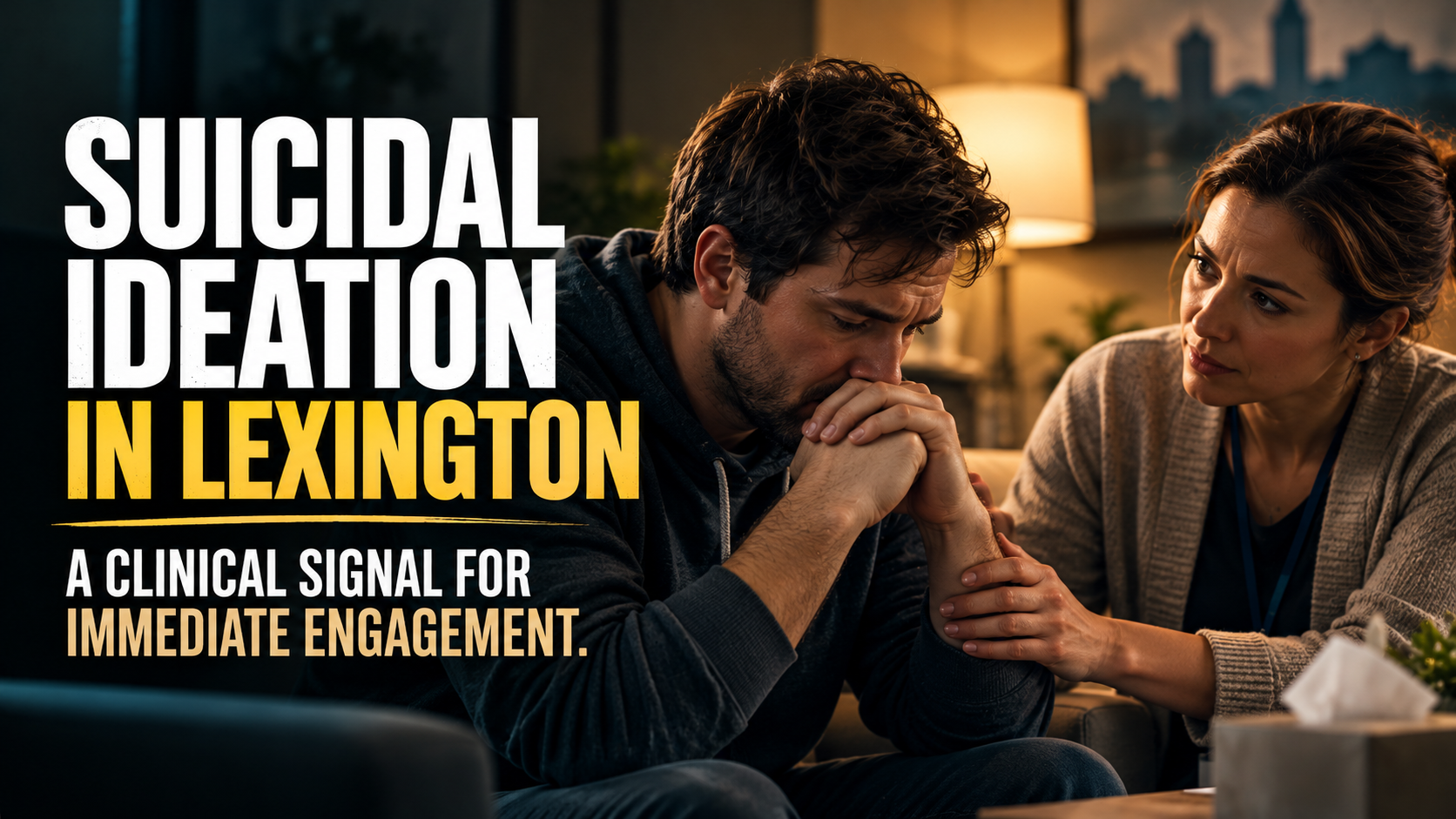
Suicidal ideation in Lexington affects people from every walk of life. When it appears, it calls for real clinical attention right away, not a wait-and-see approach. If you are reading this because you or someone you love has been having thoughts of suicide, thank you for staying here and looking for answers.
If you are in immediate danger or thinking about acting on these thoughts, call or text 988 to reach the 988 Suicide and Crisis Lifeline, or call 911. You can also text HOME to 741741 to reach the Crisis Text Line. Support is available 24 hours a day.
Thoughts of suicide can feel frightening, confusing or shameful. Many people keep them hidden because they fear being judged or worry they are overreacting.
These thoughts do not make you weak or broken. They are a sign of deep pain that deserves care. For people also living with alcohol or drug use, that pain can feel even harder to name. With the right support, it can ease, and help can begin today.
What Is Suicidal Ideation in Lexington and How Does It Show Up?
Suicidal ideation in Lexington refers to thoughts about ending one’s life, ranging from a fleeting wish to not wake up to more specific thinking about suicide. Clinicians often describe these thoughts as passive or active.
- Passive ideation includes wishing you were gone or believing others would be better off without you.
- Active ideation includes thoughts about taking action, along with intent or planning.
Both forms tell us that someone is carrying more pain than they can manage alone. Neither should be brushed aside.
Is Passive Suicidal Ideation Less Serious?
Passive suicidal ideation still deserves prompt attention, because thoughts can shift quickly during stress, withdrawal or substance use. Many people describe passive thoughts as background noise they have lived with for years.
That familiarity can make the thoughts easy to dismiss. A trained clinician can help you understand what they mean and build a plan to keep you safe.
Why Does Suicidal Ideation in Lexington Require Immediate Engagement Instead of Monitored Observation?
Suicidal ideation in Lexington requires immediate engagement because risk can change within hours, and active treatment addresses the pain driving the thoughts while observation only tracks it. Watching is not the same as helping.
Monitored observation often means noting the thoughts, scheduling a follow-up and hoping they pass. Immediate engagement means a clinician responds now with an assessment, a safety plan and support that matches the level of risk.
Why Is Waiting to See Not Enough?
Waiting to see is not enough because suicidal thoughts often grow stronger when the pain behind them goes untreated. Isolation, poor sleep, cravings and hopelessness can build quietly between appointments.
A week can feel very long to someone in that kind of pain. Responding early gives the person support before distress has time to deepen.
What Does Immediate Engagement Look Like?
Immediate engagement looks like prompt contact with a clinician who asks directly about suicidal thoughts and builds a safety plan with you. It is active, collaborative and personal.
It often includes:
- A suicide risk assessment that gently explores your thoughts, history and current stressors.
- A written safety plan listing your warning signs, coping steps, trusted people and crisis contacts.
- Steps to make your home safer, often with help from family.
- A change in level of care when more support is needed.
- A direct connection to emergency services if someone cannot stay safe.
Asking about suicide directly does not put the idea in someone’s head. For many people, being asked brings real relief.
How Does Suicidal Ideation Connect to Addiction and Dual Diagnosis?
Suicidal ideation and substance use are closely linked, and each can make the other harder to manage. Substance use disorders, depression and trauma are all recognized risk factors for suicide.
For many people experiencing suicidal ideation in Lexington, alcohol or drugs began as a way to numb the very pain behind those thoughts. That relief fades, and the pain often returns heavier than before.
Why Do Substances Increase Risk?
Substances increase risk because they can deepen depression, disrupt sleep and lower the inhibitions that normally help a person pause. Alcohol, for example, can intensify low mood as it wears off.
Withdrawal from alcohol, stimulants or sedatives can also bring waves of anxiety, despair and exhaustion. During those moments, suicidal thoughts can feel louder and more convincing.
Why Is Early Recovery a Vulnerable Time?
Early recovery can be vulnerable because emotions that substances once muffled often return all at once. Depression after stopping alcohol and low mood after stimulant use are common and treatable.
Suicidal ideation in Lexington during recovery does not mean treatment is failing. It means clinical support should increase right away, not stay at the same level.
What Warning Signs Should Families and Individuals Watch For?
Warning signs of suicidal ideation in Lexington often show up as changes in words, behavior and mood. Noticing them early can open the door to life-saving support.
Watch for signs like these in yourself or someone you love:
- Talking or writing about death, dying or wanting to disappear
- Saying they feel like a burden or that nothing will ever get better
- Pulling away from friends, family or activities they once enjoyed
- Drinking or using more, or using in riskier ways
- Giving away important belongings or saying goodbye
- Major changes in sleep, appetite or energy
- A sudden sense of calm after a long period of deep depression
If you notice these signs, ask directly and calmly: “Are you thinking about suicide?” Listen without judgment. Then call or text 988 together, or call 911 if danger feels immediate.
What Does Stepped-Up Care for Suicidal Ideation in Lexington Look Like?
Stepped-up care for suicidal ideation in Lexington means matching support to the current level of risk, then adjusting as safety improves. Care should move up quickly when needed and step down gradually as stability returns.
When Is a Higher Level of Care Needed?
A higher level of care is needed when someone cannot stay safe, has a specific plan or is experiencing severe symptoms like psychosis. In these situations, emergency evaluation or inpatient psychiatric care is the safest starting point.
Choosing that support is not a failure. It is a protective step that creates space for stabilization before outpatient work begins.
How Do Outpatient Levels of Care Support Ongoing Safety?
Outpatient levels of care support ongoing safety by providing frequent clinical contact while you live at home. Louisville Addiction Treatment Center offers several options:
- Partial hospitalization program (PHP) provides several hours of structured treatment most days of the week.
- Intensive outpatient program (IOP) offers multiple therapy sessions each week around work, school or family.
- Standard outpatient care includes fewer weekly sessions as coping skills grow stronger.
Many people move between levels as their needs change. A caring team can help you find flexible outpatient programs that match your safety needs and schedule.
Why Does Integrated Dual Diagnosis Care Matter?
Integrated dual diagnosis care matters because it treats suicidal thoughts, mental health conditions and substance use together, within one plan and one team. Treating them separately can leave dangerous gaps between providers.
Through integrated dual diagnosis care, support for suicidal ideation in Lexington may include:
- Cognitive behavioral therapy (CBT) to reshape hopeless thoughts and build coping skills.
- Dialectical behavior therapy (DBT) to manage intense emotions and distress.
- Medication management with a psychiatric provider, always a shared decision.
- Ongoing safety planning that is reviewed and updated regularly.
- Family involvement so loved ones know how to help.
How Do You Know It Is Time to Reach Out?
It is time to reach out the moment suicidal thoughts appear, even if they feel familiar or quiet. You do not need to wait until things feel unbearable.
Consider these signs as you weigh your next step:
- You have had thoughts of not wanting to be alive, even briefly.
- Your thoughts of suicide have become more frequent or more specific.
- You use alcohol or drugs to quiet painful thoughts or feelings.
- You recently stopped using substances and your mood has dropped sharply.
- Your current treatment checks in on these thoughts but has not changed your care.
- Someone close to you has expressed worry about your safety.
If even one of these feels true, talk with a professional today. Seeking help for suicidal ideation in Lexington is an act of courage, not weakness.
What Families Often Ask
Should I ask my loved one directly about suicide? Yes. Asking clearly and calmly shows you care and does not increase risk. Listen without judgment, then help them connect with 988 or a clinician.
Will my loved one have to go to the hospital? Not always. Hospital care is used when someone cannot stay safe, while many people receive effective support through structured outpatient programs.
Can outpatient treatment help with suicidal ideation in Lexington? Yes, when the program offers frequent clinical contact, safety planning and mental health care. A team can step care up quickly if risk rises.
What if my loved one refuses help? Stay connected and keep the conversation open. If you believe they are in immediate danger, call 911 or 988 right away.
Take the Next Step Toward Safety and Hope
Suicidal ideation in Lexington is a clinical signal that deserves immediate engagement, not quiet observation. When suicidal thoughts and substance use are treated together, people can find relief, stability and reasons to keep going.
You are not alone, and your pain matters. Recovery is possible with compassionate, coordinated support.
If you are in crisis, call or text 988 now. When you are ready to explore ongoing care, reach out to Louisville Addiction Treatment Center. Our caring team can talk through your options and help you build a path forward around your needs.