
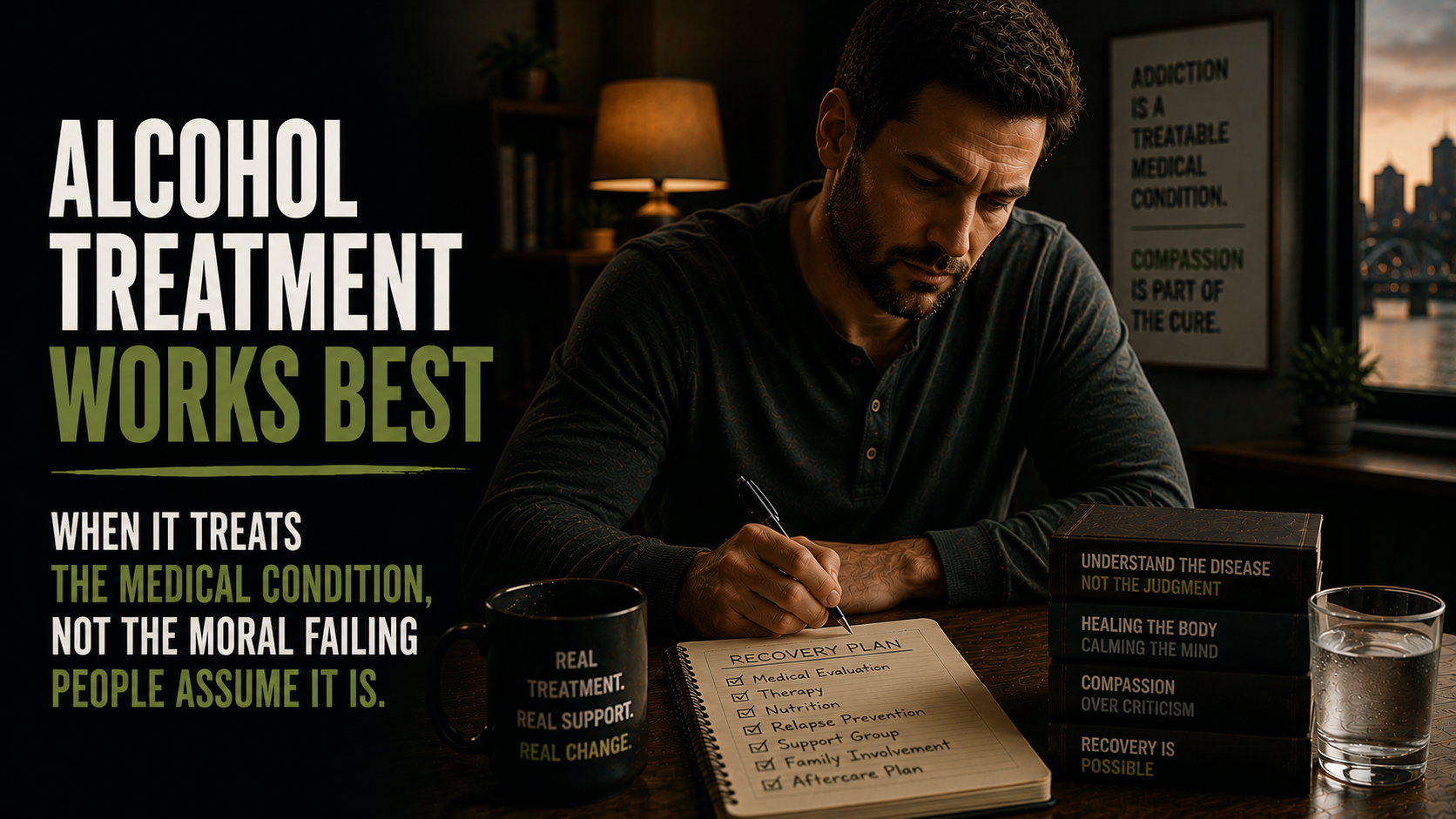
Alcohol treatment works best when it addresses a real medical condition, not a supposed lack of willpower or a flaw in someone’s character. If you or someone you love has struggled with drinking, you may have heard the quiet message that this is a personal failing, something to be ashamed of.
That belief is heavy, and it is also wrong.
You may have tried to stop through sheer determination, only to feel defeated when it did not last. That does not mean you failed. It often means the approach never matched the actual condition.
Alcohol use disorder is a health condition, one that responds to care, support, and understanding. Seeing it this way is not about excusing anything. It is about finally treating the problem in a way that can help. You are not weak, and you are not alone. Understanding what real care looks like can make that first step feel far less frightening, and support is closer than it may seem right now.
Why Is Alcohol Treatment More Effective When It Treats a Medical Condition?
Alcohol treatment is more effective when it treats a medical condition because it targets the real biological and psychological causes, not an imaginary character flaw. When care focuses on health rather than blame, it can actually address what is driving the drinking.
Alcohol use disorder changes how the brain manages reward, stress, and self-control. These are physical changes, which is why willpower alone so often falls short.
Treating the condition means using proven, evidence-based methods. Therapy, medical support, and skill-building work together to help the brain and body heal over time.
What Does “Medical Condition” Actually Mean Here?
A medical condition means alcohol use disorder involves measurable changes in the brain and body, similar to other health conditions that need care. It is recognized by medical professionals as a treatable disorder, not a matter of morality.
Think of it like high blood pressure or diabetes. Those conditions respond to treatment, not to being told to simply try harder.
Alcohol use disorder works the same way. It calls for real care, and it improves when that care is thoughtful, personal, and grounded in health.
Why Do So Many People Still See It as a Moral Failing?
So many people still see it as a moral failing because stigma has shaped how we talk about drinking for generations. Words like “weak,” “selfish,” or “lacking discipline” have long been attached to people who struggle, even though those labels are not accurate.
This framing runs deep. Many of us absorbed it long before we understood what alcohol use disorder really is.
That is not anyone’s fault. It simply means the story we inherited was incomplete.
How Does Stigma Keep People From Seeking Care?
Stigma keeps people from seeking care by making them feel ashamed to ask for help. When you believe your struggle is a character flaw, reaching out can feel like admitting defeat rather than protecting your health.
Shame convinces people to stay silent. They may hide their drinking, downplay concerns, or wait until things feel unbearable before reaching out.
That silence is costly. It delays support that could have helped much sooner, which is why changing the framing matters so much.
Common mistake: Believing you have to “prove” you tried hard enough before you deserve help. What to do instead: Recognize that needing support is not a weakness. It is a sensible response to a health condition.
How Does Brain Chemistry Explain Alcohol Use Disorder?
Brain chemistry explains alcohol use disorder because drinking gradually rewires the systems that manage reward, stress, and impulse control. Over time, the brain adapts to alcohol and begins to rely on it to feel balanced.
At first, alcohol may bring relief or pleasure. With repeated use, the brain adjusts by reducing its own natural feel-good chemicals.
This creates a cycle. A person may need to drink just to feel okay, and stopping can bring real physical and emotional distress.
Why Does Willpower Alone Rarely Work?
Willpower alone rarely works because the changes happen in parts of the brain that conscious effort does not fully control. Cravings and stress responses can override even the strongest intentions.
Someone may genuinely want to stop, yet feel pulled back by signals that feel as urgent as hunger. This is not a lack of character.
Effective alcohol treatment supports the brain directly. It combines therapy, coping skills, and, when appropriate, medical care to help the whole person heal.
Who Benefits From Alcohol Treatment That Treats the Whole Person?
Anyone struggling with drinking benefits from alcohol treatment that treats the whole person, regardless of how the drinking began or how severe it feels. You do not need to reach a crisis to deserve care.
Alcohol use disorder affects people of every age, background, and profession. Many appear successful on the outside while quietly relying on alcohol to cope.
You may recognize the value of whole-person care if any of these feel familiar for you or a loved one:
- Drinking affects your sleep, mood, work, or relationships on a regular basis.
- You have tried to cut back through willpower but found it harder than expected.
- You feel shaky, anxious, or unwell when you go without alcohol.
- You use alcohol to manage stress, sadness, or worry.
- Shame has kept you from reaching out for help.
Recognizing yourself here is not a reason for shame. It is a sign that compassionate, medical care could help you find steadier ground.
How Does Integrated Care Treat Alcohol Use and Mental Health Together?
Integrated care treats alcohol use and mental health together by addressing them as connected parts of one story rather than separate problems. This matters because the two so often overlap.
Many people drink to quiet anxiety, depression, or painful memories. That relief is temporary, and alcohol tends to deepen those struggles once it wears off.
This can create a cycle that feels hard to break. Emotional pain fuels drinking, drinking worsens the pain, and each one makes the other harder to treat alone.
When both are addressed at the same time, recovery becomes far steadier. Integrated dual diagnosis care treats the drinking and the emotional pain beneath it within one coordinated plan, which often leads to more lasting results than treating either one alone.
At Impact Outpatient Program®, care is designed to meet you where you are. Flexible outpatient and intensive outpatient options let you receive meaningful support while staying connected to work, school, and family.
What Do Flexible Treatment Options Look Like?
Flexible treatment options range from more intensive daytime support to lighter weekly sessions, each matched to a different stage of recovery. This flexibility lets care grow with you.
You do not have to step away from your entire life to get help. Outpatient care offers real clinical structure while you continue living at home.
Here is a simple overview of common levels of care:
- Partial hospitalization offers structured treatment during the day while you return home in the evenings.
- Intensive outpatient care provides several therapy sessions each week, balancing strong support with the flexibility to keep up with daily life.
- Standard outpatient care involves fewer weekly sessions, helping you maintain progress as you build independence.
Many people move through these levels gradually, stepping down as they gain stability. Your care team helps you find the level that fits your needs and your schedule.
How Do You Know It Is Time to Seek Support?
You may be ready to seek support if drinking has started to shape your days more than you would like. You do not need to hit a low point or lose everything to take your experience seriously.
Consider reaching out if any of these feel true for you or a loved one:
- Drinking interferes with your health, mood, work, or relationships on a regular basis.
- You have tried to cut back but found it harder than you expected.
- You feel uneasy, shaky, or anxious when you go without alcohol.
- You have been using alcohol to cope with stress, sadness, or worry.
- Shame has kept you from asking for the help you deserve.
- People close to you have gently expressed concern.
If even one of these resonates, that is reason enough to talk with a professional. Reaching out is not a sign of failure. It is a caring step toward feeling more like yourself again.
Common Questions Before Starting Treatment
Is alcohol use disorder really a medical condition and not a lack of willpower? Yes. Alcohol use disorder involves real changes in brain chemistry that affect cravings, stress, and self-control. It is a recognized medical condition that responds to treatment, not a character flaw.
Do I have to hit rock bottom before getting help? No. You can seek support at any stage, and earlier help often makes recovery smoother. Waiting for a crisis is not necessary and can make the road harder.
Will I have to stop drinking completely? Treatment goals are personal and made with professional guidance. For many people, stopping entirely offers the steadiest path, and your care team will help you set goals that fit your health and situation.
What if I have both drinking and mental health concerns? Integrated treatment can address both at the same time. Treating them together often works better than treating either one alone, because they frequently influence each other.
Take the Next Step Toward Recovery
Alcohol treatment works best when it treats a real medical condition, not the moral failing so many people wrongly assume it to be. Letting go of that shame can free you or someone you love to finally get the kind of care that actually helps.
You deserve support that honors your dignity, treats you as a whole person, and meets you exactly where you are. Struggling with alcohol is not a weakness, and asking for help is a sign of real strength.
If drinking has quietly shaped your days, help is available whenever you are ready. Reach out to Impact Outpatient Program today to learn how our compassionate team can support you or your loved one with clear, personalized care and a path forward built around your needs.