
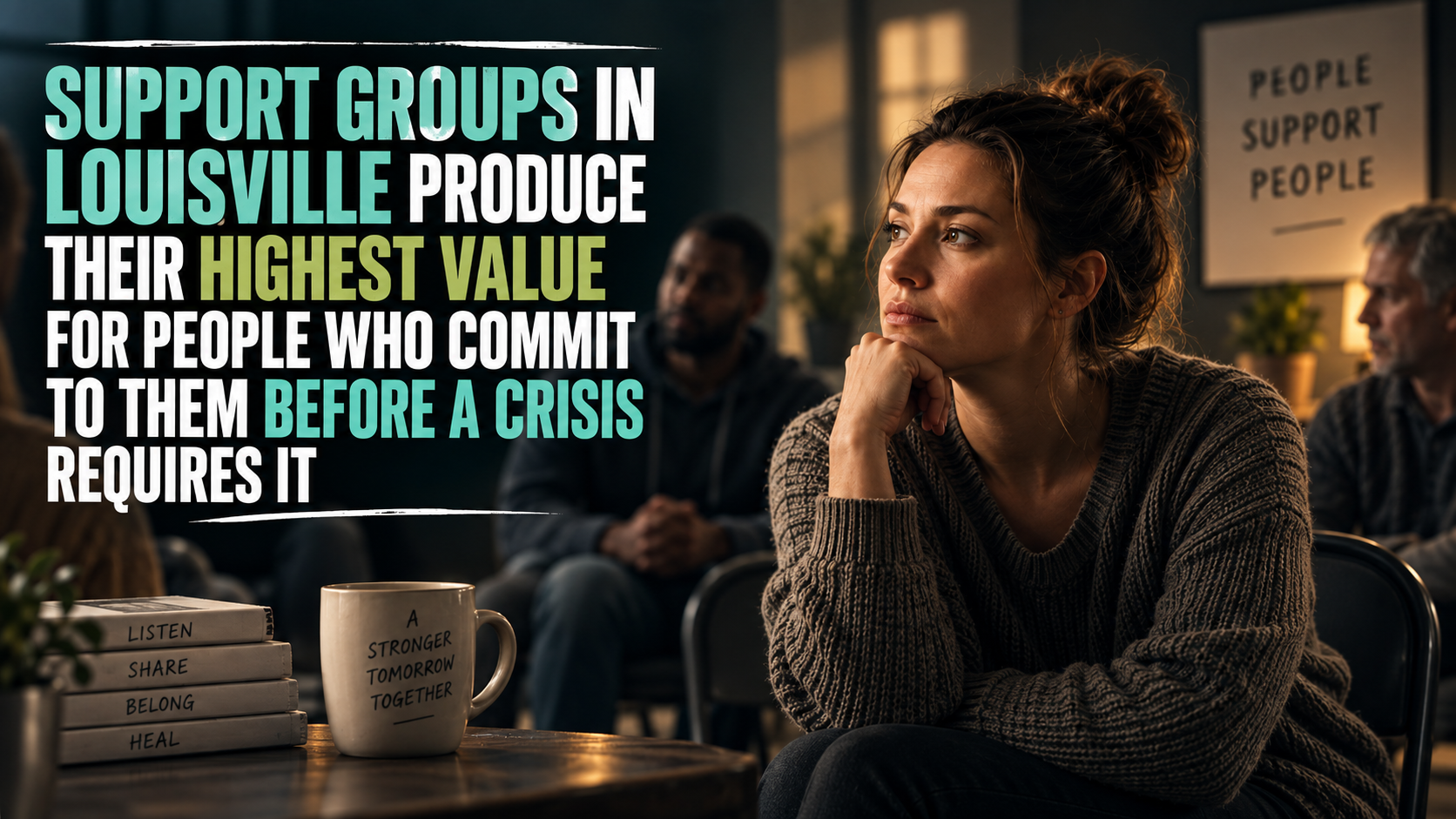
Support groups in Louisville offer the most protection when you make them a steady part of your week, not a lifeline you reach for only when everything feels like it is falling apart. If you or someone you love is in recovery, you may already know how easy it is to skip a meeting during a good stretch.
That instinct is understandable. When life feels calm, showing up can seem optional, even unnecessary.
But recovery rarely moves in a straight line, and the strength you build during steady weeks is what carries you through the hard ones. When attendance becomes a habit, you are not starting from zero each time a challenge arrives. You are already connected, already supported, and already practiced at leaning on people who understand. Help is closer than it may feel, and consistency is one of the simplest ways to protect your progress.
What Are Support Groups in Louisville and How Do They Work?
Support groups in Louisville are regular gatherings where people facing similar challenges share experiences, encouragement, and practical coping strategies in a safe, welcoming setting. They can focus on addiction recovery, mental health, grief, or any shared struggle where connection helps healing.
Most groups follow a simple rhythm. People meet at a set time, listen without judgment, and speak openly about what they are going through.
Some are peer-led, guided by members who have walked a similar path. Others are led by a trained professional who helps keep the conversation safe and focused.
What makes them powerful is not advice from experts. It is the relief of being understood by people who truly get it, without having to explain every detail of your story.
Why Does Committing Before a Crisis Matter So Much?
Committing before a crisis matters because the real value of support groups in Louisville comes from relationships and trust that build over time. You cannot rush connection, and you cannot fully lean on people you barely know.
When you show up only during a crisis, you arrive as a near stranger. You spend the meeting catching people up instead of drawing on a bond that is already there.
Regular attendance changes that. The group learns your patterns, your triggers, and your progress, so they can notice when something feels off before you even say a word.
How Do Habits Protect You During Hard Weeks?
Habits protect you during hard weeks because the support is already in place before the struggle hits. A routine you have practiced for months does not disappear the moment stress arrives.
Think of it like keeping water in the well before a drought. When a difficult week comes, you are not scrambling to build a support system from scratch.
You already have people to call, a meeting to attend, and coping tools you have practiced. That readiness can be the difference between a hard week and a full setback.
Why Does Skipping During Good Weeks Backfire?
Skipping during good weeks backfires because it teaches your mind that the group is only for emergencies. Over time, attendance starts to feel like an admission that things are bad.
That association can make it harder to return when you actually need help. Shame creeps in, and reaching out feels like proof of failure rather than an act of strength.
Regular attendance removes that pressure. When showing up is simply part of your week, there is no shame in walking through the door.
Who Benefits From Making Support Groups in Louisville a Habit?
Anyone navigating addiction recovery, a mental health condition, grief, or major life change can benefit from making support groups in Louisville a consistent part of their routine. You do not need to be in crisis to belong there.
Many people assume these groups are only for those who are struggling badly. In reality, the members who benefit most often attend during both hard and steady seasons.
You may recognize the value of consistent attendance if any of these feel familiar:
- You are early in recovery and still building a foundation of coping skills.
- You have experienced a setback before after pulling away from your support system.
- You feel isolated and want connection with people who understand your journey.
- You do well with structure and routine in other parts of your life.
- You tend to withdraw when stress builds rather than reaching out.
Seeing yourself in one of these does not mean anything is wrong with you. It means a steady source of support could help you stay grounded.
How Do Support Groups Work Alongside Professional Treatment?
Support groups work alongside professional treatment by adding peer connection and shared experience to the individualized care a clinical team provides. The two work best together, each filling a gap the other cannot.
Therapy offers private, focused attention on your specific history, patterns, and goals. A trained professional helps you understand yourself and build personalized coping strategies.
Groups offer something different. They surround you with people who have lived what you are living, which can ease the loneliness that treatment alone cannot always reach.
What Does Professional Care Add That Groups Cannot?
Professional care adds personalized, confidential support guided by a trained team that tailors treatment to your unique needs. This includes deeper work on trauma, diagnosis, and individual planning.
A clinical team can adjust your care as your situation changes. They also help you process painful experiences at a pace that feels safe.
For many people, groups work best as part of a larger plan. When they are woven together with therapy and, when helpful, integrated care for co-occurring conditions, the whole system becomes steadier and more supportive.
How Do Flexible Outpatient Options Fit In?
Flexible outpatient options fit in by letting you combine group support with structured clinical care while you continue living your daily life. You do not have to step away from work, school, or family to get meaningful help.
Care can range from more intensive daytime programming to lighter weekly sessions, each matched to a different stage of recovery. Support groups can complement any of these levels.
A caring team can help you find flexible outpatient support that pairs well with the community you build in a group. Together, they create a foundation that feels far more secure than either one alone.
What Is the Link Between Support Groups and Lasting Recovery?
The link between support groups and lasting recovery is strong, because consistent connection helps reduce isolation, shame, and the risk of returning to substance use. Recovery thrives on community, and groups offer that community on a regular schedule.
Isolation is one of the biggest threats to lasting recovery. When you withdraw, difficult thoughts grow louder, and old habits can feel more tempting.
Regular group attendance interrupts that pattern. It keeps you connected to people who hold you accountable with compassion rather than criticism.
Groups also help you spot warning signs early. When members know your baseline, they can gently point out changes you might miss in yourself.
How Do You Know It Is Time to Commit to a Support Group?
You may be ready to commit to a support group if you have been attending only during hard weeks or relying on willpower alone to stay steady. You do not need to wait for a setback to make consistency a priority.
Consider committing to regular attendance if any of these feel true for you or a loved one:
- You notice yourself skipping meetings whenever life feels calm or busy.
- You have drifted away from your support system and felt your progress slip.
- You want stronger connections with people who understand your recovery.
- You tend to isolate when stress builds instead of reaching out for help.
- You are rebuilding after a setback and want a steadier foundation this time.
If even one of these resonates, that is reason enough to make a group part of your weekly routine. Choosing consistency is not a sign of weakness. It is a practical, proven way to protect the progress you have worked hard to build.
Common Questions Before Joining a Support Group
How often should I attend a support group? Aim for a regular, repeating schedule rather than attending only when things feel hard. Many people find that weekly attendance helps build the relationships and trust that make a group truly supportive.
Do I have to share every time I attend? No. You are welcome to listen quietly for as long as you need. Simply showing up and being present in the room is a meaningful step, and many people find their voice over time.
Can a support group replace professional treatment? No, but it complements treatment well. Groups offer peer connection and shared experience, while clinical care provides personalized, professional support. Most people benefit from having both.
What if I feel nervous walking into my first meeting? That nervousness is completely normal, and most members felt the same way at first. Groups are built to be welcoming and nonjudgmental, and you can move at your own pace as you settle in.
Take the Next Step Toward Steady Support
Support groups in Louisville produce their highest value when they become a familiar, dependable part of your week rather than a last resort during your hardest moments. What feels optional in calm seasons is often exactly what carries you through the storms.
You deserve a recovery built on connection, consistency, and people who understand your journey. Choosing to show up regularly is not a sign that you are struggling. It is a sign that you are protecting your progress with intention and care.
If you have been leaning on support only during hard weeks, help is available whenever you are ready to build something steadier. Reach out to Impact IOP today to learn how our compassionate team can connect you or your loved one with consistent, personalized support and a path forward built around your needs.