
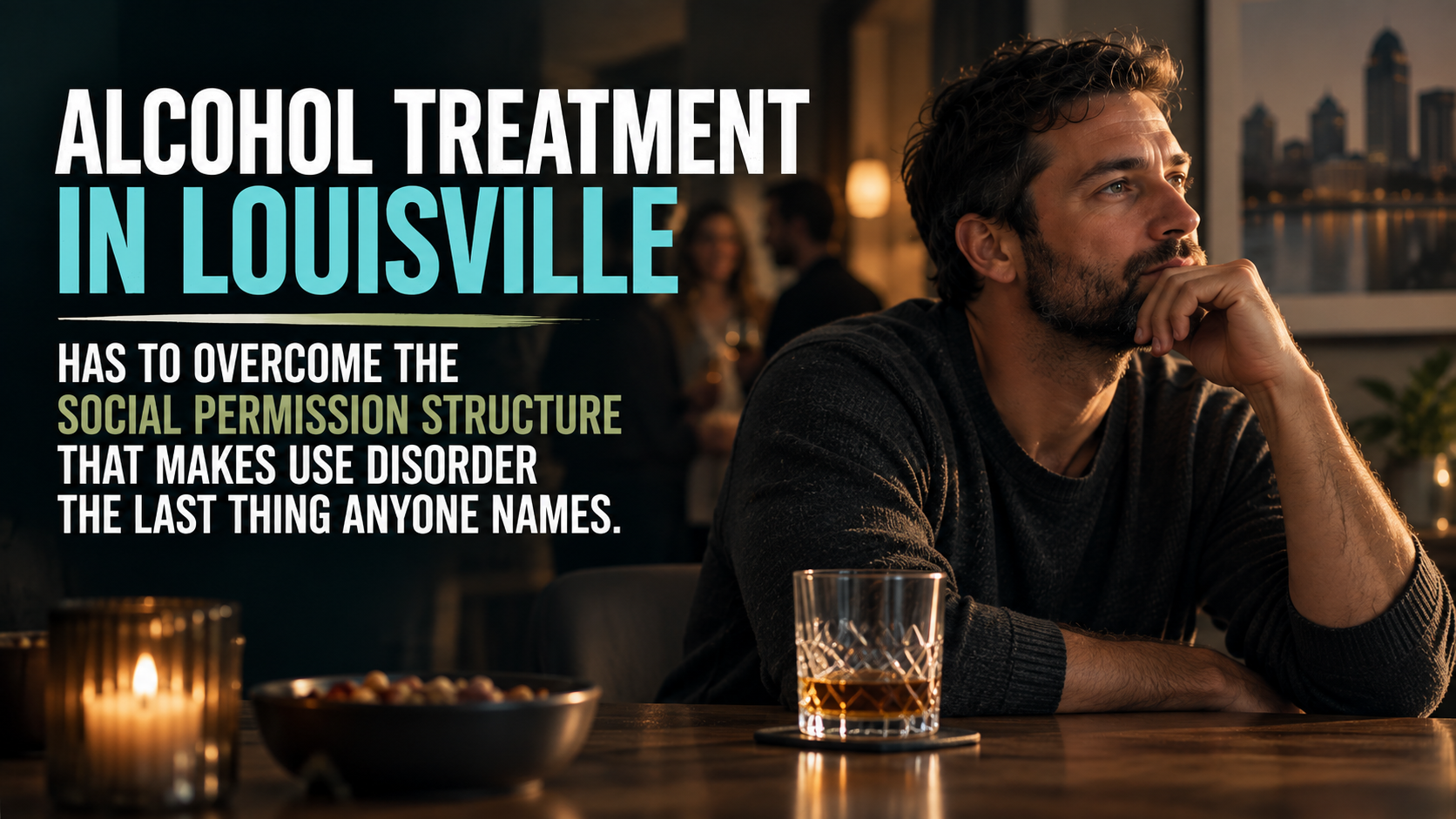
Alcohol treatment in Louisville often begins years later than it should, because drinking is so socially accepted that naming it as a problem feels almost impossible. If you or someone you love has quietly wondered whether the drinking has crossed a line, that question is worth taking seriously.
Alcohol is woven into celebrations, stress relief, and ordinary weeknights. When a substance is everywhere and everyone seems to use it, spotting the moment it turned harmful becomes genuinely hard.
That is not a personal failing. It is the result of a culture that gives alcohol permission the way it gives few other things permission. Understanding how that works can lift a heavy weight of shame and confusion, and it can help you see your own experience more clearly. Help is available, and reaching out is a sign of strength, not weakness.
Why Do Social Norms Delay Recognition of Alcohol Use Disorder?
Social norms delay recognition of alcohol use disorder because drinking is treated as normal, expected, and even encouraged in most settings. When something is that common, harmful use can hide in plain sight for years.
Think about how often alcohol shows up. Work happy hours, family dinners, sporting events, and quiet nights at home all come with a built-in invitation to drink.
That constant presence blurs the line between casual use and a real problem. What looks like everyone else’s habit can quietly become something much heavier for one person.
How Does “Everyone Drinks” Hide a Real Problem?
The belief that “everyone drinks” hides a real problem by giving harmful use a place to blend in. When your drinking looks similar to the people around you, it rarely raises alarm.
You might compare yourself to friends who drink just as much, and feel reassured. That comparison can mask the fact that alcohol has started affecting your sleep, mood, relationships, or health.
The truth is that impact matters more than comparison. If drinking is causing harm in your life, it deserves attention regardless of what anyone else is doing.
Why Is Alcohol the Last Thing Anyone Names as the Problem?
Alcohol is the last thing anyone names as the problem because its use is so accepted that people look everywhere else first. Stress, sleep, mood, or a rough season usually get blamed long before the drinking does.
Someone might see a doctor for anxiety or exhaustion and never mention how much they drink. The alcohol feels normal, so it does not seem worth raising.
This delay is not denial in the harsh sense people often imagine. It is a natural response to a culture that treats drinking as harmless and rarely questions it.
What Excuses Does the Culture Make Available?
The culture makes many gentle excuses available, and each one lets drinking stay off the table as a concern. Recognizing them can help you see past them.
- “I only drink socially, so it cannot be a problem.”
- “I just need it to unwind after a hard day.”
- “Everyone drinks this much, it is completely normal.”
- “I never drink in the morning, so I am fine.”
- “I can stop whenever I want, I just choose not to.”
None of these thoughts make someone weak or dishonest. They are simply the ready-made explanations a permissive culture hands to everyone.
How Do Stigma and Permission Structures Keep People From Seeking Help?
Stigma and permission structures keep people from seeking help by sending two conflicting messages at once. Drinking is celebrated, yet struggling with it is quietly judged.
This creates a painful bind. The same culture that pours the drinks also whispers that needing help means something is deeply wrong with you.
Under that pressure, many people stay silent. Admitting a problem can feel like confessing a personal weakness rather than describing a treatable health condition.
Why Does Shame Make Reaching Out So Hard?
Shame makes reaching out hard because it turns a health concern into a source of embarrassment. When you believe your struggle reflects a flaw in your character, asking for help feels like admitting failure.
That shame often leads people to hide their drinking, downplay concerns, or wait until things feel unbearable. The silence delays support that could have helped much sooner.
Seeing alcohol use disorder as a medical condition changes everything. It responds to care, not willpower alone, and needing help is a sensible response, not a shortcoming.
What Does Alcohol Use Disorder Actually Look Like?
Alcohol use disorder looks like a pattern where drinking continues even as it causes harm to health, relationships, or daily life. It exists on a spectrum, from mild to severe, and it can affect anyone.
You may notice some of these signs in yourself or a loved one:
- You drink more, or longer, than you intended to.
- You have tried to cut back but found it harder than expected.
- You feel anxious, shaky, or unwell when you go without alcohol.
- You use alcohol to manage stress, sadness, or worry.
- Drinking has started to affect your sleep, work, or relationships.
Noticing a few of these does not mean anything is wrong with who you are. It means your body and mind may be asking for support that is genuinely available.
What Does Integrated Alcohol Treatment in Louisville Look Like?
Integrated alcohol treatment in Louisville looks like care that treats both the drinking and the emotional struggles beneath it, within one coordinated plan. This matters because alcohol use and mental health so often overlap.
Many people drink to quiet anxiety, depression, or painful memories. That relief is temporary, and alcohol tends to deepen those struggles once it wears off.
This can create a cycle that feels hard to break. Emotional pain fuels drinking, drinking worsens the pain, and each one makes the other harder to treat alone.
When both are addressed together, recovery becomes far steadier. This kind of integrated dual diagnosis care treats the drinking and the emotional pain as connected parts of one story, which often leads to more lasting results.
What Therapies Support Recovery?
The therapies that support recovery help you understand your patterns and build healthier ways to cope. Several evidence-based approaches often work together.
- Cognitive behavioral therapy helps you notice and reshape the thoughts that fuel drinking and stress.
- Individual counseling gives you a private space to explore triggers and emotions at a safe pace.
- Group therapy connects you with others who understand, easing shame and isolation.
- Family education helps loved ones respond with support and healthy boundaries.
These pieces reinforce one another. Together, they treat the whole person rather than a single behavior.
What Flexible Outpatient Options Are Available?
Flexible outpatient options let you receive real clinical support while continuing to work, study, and care for your family. You do not have to step away from your entire life to get help.
Outpatient care offers meaningful structure without a residential stay. You attend scheduled sessions, then practice new skills in the environment where you actually live.
The levels of care range from more intensive daytime support to lighter weekly sessions, each matched to a different stage of recovery:
- Partial hospitalization offers structured treatment during the day while you return home in the evenings.
- Intensive outpatient care provides several therapy sessions each week, balancing strong support with flexibility.
- Standard outpatient care involves fewer weekly sessions as you build independence.
Many people move through these levels gradually, stepping down as they gain stability. A caring team can help you find flexible outpatient support that fits your needs and your schedule.
How Do You Know It Is Time to Seek Support?
You may be ready to seek support if drinking has started to shape your days more than you would like. You do not need to hit a low point or lose everything to take your experience seriously.
Consider reaching out if any of these feel true for you or a loved one:
- Drinking interferes with your health, mood, work, or relationships on a regular basis.
- You have tried to cut back but found it harder than you expected.
- You feel uneasy, shaky, or anxious when you go without alcohol.
- You have been using alcohol to cope with stress, sadness, or worry.
- Shame or the sense that “everyone drinks” has kept you from asking for help.
- People close to you have gently expressed concern.
If even one of these resonates, that is reason enough to talk with a professional. Reaching out is not an overreaction. It is a caring step toward feeling more like yourself again.
Common Questions Before Starting Treatment
Can I have a drinking problem if I only drink socially? Yes. Alcohol use disorder is about the impact drinking has on your life, not the setting or comparison to others. If drinking is causing harm, it is worth addressing regardless of how social it feels.
Do I have to hit rock bottom before getting help? No. You can seek support at any stage, and earlier help often makes recovery smoother. Waiting for a crisis is not necessary and can make the road harder.
Is alcohol use disorder really a medical condition? Yes. It involves real changes in brain chemistry that affect cravings, stress, and self-control. It is a recognized medical condition that responds to treatment, not a character flaw.
What if I have both drinking and mental health concerns? Integrated treatment can address both at the same time. Treating them together often works better than treating either one alone, because they frequently influence each other.
Take the Next Step Toward Recovery
Alcohol treatment in Louisville has to overcome the social permission structure that makes use disorder the last thing anyone names, and simply understanding that truth can free you or someone you love from years of quiet doubt. What has felt normal or unspeakable may be a treatable condition that deserves real care.
You deserve support that honors your dignity, treats you as a whole person, and meets you exactly where you are. Struggling with alcohol is not a weakness, and asking for help is a sign of real courage.
If drinking has quietly shaped your days, help is available whenever you are ready. Reach out to Impact IOP today to learn how our compassionate team can support you or your loved one with clear, personalized care and a path forward built around your needs.