
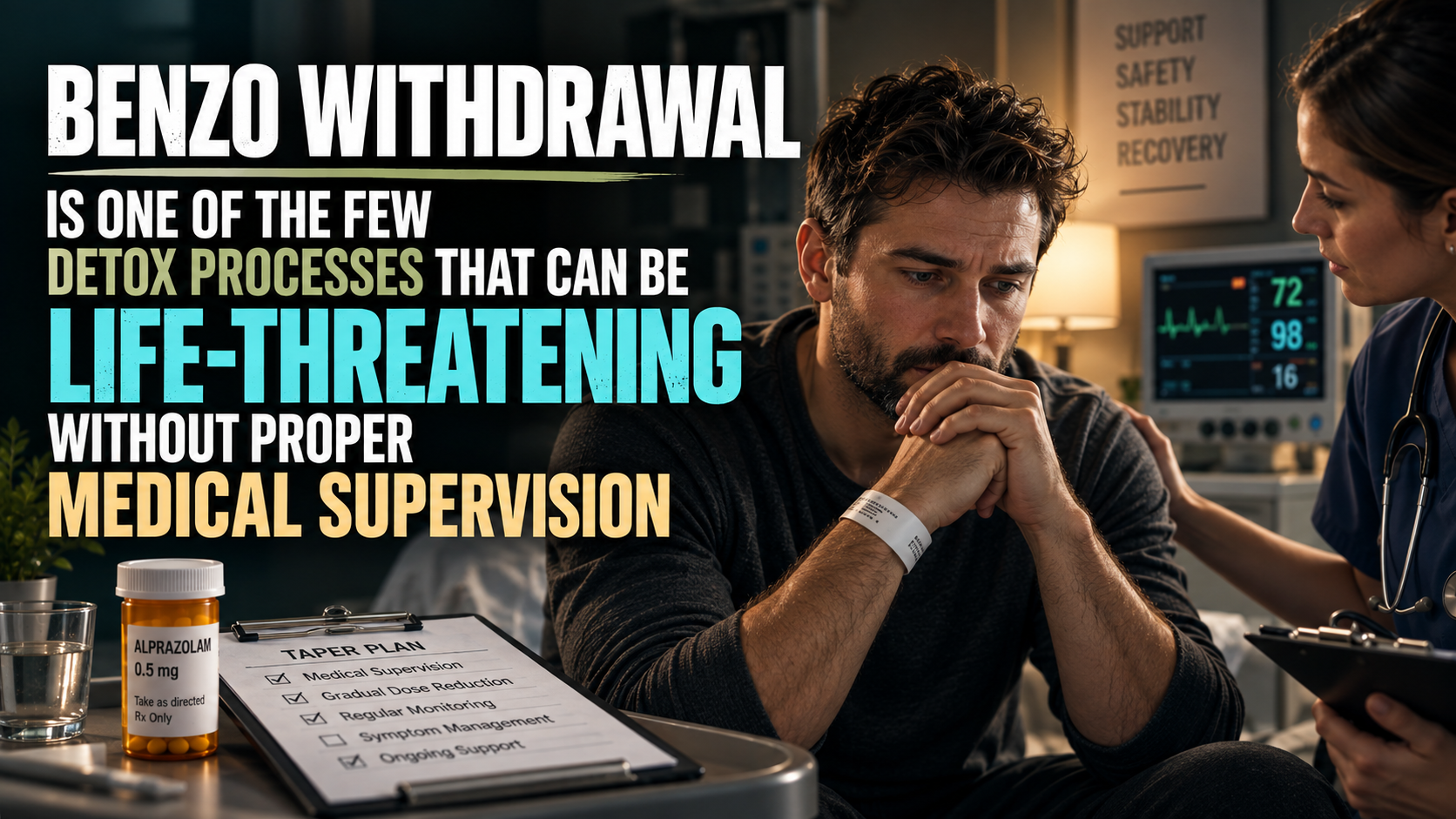
Benzo withdrawal is one of the few detox processes that can turn genuinely dangerous, even life-threatening, without proper medical supervision. If you or someone you love has come to rely on a benzodiazepine and feels afraid of stopping, that fear is valid, and it deserves a compassionate, medically guided response.
You may have started the medication for a real reason, like anxiety, panic, or trouble sleeping. It helped, it came from a trusted provider, and stopping never seemed like it would be a problem.
Over time, though, something shifted. Missing a dose brought discomfort, and the thought of quitting began to feel frightening. That fear is not a weakness or a sign of failure. It reflects how deeply these medications affect the brain and body. Understanding why this process carries real risk, and how safe recovery works, can replace confusion with clarity. Help is available, and you do not have to face this alone.
What Is Benzo Withdrawal and Why Is It So Dangerous?
Benzo withdrawal is the set of physical and emotional symptoms that occur when a person who is dependent on a benzodiazepine reduces or stops the medication. It is medically serious because sudden withdrawal can overwhelm the nervous system and, in some cases, cause seizures.
Benzodiazepines calm the brain by slowing overactive nervous system activity. Medications in this class include Xanax, Klonopin, Ativan, and Valium.
When the brain adapts to that calming effect, removing it too quickly leaves the nervous system in overdrive. The result can range from intense anxiety to dangerous physical reactions.
Why Does Seizure Risk Make This Different?
Seizure risk sets benzo withdrawal apart from most other detox processes, because few substances carry this level of physical danger when stopped suddenly. Alcohol and benzodiazepines are among the small group where withdrawal itself can threaten a person’s life.
When the brain loses the medication it has adapted to, its activity can surge without warning. That surge can trigger seizures, which is why medical supervision matters so much.
This is not meant to frighten you. It is meant to explain why stopping on your own is never recommended, and why the right support keeps you safe.
How Does Dependence Form From a Legitimate Prescription?
Dependence forms when the brain and body adapt to a benzodiazepine over time and come to rely on it to feel steady. This can happen even when a person takes the medication exactly as prescribed, which is part of what makes it so easy to overlook.
Doctors prescribe these medications for genuine reasons, including anxiety, panic disorders, and sleep. When taken regularly, the brain adjusts to their presence.
As that adjustment happens, a person may need more of the medication to feel the same relief. That change, known as tolerance, is often the quiet beginning of dependence.
Why Is the Slow Onset So Easy to Miss?
The slow onset is easy to miss because the changes happen gradually enough to blend into daily life. Unease or restlessness when a dose is late can feel like anxiety returning rather than a sign of physical dependence.
You might interpret a rough night’s sleep or a tense afternoon as ordinary stress. In reality, your body may be signaling its reliance on the medication.
Because the shift is so gentle, many people do not recognize it until they try to stop. That moment of difficulty is often the first real clue that dependence has formed.
Why Is Stopping Benzos Without Medical Supervision So Risky?
Stopping benzos suddenly without medical guidance is risky because the nervous system can react intensely when the calming effect disappears all at once. What feels like determination can put your health in real danger.
When the brain has adapted to a benzodiazepine, it needs time to readjust. Removing the medication too quickly does not allow for that gradual recovery.
This is why quitting cold turkey is never advised. The safest path always involves professional support and a carefully planned approach.
What Withdrawal Symptoms Can Occur?
Withdrawal symptoms can range from uncomfortable to severe, and recognizing them helps explain why professional care is so important. Some symptoms are distressing, while others signal a genuine medical emergency.
During unsupported withdrawal, a person may experience:
- Heightened anxiety, panic, or a sense of dread
- Insomnia and restlessness that sleep does not relieve
- Muscle tension, tremors, or shaking
- Nausea, sweating, or a racing heart
- Sensitivity to light and sound
- In serious cases, seizures
These symptoms are not a reflection of willpower. They are physical responses to a real medical situation, and a care team can help manage them safely.
What Does Medically Supervised Benzo Withdrawal Involve?
Medically supervised benzo withdrawal involves gradually reducing the medication under professional care, so the brain has time to adjust safely. This approach, often called a taper, lowers the risk of dangerous symptoms.
Think of it like easing down a steep hill instead of jumping from the top. A steady, controlled descent protects you every step of the way.
Care usually begins with a thorough assessment. A provider reviews your history, dose, and overall health so the plan fits you rather than a generic schedule.
How Does a Taper Keep You Safe?
A taper keeps you safe by reducing the dose in small, planned steps that your body can handle. Each reduction is monitored, and the pace can slow if symptoms become difficult.
Your care team watches how you respond and adjusts as needed. This flexibility means you are never pushed to move faster than your body can manage.
The goal is stability, not speed. A well-managed taper protects your comfort while helping you move steadily toward freedom from dependence.
What Should a Well-Equipped Program Offer?
A well-equipped program offers medical oversight, individualized planning, and support for both body and mind. Knowing what to look for helps you make a confident, informed choice.
- Medical supervision from providers experienced with benzodiazepine tapering
- Individualized taper schedules that adjust to how you respond
- Regular monitoring to catch and ease difficult symptoms early
- Mental health support for the anxiety or other conditions beneath the dependence
- Coordinated levels of care that can step up or down as your needs change
Each of these signals a program that takes your safety seriously. Together, they create a foundation that makes recovery both safe and sustainable.
Who Is Most at Risk During Benzo Withdrawal?
The people most at risk during benzo withdrawal are those who have used the medication for a long time, at higher doses, or in combination with other substances. Anyone dependent on a benzodiazepine deserves professional guidance before stopping.
You do not need to have misused the medication to face real risk. Dependence and withdrawal can affect careful, responsible people who followed every instruction.
You may be at higher risk if any of these feel true for you or a loved one:
- You have taken a benzodiazepine daily for several weeks or longer.
- You use higher doses to get the same relief you once felt.
- You combine the medication with alcohol or other substances.
- You have experienced withdrawal symptoms before when a dose was late.
- You are managing an anxiety or other mental health condition alongside use.
Recognizing yourself here is not a reason for shame. It is a sign that a safe, medically supported approach could protect your health and your progress.
How Do Co-Occurring Mental Health Conditions Affect Recovery?
Co-occurring mental health conditions affect recovery because benzodiazepines are often prescribed for anxiety or panic in the first place. When the medication is reduced, those underlying feelings can resurface and need direct care.
Many people began taking a benzodiazepine to manage genuine emotional pain. Removing it without addressing that pain leaves an important part of the picture untouched.
Treating only the dependence often leaves the anxiety in place, which can strengthen the urge to return to the medication. Treating both together tends to produce steadier results. This kind of integrated dual diagnosis care coordinates your taper and your mental health support within one plan, so nothing important slips through the cracks.
What Flexible Outpatient Levels of Care Are Available?
Flexible outpatient levels of care let you receive real clinical support while continuing to live at home and manage daily responsibilities. You do not have to step away from your entire life to get help.
The levels of care range from more intensive daytime support to lighter weekly sessions, each matched to a different stage of recovery. This flexibility lets treatment grow with you.
- Partial hospitalization offers structured treatment during the day while you return home in the evenings.
- Intensive outpatient care provides several therapy sessions each week, balancing strong support with flexibility.
- Standard outpatient care involves fewer weekly sessions as you build independence.
Many people move through these levels gradually, stepping down as they gain stability. A caring team can help you find flexible outpatient support that fits your needs and your schedule.
How Do You Know It Is Time to Seek Support?
You may be ready to seek support if a benzodiazepine has started to feel harder to manage than it once did. You do not need to reach a crisis point to take your experience seriously.
Consider reaching out if any of these feel true for you or a loved one:
- You need more of the medication than before to feel the same relief.
- You feel anxious, shaky, or unwell when a dose is late or missed.
- You have tried to cut back but found it harder than you expected.
- You feel afraid of what stopping might involve.
- You take the medication more often, or in higher amounts, than prescribed.
- You are managing both benzodiazepine use and an anxiety or other mental health condition.
If even one of these resonates, that is reason enough to talk with a professional. Reaching out is not a sign of failure. It is a caring, courageous step toward steadier ground.
Common Questions Before Starting Treatment
Is it really dangerous to stop benzos on my own? Yes. Stopping suddenly can cause severe symptoms, including seizures in some cases. A medically supervised taper reduces the dose gradually and safely, which protects your health throughout the process.
Can I become dependent even if I take my medication as prescribed? Yes. Dependence can develop with regular use over time, even when you follow every instruction. This is a normal biological response to a benzodiazepine, not a sign of misuse.
How long does a benzodiazepine taper take? The timeline is personal and depends on your dose, history, and how your body responds. A care team adjusts the pace to keep you as safe and comfortable as possible, rather than rushing the process.
What if I take my medication for anxiety? Integrated treatment can address both the dependence and the anxiety at the same time. Treating them together often works better than treating either one alone, because they frequently influence each other.
Take the Next Step Toward Safe Recovery
Benzo withdrawal is one of the few detox processes that can be life-threatening without proper medical supervision, and understanding that truth can help you or someone you love approach it with the care it truly requires. Recognizing that something has shifted is not a weakness, and reaching out for the right support is a wise, hopeful first step.
You deserve care that keeps you safe, honors your dignity, and treats both your dependence and the feelings beneath it. Recovery is possible, and it becomes far steadier with the right team beside you.
If stopping has felt frightening or out of reach, help is available whenever you are ready. Reach out to Impact IOP today to learn how our compassionate team can support you or your loved one with clear, personalized care and a path forward built around your needs.