
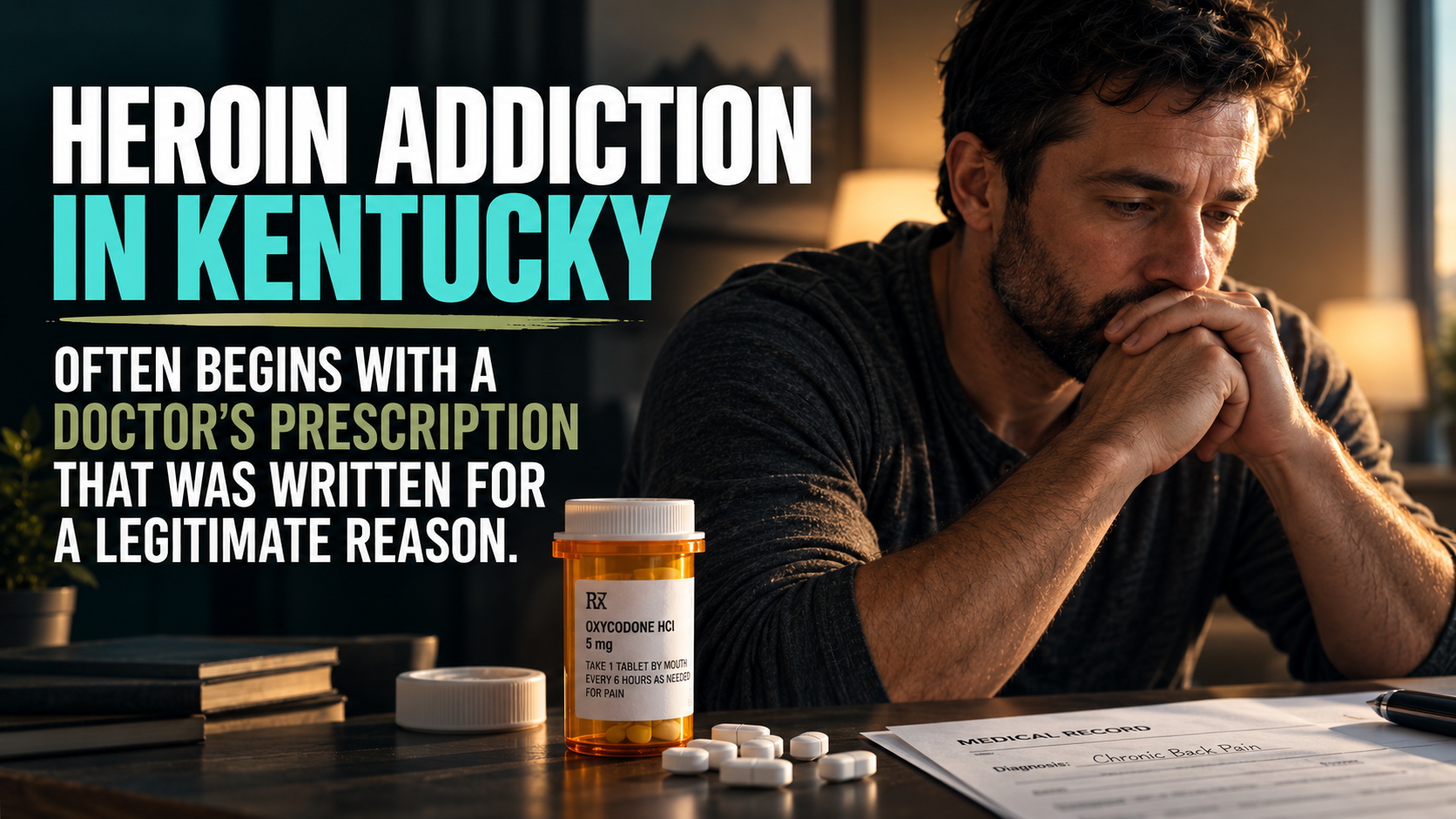
Heroin addiction in Kentucky often starts in the most ordinary place, a doctor’s office where someone received a prescription for real, legitimate pain. If you or someone you love has traveled that path, you already know how quietly it can happen.
Maybe it began after surgery, an injury, or a painful medical condition. The medication helped, it came from a trusted professional, and no one saw any reason for concern.
Over time, though, something shifted. What started as pain relief slowly became something harder to control, and the path from prescription pills to heroin can feel shockingly short. That progression is not a moral failing, and it does not mean anyone did anything wrong. It reflects how powerfully opioids reshape the brain. Understanding how this happens can replace shame with clarity, and support is closer than it may feel right now.
How Does Heroin Addiction in Kentucky Begin With a Legitimate Prescription?
Heroin addiction in Kentucky often begins when a person receives an opioid prescription for genuine pain, then gradually develops a dependence they never expected. The medication does exactly what it was meant to do at first, which is why the danger is so easy to miss.
Prescription opioids like oxycodone and hydrocodone are strong pain relievers. Doctors prescribe them for real reasons, including surgery recovery, serious injuries, and chronic pain.
When taken as directed for a short time, these medications can help. The trouble comes when the body adapts to them, which can happen even with careful, appropriate use.
As the body adjusts, a person may need more of the medication to feel the same relief. That gradual shift is often the quiet beginning of a much larger struggle.
Why Do Prescription Opioids Sometimes Lead to Heroin Use?
Prescription opioids sometimes lead to heroin use because both act on the same opioid receptors in the brain, and heroin can become a cheaper, more available alternative. When a prescription ends or dependence grows, some people find themselves searching for relief elsewhere.
This progression is not inevitable, and it is never a sign of weak character. It reflects how the brain changes after repeated opioid use.
Once dependence takes hold, stopping can bring painful withdrawal. To avoid that discomfort, a person may keep using, even after the original pain has healed.
What Happens When a Prescription Runs Out?
When a prescription runs out, a person who has become dependent may face withdrawal, cravings, and a desperate search for relief. That moment is often where the risk rises sharply.
The body still expects the opioid, so its absence brings real physical distress. Aches, nausea, anxiety, and cravings can feel overwhelming.
Faced with that discomfort, some people turn to other opioids. Heroin, which is often cheaper and easier to find, can seem like the only option within reach.
Why Is Heroin Often the Next Step?
Heroin is often the next step because it produces similar effects to prescription opioids while being more accessible and less expensive. To a brain already dependent on opioids, it can feel like a substitute rather than a dramatic change.
Many people who reach this point never imagined using heroin. They started with a prescription and followed a slow, unintended progression.
Seeing this clearly matters. It shows that the path was driven by biology and circumstance, not by a lack of willpower or worth.
What Are the Warning Signs of Opioid and Heroin Addiction?
The warning signs of opioid and heroin addiction show up in a person’s body, behavior, and daily life. Recognizing them early can open the door to compassionate, supportive care.
You may notice some of these patterns in yourself or a loved one:
- Needing more of the medication to feel the same relief.
- Feeling anxious, achy, or unwell when a dose is late or missed.
- Taking opioids more often, or in higher amounts, than prescribed.
- Running out of a prescription earlier than expected.
- Continuing to use even after the original pain has eased.
- Withdrawing from family, work, or activities that once mattered.
- Feeling defensive or secretive about use.
Noticing a few of these does not mean something is wrong with who you are. It means your body and mind may be signaling a need for support that is genuinely available.
What Makes Kentucky’s Opioid Landscape Unique?
Kentucky has been affected by the opioid crisis in ways that touch families, communities, and generations across the state. Many people here have watched a loved one move from a prescription to something far more dangerous.
Rural areas can face added challenges. Long distances to care, fewer nearby providers, and limited transportation can make reaching treatment harder.
Stigma adds another layer. In tight-knit communities, the fear of being judged can keep people from asking for the help they deserve.
Why Does This Local Context Matter for Recovery?
This local context matters because effective care meets people where they are, with an understanding of the barriers they face. Recovery becomes more possible when treatment is flexible, accessible, and free of judgment.
Someone balancing work, family, and travel needs care that fits their life. That is why flexible options can make such a meaningful difference across Kentucky.
Understanding these realities is not about discouragement. It is about building a path forward that actually works for the people walking it.
How Are Heroin Addiction and Mental Health Connected?
Heroin addiction and mental health are deeply connected, because emotional pain and opioid use often feed each other. For many people, anxiety, depression, or trauma were part of the story long before addiction took hold.
Opioids can temporarily quiet emotional pain along with physical pain. That relief never lasts, and it often leaves the underlying struggle even heavier once it fades.
This creates a cycle that is hard to break. Emotional pain drives use, use deepens the pain, and the pattern tightens with each turn.
Why Does Treating Both Together Matter?
Treating both the addiction and the mental health condition together matters because addressing only one leaves the other in place. When anxiety, depression, or trauma go untreated, they can quietly fuel a return to opioids.
Many people who develop heroin addiction are also carrying unspoken emotional pain. That pain is not a weakness, and it deserves real, compassionate care.
When both are addressed at the same time, recovery becomes far steadier. This kind of integrated dual diagnosis care treats the opioid use and the emotional pain beneath it as connected parts of one story, which often leads to more lasting results than treating either one alone.
How Is Heroin Addiction Treated Through Outpatient Care?
Heroin addiction is treated through a combination of medical support, therapy, and skill-building, often delivered in flexible outpatient settings. This approach helps people heal while staying connected to work, family, and daily life.
Care usually begins with a thorough assessment. This helps providers understand your history, health, and goals so your plan fits you rather than a generic template.
From there, treatment blends several forms of support. Medical care can ease withdrawal and cravings, while therapy addresses the roots of substance use.
What Therapies Support Recovery?
The therapies that support recovery help you understand your patterns and build healthier ways to cope. Several evidence-based approaches often work together.
- Cognitive behavioral therapy helps you notice and reshape the thoughts that fuel cravings and stress.
- Individual counseling gives you a private space to explore pain, triggers, and emotions at a safe pace.
- Group therapy connects you with others who understand, easing shame and isolation.
- Relapse prevention planning helps you recognize warning signs and respond with confidence.
These pieces reinforce one another. Together, they treat the addiction and any underlying struggles as connected parts of one journey.
What Flexible Options Fit Around Daily Life?
Flexible outpatient options let you receive real clinical support while continuing to work, study, and care for your family. You do not have to step away from your entire life to get help.
The levels of care range from more intensive daytime support to lighter weekly sessions, each matched to a different stage of recovery:
- Partial hospitalization offers structured treatment during the day while you return home in the evenings.
- Intensive outpatient care provides several therapy sessions each week, balancing strong support with flexibility.
- Standard outpatient care involves fewer weekly sessions as you build independence.
Many people move through these levels gradually, stepping down as they gain stability. A caring team can help you find flexible outpatient support that fits your needs and your schedule.
How Do You Know It Is Time to Seek Support?
You may be ready to seek support if opioid use has started to feel harder to manage than it once did. You do not need to reach a crisis point to take your experience seriously.
Consider reaching out if any of these feel true for you or a loved one:
- What started as a prescription has become something you cannot easily stop.
- You feel unwell, anxious, or achy when you go without opioids.
- You have moved from prescription pills to other opioids, including heroin.
- You keep using even after your original pain has healed.
- You have tried to cut back but found it harder than expected.
- You are managing both opioid use and a mental health condition.
If even one of these resonates, that is reason enough to talk with a professional. Reaching out is not a sign of failure. It is a caring, courageous step toward steadier ground.
Common Questions Before Starting Treatment
Can someone really become addicted to opioids they were prescribed? Yes. Dependence can develop even when a person follows every instruction, because the body adapts to opioids over time. This is a normal biological response, not a sign of misuse or wrongdoing.
Why do some people move from pills to heroin? Prescription opioids and heroin affect the same parts of the brain. When a prescription ends or dependence grows, heroin can become a cheaper, more available option, which is how an unintended progression often happens.
Is it safe to stop opioids on my own? It is best to make any changes with professional guidance. Stopping suddenly can bring difficult withdrawal symptoms, and a care team can help you reduce use safely while supporting your comfort and health.
What if I have both addiction and a mental health condition? Integrated treatment can address both at the same time. Treating them together often works better than treating either one alone, because they frequently influence each other.
Take the Next Step Toward Lasting Recovery
Heroin addiction in Kentucky often begins with a doctor’s prescription written for a legitimate reason, and understanding that truth can lift the weight of shame from you or someone you love. This is a medical condition with real biological roots, not a personal failing, and it responds to compassionate, evidence-based care.
You deserve support that treats the whole person, honors your dignity, and meets you exactly where you are. Recognizing that something has shifted is not a weakness. It is a wise and hopeful first step.
If a prescription has grown into something harder to manage, help is available whenever you are ready. Reach out to Louisville Addiction Treatment Center today to learn how our compassionate team can support you or your loved one with clear, personalized care and a path forward built around your needs.