
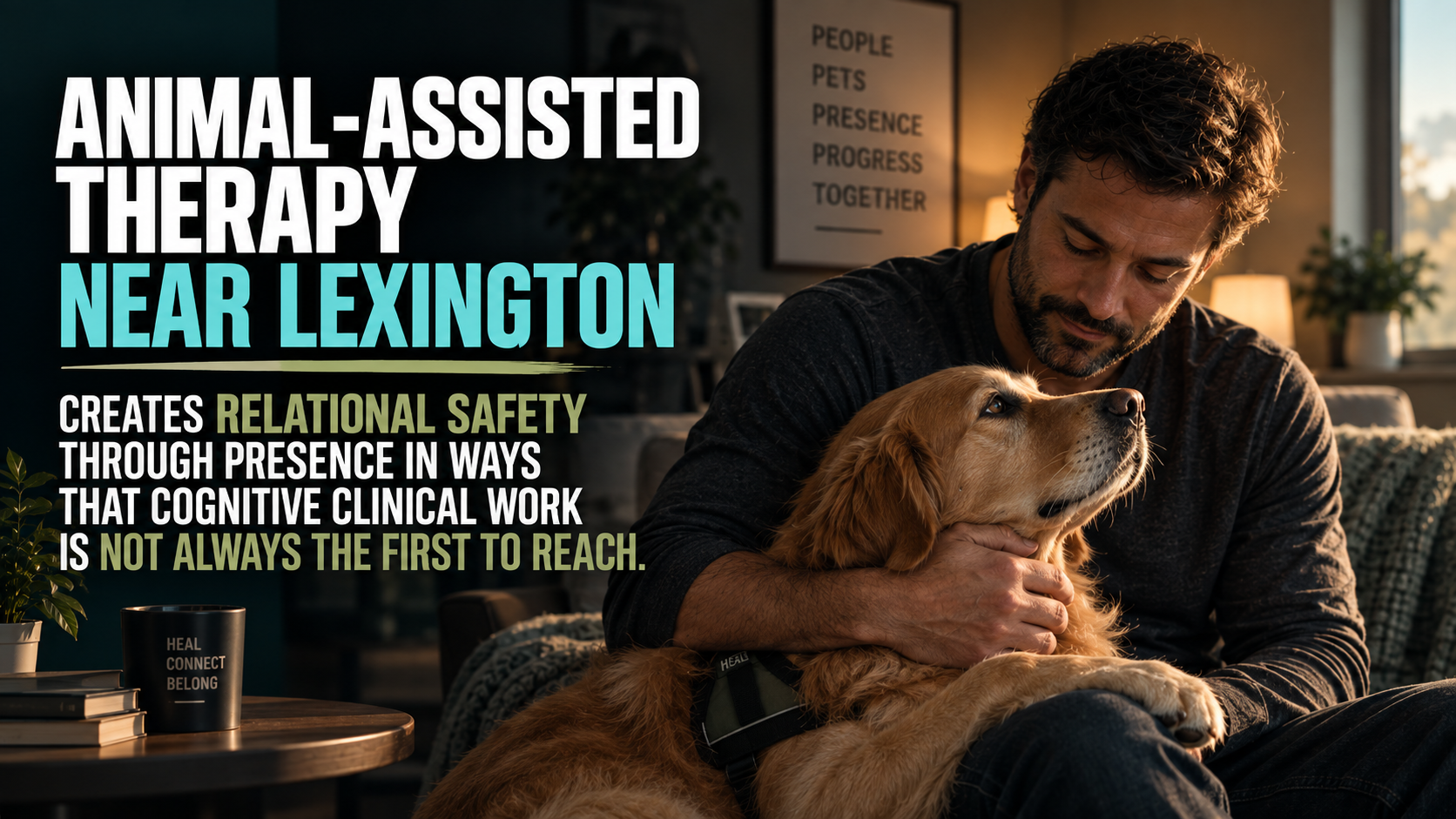
Animal-assisted therapy near Lexington offers a gentle path toward healing for people who have found that talking alone does not always unlock what they carry. If you or someone you love has sat in therapy sessions feeling guarded, stuck, or unable to put pain into words, that experience is more common than you might think.
You may have tried hard to open up, only to feel your walls stay firmly in place. That does not mean therapy failed you, and it does not mean you are doing recovery wrong.
Some of what we hold lives beneath language, in a place that logic and conversation cannot always reach first. The steady, non-judgmental presence of an animal can meet you there, easing you toward a sense of safety before a single word is spoken. Understanding how this works can bring real hope, and support is closer than it may feel right now.
What Is Animal-Assisted Therapy Near Lexington?
Animal-assisted therapy near Lexington is a therapeutic approach that includes trained animals in the healing process to support emotional connection, calm, and trust. It works alongside traditional treatment, adding a gentle, relational layer that many people find easier to access.
In these sessions, a therapist guides the experience while an animal, often a dog or a horse, provides steady companionship. The animal is not a replacement for clinical care. It is a partner that helps open the door to it.
The presence of an animal can lower stress almost immediately. Petting a calm dog or standing near a gentle horse can slow a racing heart and ease tension in the body.
That physical calm matters. When your nervous system feels safer, your mind becomes more willing to engage in the deeper work of recovery.
Why Does Presence Reach People When Words Cannot?
Presence reaches people when words cannot because animals offer connection without questions, judgment, or pressure to explain. For someone carrying shame or fear, that kind of acceptance can feel profoundly safe.
Talking about painful experiences takes energy and trust. Many people are not ready to speak openly, especially early in recovery when everything still feels raw.
An animal asks for none of that. It simply stays near, offering warmth and attention that require no words at all.
How Does Non-Judgment Create Safety?
Non-judgment creates safety because an animal responds to who you are in the moment, not to your past or your mistakes. There is no worry about being seen as broken, weak, or beyond help.
Shame keeps many people silent. When you fear judgment, it becomes harder to be honest, even with a caring professional.
Animals bypass that fear entirely. Their acceptance is immediate and unconditional, which helps you feel worthy of care exactly as you are.
Why Does Calming Presence Prepare the Mind for Deeper Work?
Calming presence prepares the mind for deeper work by soothing the nervous system so reflection and honesty feel possible. When the body relaxes, the brain shifts out of survival mode.
During stress, the mind focuses on protection rather than processing. Learning, insight, and openness take a back seat to simply feeling safe.
The steady comfort of an animal helps quiet that alarm. Once you feel grounded, you can engage more fully in therapy and take in what it offers.
What Does Animal-Assisted Therapy Near Lexington Actually Involve?
Animal-assisted therapy near Lexington involves structured sessions where a trained animal and a therapist work together to support your emotional goals. Each session is guided, intentional, and shaped around your needs.
Care usually begins with an understanding of your history, comfort level, and goals. This helps your team design experiences that feel safe and meaningful for you.
Sessions can look different depending on the animal and your needs. What stays consistent is the sense of calm and connection the experience creates.
Common elements often include:
- Spending quiet time with an animal to ease anxiety and build trust
- Gentle activities like grooming, walking, or caring for the animal
- Reflecting with your therapist on the feelings that surface
- Practicing patience, boundaries, and communication through the relationship
- Using the calm the animal provides to open up about harder topics
None of this requires special skill or experience. You simply show up, connect, and let the process unfold at your own pace.
Who Benefits Most From Animal-Assisted Therapy?
People who struggle to open up through talk therapy alone often benefit most from animal-assisted therapy. It can reach those who feel guarded, overwhelmed, or disconnected from their own emotions.
You do not need to consider yourself an animal lover to benefit. You simply need to be open to a gentler way of building safety and trust.
You may find this approach especially helpful if any of these feel true for you or a loved one:
- You feel anxious, shut down, or guarded during traditional therapy.
- You struggle to put your emotions or experiences into words.
- Shame or fear of judgment makes it hard to open up.
- You feel disconnected from yourself or the people around you.
- You are healing from trauma that talk therapy alone has not reached.
- You are managing both substance use and a mental health condition.
Recognizing yourself here is not a reason for shame. It is a sign that a more relational approach could help you feel safe enough to heal.
How Does Animal-Assisted Therapy Complement Traditional Treatment?
Animal-assisted therapy complements traditional treatment by opening emotional doors that make talk-based approaches more effective. It does not replace proven therapies. It helps them work better.
Approaches like cognitive behavioral therapy do vital work by reshaping the thoughts and patterns that fuel distress. Yet that work often requires a level of openness that can be hard to reach at first.
Animal-assisted therapy helps create that openness. By easing anxiety and building trust, it prepares you to engage more fully with the deeper clinical work.
How Does It Support Trauma Healing?
Animal-assisted therapy supports trauma healing by calming a nervous system that has stayed on high alert. Trauma often lives in the body, not only in memory, which is why presence can reach it so well.
The steady comfort of an animal helps signal safety to the body. That physical reassurance can succeed where words alone sometimes struggle.
Once your body feels calmer, trauma-focused work becomes more accessible. The animal’s presence becomes a source of grounding you can return to again and again.
How Does It Fit Into Dual Diagnosis Care?
Animal-assisted therapy fits into dual diagnosis care by supporting emotional stability while both mental health and substance use are treated together. When conditions overlap, a sense of safety becomes even more important.
Many people turn to substances to quiet anxiety, depression, or painful memories. Building healthier sources of comfort is a key part of lasting recovery.
The calm connection an animal provides offers one such source. Woven into integrated dual diagnosis care, it helps address the whole person rather than a single symptom.
What Flexible Outpatient Options Are Available?
Flexible outpatient options let you include animal-assisted therapy in a plan that fits your daily life. You do not have to step away from work, school, or family to receive meaningful support.
Outpatient care offers real clinical structure without a residential stay. You attend scheduled sessions, then practice new skills in the environment where you actually live.
The levels of care range from more intensive daytime support to lighter weekly sessions, each matched to a different stage of recovery:
- Partial hospitalization offers structured treatment during the day while you return home in the evenings.
- Intensive outpatient care provides several therapy sessions each week, balancing strong support with flexibility.
- Standard outpatient care involves fewer weekly sessions as you build independence.
Many people move through these levels gradually, stepping down as they gain stability. A caring team can help you find flexible outpatient support that fits your needs and your schedule.
How Do You Know It Is Time to Explore This Approach?
You may be ready to explore animal-assisted therapy if traditional talk-based care alone has not helped you feel safe enough to open up. You do not need to wait for a crisis to try a gentler path.
Consider reaching out to a professional if any of these feel true for you or a loved one:
- You feel guarded or shut down in traditional therapy sessions.
- You want to heal but struggle to talk about what you are feeling.
- Anxiety or fear of judgment keeps you from opening up.
- You feel disconnected from yourself or the people you love.
- You are working through trauma that words alone have not reached.
- You are managing both substance use and a mental health condition.
If even one of these resonates, that is reason enough to talk with a professional. Choosing a more relational approach is not a sign of weakness. It is a thoughtful step toward feeling safe enough to heal.
Common Questions Before Starting Treatment
Do I need experience with animals to benefit? No. You do not need any special skill or background. The therapy is guided by a trained professional, and the animal simply offers calm, steady companionship as you engage in the process.
Does animal-assisted therapy replace traditional treatment? No. It works alongside proven approaches like cognitive behavioral therapy and counseling. By easing anxiety and building trust, it helps make the rest of your treatment more effective.
What kinds of animals are involved? Dogs and horses are among the most common, though other trained animals may be included. Your care team matches the experience to your comfort level and goals.
Can this help with both mental health and substance use? Yes. Animal-assisted therapy supports emotional stability, which is valuable when treating both conditions together. It fits naturally into integrated care that addresses the whole person.
Take the Next Step Toward Healing
Animal-assisted therapy near Lexington creates relational safety through presence in ways that cognitive clinical work is not always the first to reach, and recognizing that truth can bring real hope to you or someone you love. When talking has felt too hard, a gentle, non-judgmental connection can open the door to healing.
You deserve care that meets you exactly where you are, honors your dignity, and helps you feel safe enough to grow. Needing a different path is not a weakness. It is a wise and caring first step.
If words alone have not been enough, help is available whenever you are ready. Reach out to Impact IOP today to learn how our compassionate team can support you or your loved one with clear, personalized care and a path forward built around your needs.