
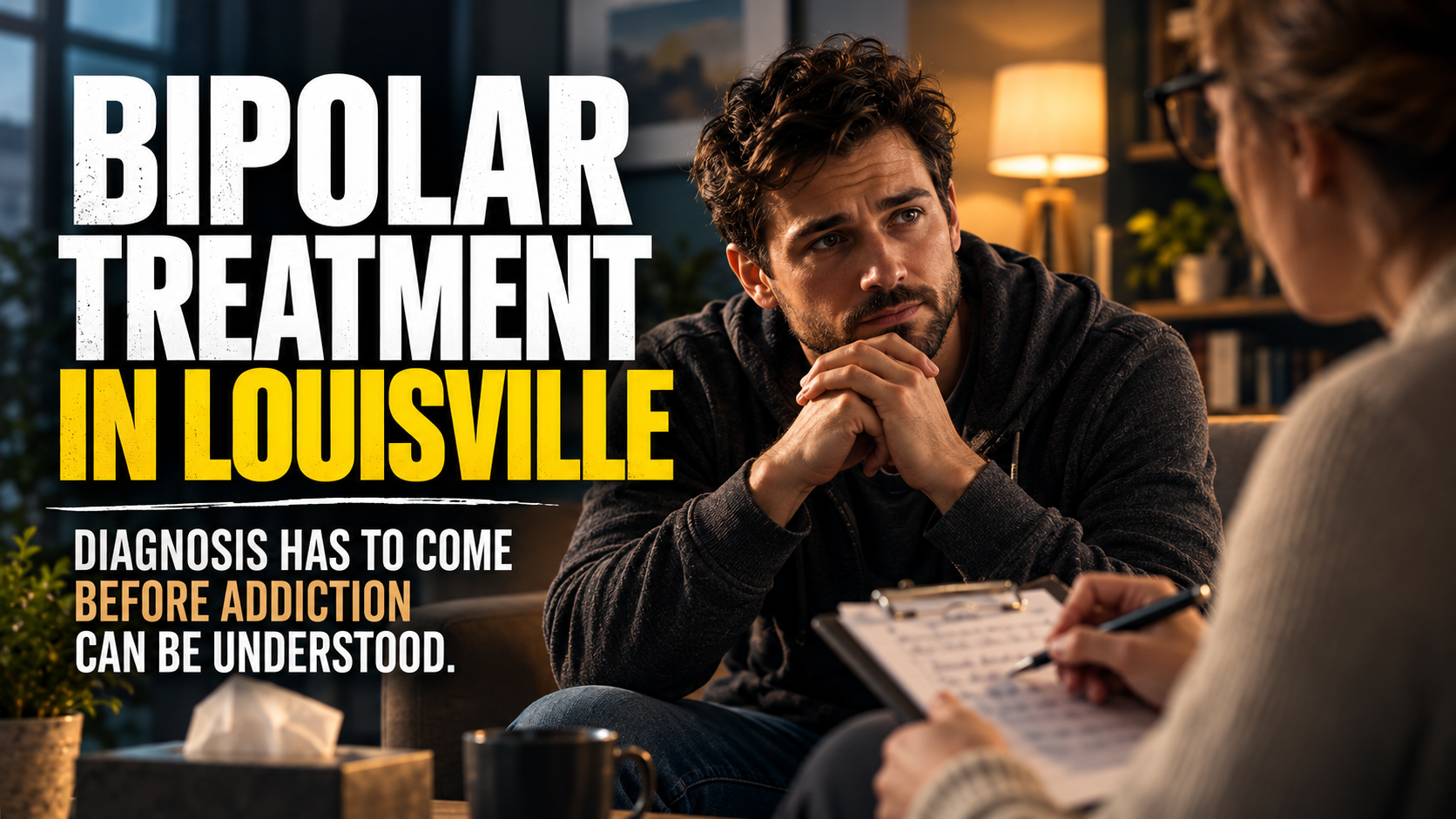
Bipolar disorder treatment in Louisville is most effective when the mood condition is identified before alcohol or drugs become part of how a person copes. If you or someone you love has lived through waves of high energy followed by deep, heavy lows, you may have spent years trying to understand them.
The good stretches may have felt productive and bright, until sleep disappeared and decisions became hard to control. The hard stretches may have felt so dark that a drink at night or a pill in the morning seemed like the only way to function.
None of this means you are weak or that you did something wrong. Many people live with bipolar disorder for years before anyone names it, and substances often fill the space where answers should have been. When addiction arrives first, care takes more patience, but recovery is still possible. You do not have to sort this out alone.
What Does Bipolar Disorder Treatment in Louisville Involve?
Bipolar disorder treatment in Louisville involves a psychiatric evaluation, medication management, evidence-based therapy and daily routines that help steady mood, energy and sleep. The goal is fewer and milder episodes, plus the skills to spot warning signs early.
Bipolar disorder is a mental health condition marked by episodes of mania or hypomania (a milder form of elevated mood) and episodes of depression. Between episodes, many people feel like themselves. That is one reason the pattern can go unnoticed for so long.
Care usually starts with a detailed conversation about your mood history, sleep, family background and any substance use. That picture lets your team build a plan around your actual life.
How Is Bipolar Disorder Different From Depression Alone?
Bipolar disorder includes periods of elevated mood, while depression alone does not. The difference matters because treatment for each condition can look very different.
Many people first seek help during a low period, since that is when they feel worst. If past highs never come up, the full picture stays hidden. Thorough bipolar disorder treatment in Louisville always asks about both ends of the mood spectrum.
Why Does Diagnosis Timing Shape Bipolar Disorder Treatment in Louisville?
Diagnosis timing shapes bipolar disorder treatment in Louisville because a mood condition named early can be treated directly, before substances blur its symptoms and add a second condition to manage. The order of events affects how clearly anyone can see what is happening.
Think of it like reading a map through a foggy window. When bipolar disorder is identified first, the view is clear. When addiction comes first, the fog has to lift before the route makes sense.
What Changes When the Diagnosis Comes First?
When the diagnosis comes first, a person gains words for their experience and tools to manage it before turning to substances for relief. That early clarity can lower the pull to self-medicate.
You learn your personal warning signs, such as shrinking sleep or racing thoughts. You also build a relationship with a care team you can call when an episode starts to build.
Early bipolar disorder treatment in Louisville can also protect relationships, work and finances. These areas often take the hardest hits during untreated mania.
Why Does Addiction Arriving First Complicate Care?
Addiction arriving first complicates care because substances can mimic, hide or intensify mood symptoms. Stimulants can look like mania, and heavy drinking or alcohol withdrawal can look like depression.
A provider may reasonably focus on the substance use and miss the mood pattern beneath it. Some people are treated for depression alone. In people with bipolar disorder, certain antidepressants used without a mood stabilizer can sometimes trigger manic symptoms.
This is no one’s fault. It reflects how closely these conditions overlap.
How Does Undiagnosed Bipolar Disorder Lead to Self-Medication?
Undiagnosed bipolar disorder leads to self-medication because people naturally reach for whatever eases symptoms they cannot explain. Without a name for what is happening, alcohol or drugs can feel like the only relief available.
It rarely starts as a plan. It often begins with a drink to finally fall asleep or a substance to push through a heavy morning.
What Does Self-Medication Look Like in Each Mood Phase?
Self-medication looks different during manic and depressive phases, and many people recognize both patterns once they see them side by side.
- A person in a manic phase may drink or take sedatives to quiet racing thoughts and finally sleep.
- Someone feeling elevated may use stimulants to stretch out the energy or take risks they would usually avoid.
- A person in a depressive phase may use alcohol to numb sadness or emptiness.
- Someone in a low stretch may reach for stimulants just to get through the day.
Seeing yourself here is not a reason for shame. It is a sign that your mood deserves real care. That is why bipolar disorder treatment in Louisville focuses on mood before coping habits harden.
How Do Mood Episodes and Substance Use Affect Each Other?
Mood episodes and substance use affect each other in both directions, with each one making the other harder to manage. Mood swings drive the urge to use, and substances then make the swings stronger or more frequent.
Sleep sits at the center of this loop. Alcohol and many drugs disrupt sleep, and poor sleep is one of the most common triggers for mood episodes in bipolar disorder.
Substances can also interfere with mood-stabilizing medication and lower judgment during manic periods. As their effects fade, they often deepen low mood.
You may notice warning signs like these in yourself or a loved one:
- Needing far less sleep without feeling tired
- Talking quickly or jumping between ideas
- Spending, driving or using substances in riskier ways
- Pulling away from people during low stretches
- Drinking or using more as mood shifts
Breaking this cycle usually requires bipolar disorder treatment in Louisville that addresses mood and substance use at the same time.
Why Does Integrated Dual Diagnosis Care Work Better Than Sequential Treatment?
Integrated dual diagnosis care works better than sequential treatment because it treats bipolar disorder and substance use together, within one plan and one team. Sequential care treats one condition first and the other later, which leaves a gap where progress often slips.
If substance use is treated while mood stays unmanaged, the swings that fueled using remain active. If mood is treated while substance use continues, substances keep disrupting sleep, medication and emotional balance.
At Louisville Addiction Treatment Center, integrated dual diagnosis care brings psychiatric support and addiction treatment together. Your providers share one view of your progress, so you are not repeating your story to teams that never compare notes. That coordination sits at the heart of effective bipolar disorder treatment in Louisville.
What Does Coordinated Care Include?
Coordinated care includes psychiatric support, therapy and practical skills that treat mood and substance use as connected parts of one story. A strong plan for bipolar disorder treatment in Louisville may include:
- Psychiatric evaluation and medication management to explore options for mood stability, always decided together with you.
- Cognitive behavioral therapy (CBT) to help you notice early warning signs and reshape thoughts that fuel distress or cravings.
- Interpersonal and social rhythm therapy (IPSRT) to build steady daily routines for sleep, meals and activity.
- Mood and sleep tracking to catch patterns before they grow into full episodes.
- Relapse prevention planning that maps both mood triggers and substance triggers.
- Family education so loved ones can recognize changes and respond calmly.
What Outpatient Levels of Care Support Bipolar Disorder Treatment in Louisville?
The outpatient levels of care that support bipolar disorder treatment in Louisville include partial hospitalization, intensive outpatient and standard outpatient programs. Each level matches a different stage of recovery, and many people move between them as their needs change.
- Partial hospitalization program (PHP) offers several hours of treatment most days of the week while you return home each evening.
- Intensive outpatient program (IOP) provides 9 or more hours of therapy each week, often scheduled around work, school or family.
- Standard outpatient care involves fewer weekly sessions as mood stabilizes and coping skills grow more reliable.
Outpatient care lets you practice new skills in the same places where stress shows up. A caring team can help you choose among flexible outpatient programs and adjust your care as you grow steadier.
If you are experiencing severe mania, psychosis or thoughts of suicide, a higher level of care may be the safest place to start. Call or text 988, or call 911 if you are in immediate danger.
How Do You Know It Is Time to Seek Bipolar Disorder Treatment in Louisville?
You may be ready to seek bipolar disorder treatment in Louisville if mood swings and substance use keep shaping each other in ways you cannot untangle alone. You do not need a confirmed diagnosis to start the conversation.
Consider these signs as you weigh your next step:
- You go through stretches of high energy and little sleep followed by deep lows.
- You were treated for depression, but something still feels unaddressed.
- You use alcohol or drugs to calm racing thoughts or lift a heavy mood.
- Past treatment focused only on substance use, and the mood swings returned.
- People close to you have noticed dramatic shifts in your energy or behavior.
- Progress in one area keeps unraveling because of the other.
If even one of these feels familiar, talking with a professional is a reasonable next step. Reaching out is a caring choice, not an overreaction.
Common Questions Before Starting Treatment
What if my addiction started before anyone diagnosed my bipolar disorder? You can still find effective care. Integrated treatment addresses both conditions together, and careful evaluation helps sort out which symptoms come from mood and which come from substances.
How long does it take to get an accurate diagnosis? It varies from person to person. Providers often need time to observe mood patterns once substances are no longer clouding symptoms, so your diagnosis may become clearer during treatment.
Can I keep working during treatment? Yes, in many cases. Intensive outpatient and standard outpatient programs are built to fit around work, school and family responsibilities.
Will I have to take medication? Medication is a common part of bipolar care, but it is always a shared decision. Your provider will explain options and respect your preferences.
Take the Next Step Toward Steadier Days
Bipolar disorder treatment in Louisville works best when the diagnosis arrives before the addiction does. Even when the order is reversed, integrated care can help you find steadier ground, and naming what is really happening is often the turning point.
You deserve care that sees the whole picture and treats you with dignity. Recovery is possible, and support is available at every step.
If mood swings and substance use have been feeding each other, reach out to Louisville Addiction Treatment Center today. Our compassionate team can answer your questions, explain your options and help you build a path forward around your needs.