Anxiety and addiction in Louisville often show up together. When they do, each one can make the other harder to manage.
Maybe you or someone you love lives with constant worry, racing thoughts or panic that seems to come from nowhere. You may have found that a drink, a pill or another substance takes the edge off. For a while, that relief can feel like the only thing that works.
Over time, the relief fades faster and the anxiety comes back stronger. You may feel stuck between two struggles that keep feeding each other. You may also wonder why past treatment never seemed to stick.
That pattern is not a personal failing. It is a common, well-understood cycle, and it responds best to care that treats both conditions at the same time. Help is available, and you do not have to untangle this alone.
Why Do Anxiety and Addiction in Louisville So Often Occur Together?
Anxiety and addiction in Louisville so often occur together because many people use alcohol or drugs to quiet anxiety they do not yet have the words or tools to manage. The National Institute on Drug Abuse recognizes that anxiety disorders frequently co-occur with substance use disorders.
The order can go either way. Some people develop anxiety first and turn to substances for relief. Others develop anxiety because of substance use, withdrawal or the stress that addiction brings into daily life.
What Does Self-Medication Look Like?
Self-medication means using a substance to manage a feeling rather than for enjoyment. It usually starts small and makes sense in the moment. It can look like this:
- Drinking to calm nerves before social events or work meetings
- Using cannabis to slow racing thoughts or fall asleep
- Taking sedatives that were not prescribed to stop panic
- Using more on days when worry feels heavier
Recognizing these patterns is not a reason for shame. It is useful information that points toward the kind of care that can help.
Which Anxiety Conditions Commonly Overlap With Substance Use?
Generalized anxiety disorder, panic disorder, social anxiety disorder and post-traumatic stress disorder (PTSD) commonly overlap with substance use. Each one looks a little different. All of them can make a quick source of relief feel appealing.
A careful assessment helps clarify how anxiety and addiction in Louisville show up for each person. That clarity shapes a plan that fits.
How Does Each Condition Make the Other Worse?
Each condition makes the other worse because substances bring short-term calm, then a rebound of anxiety that drives the urge to use again. For many people living with anxiety and addiction in Louisville, this loop tightens a little more each week.
How Do Substances Intensify Anxiety?
Substances intensify anxiety by disrupting the brain’s natural calming systems and by triggering withdrawal symptoms that feel like panic. Alcohol, for example, boosts a calming brain chemical called gamma-aminobutyric acid (GABA). With regular drinking, the brain compensates by turning down its own calming signals.
When the alcohol wears off, the nervous system is left on edge. A racing heart, sweating, restlessness and poor sleep can follow, and these can feel exactly like an anxiety attack.
Stimulants such as cocaine and methamphetamine can trigger anxiety and panic directly. Benzodiazepines may ease anxiety at first. Over time, though, dependence can develop, and stopping them suddenly can be medically dangerous.
How Does Anxiety Drive Continued Use?
Anxiety drives continued use by teaching the brain to link substances with relief. Every time a drink or pill quiets worry, the brain learns to reach for it again.
Avoidance plays a role too. Anxiety pushes people to escape uncomfortable feelings, and substances offer a fast escape that leaves the underlying fear untreated. Day to day, the cycle often looks like this:
- A worry, trigger or stressful moment sets off anxiety.
- A substance quiets the feeling for a short time.
- The effect fades and anxiety returns, often stronger.
- Sleep and mood suffer, which makes it harder to cope.
- The urge to use grows simply to feel steady again.
Why Does Treating Anxiety and Addiction in Louisville Separately Produce Weaker Outcomes?
Treating anxiety and addiction in Louisville separately produces weaker outcomes because the untreated condition keeps pulling the treated one backward. Progress in one area rarely holds while the other stays active.
Separate care often means two intakes, two treatment plans and providers who may never compare notes. Important warning signs can slip through the space between them.
What Happens When Only the Substance Use Is Treated?
When only the substance use is treated, anxiety often grows louder in early sobriety because nothing is muffling it anymore. Without new ways to manage that anxiety, the old coping habit can feel like the only option.
This is one of the most common reasons people living with anxiety and addiction in Louisville return to old habits. It is not a lack of willpower. It is the predictable result of leaving half the picture untreated.
What Happens When Only the Anxiety Is Treated?
When only the anxiety is treated, ongoing substance use keeps disrupting sleep, mood and medication. Hangovers and withdrawal make it hard to practice the calming skills learned in therapy.
Some anxiety medications also carry risks for people with a substance use disorder. A team that understands both conditions can weigh those choices carefully.
What Does Integrated Outpatient Care for Anxiety and Addiction in Louisville Look Like?
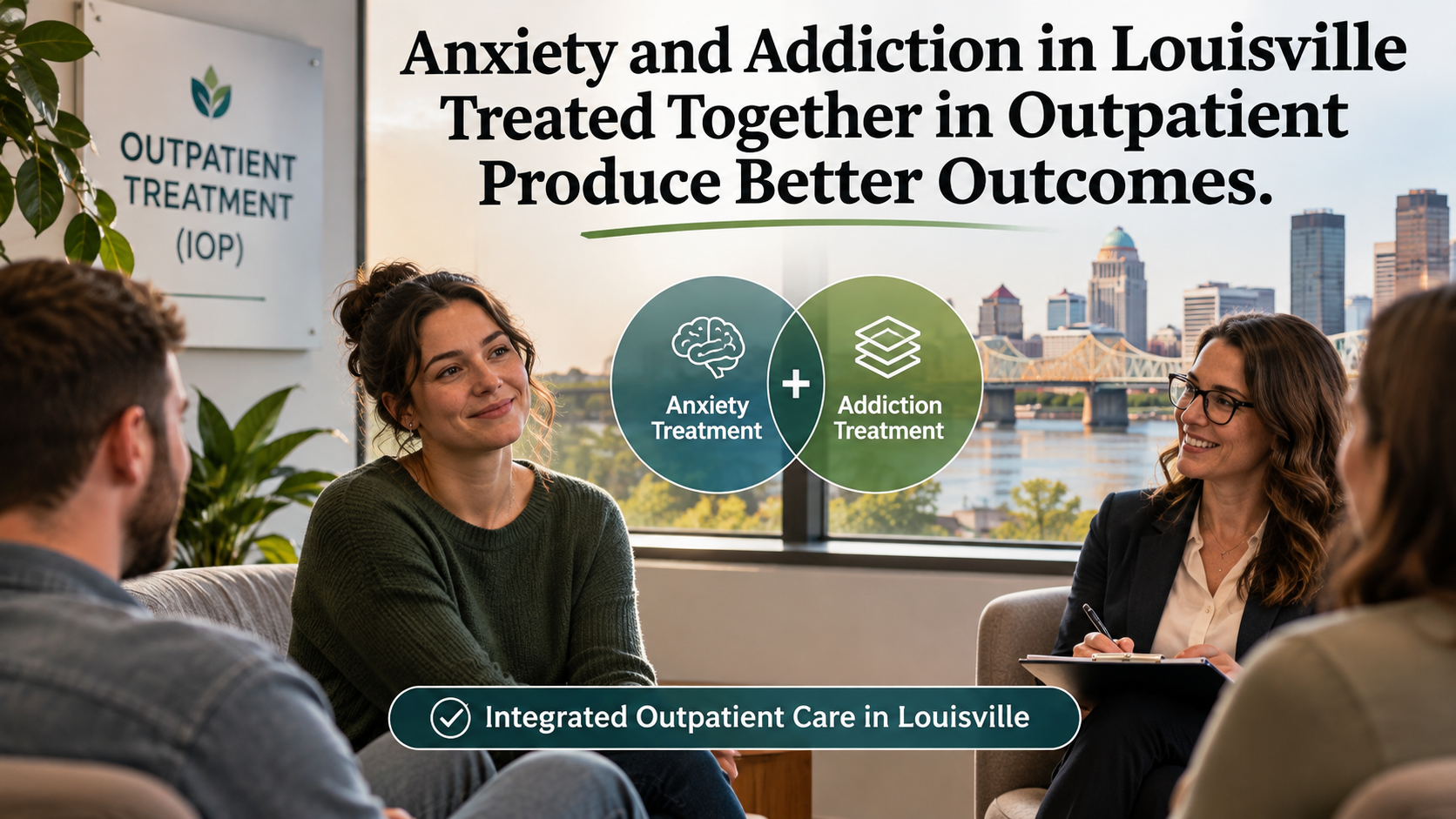
Integrated outpatient care for anxiety and addiction in Louisville means one coordinated team treats both conditions at the same time, within one shared plan, while you live at home. Nothing important gets lost between separate offices.
Care usually begins with a thorough assessment of your anxiety symptoms, substance use, physical health and daily stressors. That picture shapes a plan built around your real life rather than a generic template.
At Louisville Addiction Treatment Center, integrated dual diagnosis care brings mental health and addiction treatment together. Your providers share one view of how your anxiety and substance use connect, so you do not have to repeat your story to teams that never talk to each other.
Which Outpatient Levels of Care Are Available?
Outpatient care for anxiety and addiction in Louisville includes three main levels, each matched to a different stage of recovery:
- Partial hospitalization program (PHP) offers several hours of treatment most days of the week, with evenings at home. It suits people who need strong daily structure.
- Intensive outpatient program (IOP) provides at least 9 hours of therapy each week, often with evening options around work, school or family.
- Standard outpatient care involves one or two sessions a week as your coping skills become more reliable.
Many people step up or down as their needs change. A caring team can help you choose among flexible outpatient programs without switching providers.
If withdrawal from alcohol or benzodiazepines could be dangerous, medically supervised detox may need to come first.
Which Therapies Help Treat Anxiety and Addiction Together?
The therapies that help most teach practical skills for calming the body, reshaping anxious thoughts and responding to cravings without substances. Each one builds on the others.
How Does CBT Help?
Cognitive behavioral therapy (CBT) teaches you to notice anxious thoughts and the urges that follow, then respond in healthier ways. A thought like “I cannot handle this without a drink” can be examined and replaced with a more accurate one.
CBT for anxiety and addiction in Louisville often includes gradual exposure. That means facing feared situations in small, manageable steps until avoidance loses its grip.
How Do DBT Skills Help?
Dialectical behavior therapy (DBT) skills give you ways to ride out intense emotions without acting on them. Paced breathing, grounding and distress tolerance offer real tools for the moments when anxiety spikes.
For people navigating anxiety and addiction in Louisville, these skills work where anxiety actually shows up, like during a tense meeting or a sleepless night.
Where Does Medication Management Fit In?
Medication management helps when anxiety symptoms are strong enough that therapy alone is hard to engage in. A psychiatric provider may discuss non-addictive options for anxiety, such as certain antidepressants. Medication-assisted treatment (MAT) for opioid or alcohol use disorders may also be part of your plan when appropriate.
Every decision is made together with you. Because benzodiazepines carry a risk of dependence, an integrated team weighs them very carefully.
Group therapy, family sessions and relapse prevention planning complete the picture. Together, they map anxiety triggers and substance triggers side by side.
How Do You Know It Is Time to Seek Integrated Care?
You may be ready for integrated care if anxiety and substance use keep shaping each other in ways you cannot untangle alone. You do not need a formal diagnosis to start the conversation. Consider these signs:
- You use alcohol or drugs to calm your nerves, stop panic or fall asleep.
- Your anxiety feels worse on the days after drinking or using.
- You tried to quit, and your anxiety grew so strong that you started using again.
- Past treatment addressed only your anxiety or only your substance use.
- You avoid people, places or tasks because worry feels overwhelming.
- Someone close to you has gently shared concern about your well-being.
If even one of these feels familiar, an assessment is a reasonable next step. If you are having thoughts of suicide, call or text 988. If you are in immediate danger, call 911.
Common Questions Before Starting Treatment
Which condition gets treated first? Neither. Both are treated together, because calmer anxiety supports steadier sobriety and steadier sobriety helps anxiety ease.
Will my anxiety get worse when I stop drinking or using? It can for a while, especially during withdrawal. Integrated care prepares you for this with coping skills, close monitoring and extra support when you need it.
Can I keep working during treatment for anxiety and addiction in Louisville? Yes, in many cases. Evening IOP tracks and standard outpatient sessions are designed to fit around work, school and family.
Will I have to take medication? Not necessarily. Medication is one option among many, and you and your provider will make any decision together.
Take the Next Step Toward Calmer Days
Anxiety and addiction in Louisville respond best when they are treated together in outpatient care, not on separate tracks that leave gaps between them. When one team understands how worry and substance use connect, you gain tools that make each day feel more manageable.
You deserve care that sees your whole story and honors your dignity. Recovery is possible, and you do not have to carry this alone.
If anxiety and substance use have been feeding each other, reach out to Louisville Addiction Treatment Center today. Our compassionate team can answer your questions, explain your options and help you build a path forward around your needs.