Bipolar disorder in Lexington affects people across every neighborhood, campus and workplace, and when it appears alongside addiction, it calls for care designed to treat both conditions at once. If you or someone you love has lived through soaring highs, crushing lows and a growing reliance on alcohol or drugs, you may feel exhausted and unsure where to turn.
Maybe the energetic stretches felt productive at first, then turned into sleepless nights and choices that were hard to explain. Maybe the low stretches felt so heavy that a drink or a pill became the only way to get through the day. Over time, it can become hard to tell where the mood ends and the substance use begins.
None of this means you are weak or broken. Bipolar disorder is a real medical condition, and reaching for relief is a very human response to symptoms that feel overwhelming. With outpatient programming built for both conditions, steadier days are possible. You do not have to figure this out alone.
What Is Bipolar Disorder and How Does It Show Up?
Bipolar disorder is a mental health condition marked by shifts in mood, energy and activity that move between elevated episodes and depressive episodes. Between episodes, many people feel like themselves again, which is one reason the pattern can go unrecognized for years.
Clinicians describe two main types. Bipolar I involves at least one full manic episode. Bipolar II involves hypomania (a milder form of elevated mood) along with major depressive episodes.
What Do Manic and Hypomanic Episodes Look Like?
Manic and hypomanic episodes look like periods of unusually high energy, reduced need for sleep and racing thoughts. You may notice signs like these in yourself or a loved one:
- Feeling rested after only a few hours of sleep
- Talking quickly or jumping between ideas
- Taking on many projects at once
- Spending, driving or using substances in riskier ways
- Feeling unusually confident, irritable or restless
What Do Depressive Episodes Look Like?
Depressive episodes look like long stretches of sadness, emptiness, low energy and lost interest in things that once mattered. Sleep and appetite may change, and focusing can feel nearly impossible.
Many people first seek help during a low period, when they feel their worst. If past highs never come up in that conversation, bipolar disorder in Lexington can be mistaken for depression alone.
How Does Bipolar Disorder in Lexington Co-Occur With Addiction?
Bipolar disorder in Lexington often co-occurs with addiction because many people use alcohol or drugs to manage mood symptoms they cannot yet name or control. Research consistently shows that people living with bipolar disorder face a higher risk of substance use disorders than the general population.
Clinicians call this pairing a dual diagnosis or co-occurring disorders. It is common, well understood and treatable.
Why Do People With Bipolar Disorder Turn to Substances?
People with bipolar disorder turn to substances because those substances seem to ease symptoms in the moment. Self-medication rarely starts as a plan. It usually begins as a reasonable attempt to cope.
During manic phases, a person may drink or take sedatives to slow racing thoughts and finally sleep. During depressive phases, a person may use alcohol to numb sadness or stimulants to find enough energy to function. For many individuals living with bipolar disorder in Lexington, both patterns appear at different times.
How Do Substances Make Mood Episodes Worse?
Substances make mood episodes worse by disrupting sleep, interfering with medication and deepening the swings they were meant to soften. Poor sleep is one of the most common triggers for mood episodes, and alcohol and many drugs break up restful sleep.
Stimulants can push someone toward mania. Alcohol can deepen depression as it wears off. Over time, bipolar disorder in Lexington and substance use can lock into a loop where each condition fuels the other.
Why Does Sequential Treatment Fail for Bipolar Disorder in Lexington?
Sequential treatment fails for bipolar disorder in Lexington because treating one condition first and the other later leaves the untreated condition free to pull progress backward. Mood and substance use are too closely linked to handle on separate timelines.
Many people have been told to get sober before addressing their mood. Others have received psychiatric care while their drinking or drug use continued in the background. Both paths leave important work undone.
What Happens When Only Substance Use Is Treated?
When only substance use is treated, the mood swings that drove the substance use stay active. A manic episode can bring impulsive choices, and a depressive episode can make the old coping habit feel like the only relief.
That return to use is not a lack of willpower. It is a predictable result of leaving bipolar disorder in Lexington untreated while focusing only on sobriety.
What Happens When Only Mood Is Treated?
When only mood is treated, ongoing substance use keeps destabilizing sleep, medication and emotional balance. Alcohol and drugs can reduce how well mood stabilizers work and make it harder to follow a consistent routine.
There is another risk. Substances can mimic or hide mood symptoms, which makes an accurate diagnosis harder. A provider may treat depression alone without seeing the full picture, and in people with bipolar disorder, certain antidepressants used without a mood stabilizer can sometimes trigger manic symptoms.
What Does Integrated Dual Diagnosis Outpatient Care Look Like?
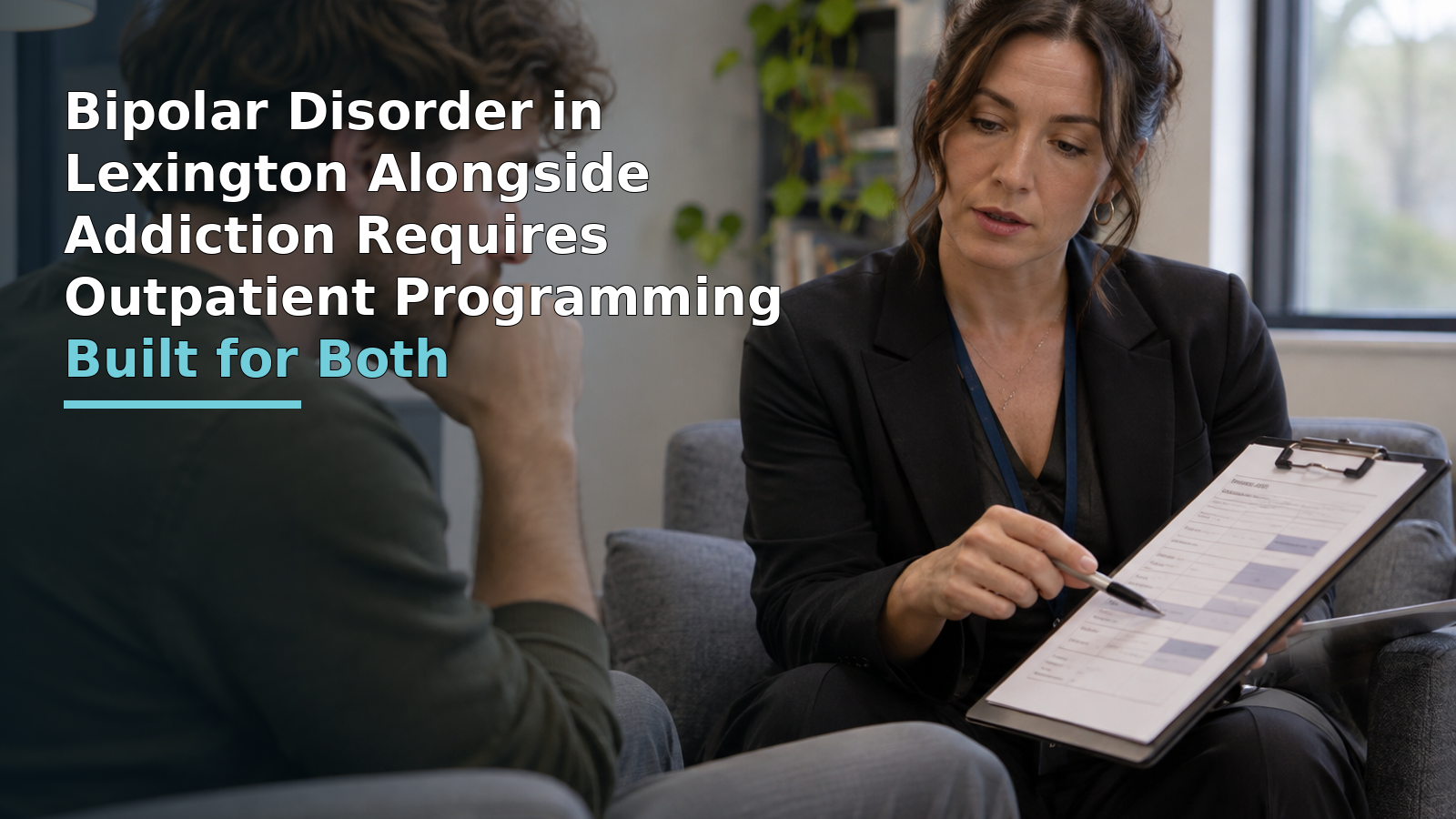
Integrated dual diagnosis outpatient care means one coordinated team treats bipolar disorder and substance use at the same time, within one shared plan, while you live at home. You do not have to repeat your story to separate providers who never compare notes.
At Louisville Addiction Treatment Center, integrated dual diagnosis care brings psychiatric support and addiction treatment together. For individuals and families managing bipolar disorder in Lexington, a short drive west on Interstate 64 opens the door to that coordinated care.
What Happens During the First Assessment?
The first assessment maps your mood history, substance use, sleep patterns, family background and daily stressors so your plan fits your real life. A psychiatric evaluation is usually part of this step.
Your diagnosis may become clearer over the first few weeks of care. Once substances are no longer clouding symptoms, providers can see mood patterns more accurately.
Which Therapies and Supports Help Both Conditions?
The therapies that help most combine psychiatric care, practical skills and steady routines that address mood and substance use as connected parts of one story. A personalized plan may include:
- Medication management with a psychiatric provider to explore mood-stabilizing options, always decided together with you.
- Cognitive behavioral therapy (CBT) to help you spot early warning signs and reshape thoughts that fuel distress or cravings.
- Interpersonal and social rhythm therapy (IPSRT) to build consistent daily rhythms for sleep, meals and activity.
- Mood and sleep tracking to catch changes before they grow into full episodes.
- Medication-assisted treatment (MAT) for opioid or alcohol use disorders when appropriate.
- Relapse prevention planning that maps mood triggers and substance triggers side by side.
- Family education so loved ones can recognize changes and respond with calm support.
Each piece strengthens the others. When one team sees the whole picture, care for bipolar disorder in Lexington can adjust quickly as your needs change.
Which Outpatient Levels of Care Support Bipolar Disorder in Lexington?
The outpatient levels of care that support bipolar disorder in Lexington include partial hospitalization, intensive outpatient and standard outpatient programs. Each level matches a different stage of recovery, and many people move between them over time.
- Partial hospitalization program (PHP) offers at least 20 hours of structured treatment each week, with evenings at home. It often fits people stepping down after a recent episode.
- Intensive outpatient program (IOP) provides at least 9 hours of therapy each week, often with evening options around work, school or family.
- Standard outpatient care involves one or two sessions a week as mood stabilizes and coping skills grow more reliable.
Care can step up when mood symptoms flare and step down as stability returns, all without changing teams. A caring team can help you choose among flexible outpatient programs that fit your symptoms and schedule.
If you are experiencing severe mania, psychosis or thoughts of suicide, a higher level of care may be the safest place to start. Call or text 988 to reach the 988 Suicide and Crisis Lifeline, or call 911 if you are in immediate danger. If withdrawal from alcohol or benzodiazepines could be risky, medically supervised detox may need to come first.
How Do You Know Outpatient Programming Built for Both Is the Right Next Step?
Outpatient programming built for both conditions may be the right next step if mood swings and substance use keep shaping each other in ways you cannot untangle alone. You do not need a confirmed diagnosis to start the conversation.
Consider these points as you weigh your options:
- You go through stretches of high energy and little sleep followed by deep lows.
- You use alcohol or drugs to calm racing thoughts or lift a heavy mood.
- You were treated for depression, but something still feels unaddressed.
- Past treatment focused only on substance use, and the mood swings returned.
- You can attend sessions several days a week while living in a safe home.
- Someone close to you has gently shared concern about your energy, mood or use.
When comparing programs, ask whether one team builds one plan for both conditions. That answer often reveals whether a program is truly equipped for bipolar disorder in Lexington alongside addiction.
Common Questions Before Starting Treatment
What if my substance use started before anyone diagnosed my bipolar disorder? You can still find effective care. Integrated treatment addresses both conditions together, and careful evaluation helps sort out which symptoms come from mood and which come from substances.
Will I have to take medication? Medication is a common part of bipolar care, but it is always a shared decision. Your provider will explain options, answer questions and respect your preferences.
Can I keep working during outpatient treatment? Yes, in many cases. Evening IOP tracks and standard outpatient sessions are designed to fit around work, school and family responsibilities.
How can my family help? Families can learn the early signs of mood episodes and respond with patience instead of alarm. With your consent, family sessions give loved ones a guided space to understand both conditions.
Take the Next Step Toward Steadier Days
Bipolar disorder in Lexington alongside addiction requires outpatient programming built for both, not separate tracks that leave gaps between them. When one team understands how mood and substance use connect, you gain tools that make each day feel more manageable and more hopeful.
You deserve care that sees your whole story and honors your dignity. Recovery is possible, and support is available at every step.
If mood swings and substance use have been feeding each other, reach out to Louisville Addiction Treatment Center today. Our compassionate team can answer your questions, explain your options and help you build a path forward around your needs.