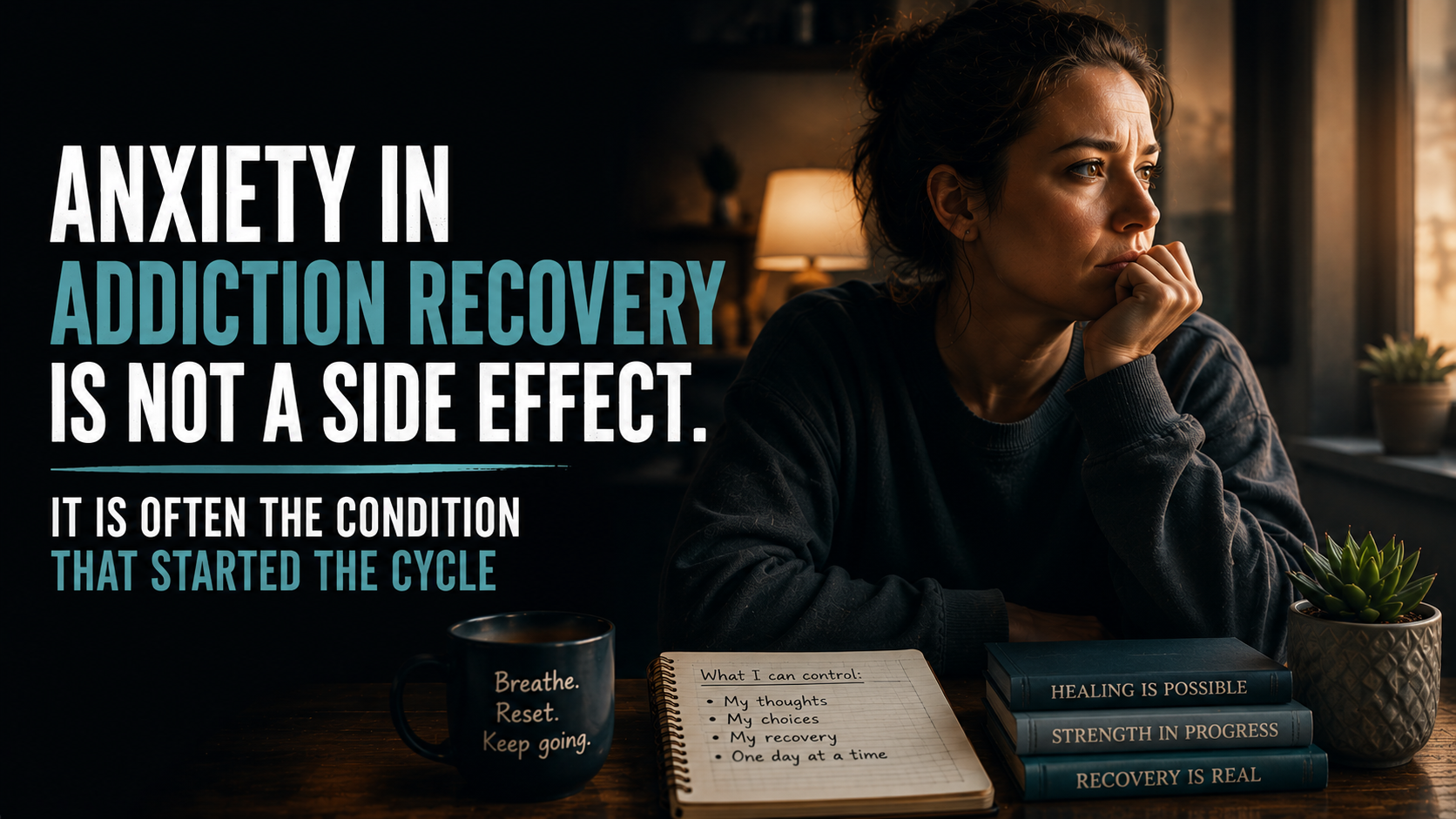
Anxiety in addiction recovery is often treated as a passing symptom, something to wait out until the substances clear. But for many people, that anxiety is not a side effect at all. It is the very thing that started the cycle in the first place.
If you or someone you love has felt anxious long before substances entered the picture, that experience matters. Maybe drinking or using started as a way to quiet racing thoughts, calm a pounding heart, or finally get some sleep. That relief felt real, even if it never lasted.
You are not weak for reaching for something that seemed to help. And you are not failing recovery when anxiety rises again once the substances are gone. It often means the condition underneath was there all along, waiting to be addressed.
Understanding this connection can change everything about how healing unfolds. When anxiety is treated as a root cause rather than an afterthought, recovery becomes far steadier. Help is closer than it may feel right now.
Why Are Emotional Struggles in Addiction Recovery So Often Overlooked?
Emotional struggles in addiction recovery are so often overlooked because treatment tends to focus on the substance first and the emotions second. When the drinking or drug use stops, everyone hopes the hard part is over, so feelings of worry or unease can get dismissed as temporary.
That assumption leaves a real gap. If underlying distress was driving substance use from the start, ignoring it means the deeper problem stays untouched.
Many people describe feeling on edge for years before they ever used a substance. The worry, tension, or panic came first, and substances simply became a way to manage it.
How These Feelings Get Mistaken for Withdrawal
These feelings get mistaken for withdrawal because both can cause restlessness, racing thoughts, and physical tension in early recovery. Providers may reasonably assume the distress will fade as the body adjusts.
Sometimes it does ease. But when that sense of dread or unease persists well past the withdrawal window, that is a strong signal it was a standalone condition all along.
Recognizing this difference is not about blame. It is about making sure the care you receive matches what you are actually facing.
Does Emotional Distress Usually Come Before Substance Use?
Yes, for many people emotional distress comes before substance use and quietly sets the cycle in motion. Rather than being caused by substances, the underlying tension was already there, shaping how a person coped with daily life.
Think of someone who felt on edge in social settings, then discovered that a few drinks made those moments easier. Or someone who could not quiet their mind at night until a substance finally brought sleep.
In these situations, the substance was never the true starting point. It was an attempt to manage a nervous system that already felt overwhelmed.
What This Means for Treatment
When anxiety comes first, treatment needs to address both the anxiety and the substance use together. Treating only the substance use leaves the original driver in place, which often leads to relapse.
This is why an accurate picture matters so much. Care built around the full story tends to hold, while care built around half the story often falls short.
You deserve treatment that looks at why substance use began, not just that it happened.
What Are the Signs Anxiety Is the Root Condition?
The signs that anxiety is the root condition show up in your history, your patterns, and how you feel when substances are removed. Recognizing them can help you and your care team build a plan that fits.
You may notice some of these in yourself or a loved one:
- You felt anxious, tense, or fearful long before you ever used substances.
- You started drinking or using mainly to calm nerves, quiet your mind, or sleep.
- Your anxiety returns strongly once the substances are gone, even weeks later.
- You avoid people, places, or situations because they trigger worry or panic.
- You experience physical symptoms like a racing heart, tight chest, or restlessness.
- Family members struggled with anxiety, panic, or similar conditions.
Noticing a few of these does not mean something is wrong with you. It means your anxiety may be a real condition that deserves direct, compassionate care.
How Does the Cycle of Anxiety and Substance Use Actually Work?
The cycle of anxiety and substance use works by trapping a person in a loop where each condition feeds the other. Anxiety creates discomfort, substances offer temporary relief, and that relief eventually deepens the anxiety.
It usually begins with a moment of genuine calm. A substance quiets the worry, and the brain learns to associate it with relief.
Over time, though, the relief shrinks. Many substances actually heighten anxiety once they wear off, so the worry returns stronger than before.
Why the Relief Never Lasts
The relief never lasts because substances change brain chemistry in ways that increase anxiety over time. What starts as calm slowly becomes a rebound effect, where anxiety spikes as the substance leaves the body.
This drives the urge to use again, not for pleasure, but simply to feel normal. The cycle tightens, and stopping feels harder with each turn.
Breaking this loop is not about willpower. It is about treating the anxiety directly so substances are no longer the only tool available.
Why Does Integrated Dual Diagnosis Care Work Better?
Integrated dual diagnosis care works better because it treats anxiety and substance use at the same time, as connected parts of one story. When both are addressed together, the whole cycle can begin to loosen.
Treating them separately often leaves a gap. If the substance use is handled while the anxiety stays untouched, the original driver remains and relapse becomes more likely.
This is not a personal failing. It is a natural result of treating one half of a connected problem.
What Integrated Care Includes
Integrated care includes therapy, skill-building, and, when appropriate, medical support, all coordinated by one team. Several evidence-based approaches often work together.
- Cognitive behavioral therapy helps you notice anxious thoughts and respond to them in healthier ways.
- Individual counseling gives you a private space to explore triggers and emotions at a safe pace.
- Group therapy connects you with others who understand, easing shame and isolation.
- Coping skills like grounding and breathing help calm a nervous system on high alert.
These pieces reinforce each other. Together, they address the anxiety and the substance use as parts of the same journey. When conditions overlap, integrated dual diagnosis care tends to lead to steadier, more lasting results than treating either one alone.
What Flexible Outpatient Options Are Available in Kentucky?
Flexible outpatient options in Kentucky let you receive real clinical support while continuing to work, study, and care for your family. You do not have to step away from your entire life to get help.
Outpatient care offers meaningful structure without a residential stay. You attend scheduled sessions, then return home to practice new skills where you actually live.
The levels of care range from intensive daytime support to lighter weekly sessions, each matched to a different stage of recovery. Here is a simple overview:
- Partial hospitalization offers structured treatment during the day while you return home in the evenings.
- Intensive outpatient care provides several therapy sessions each week, balancing strong support with flexibility.
- Standard outpatient care involves fewer weekly sessions as you build independence.
Many people move through these levels gradually, stepping down as they gain stability. At Impact Outpatient Program, flexible outpatient and intensive outpatient options help you find the support that fits your needs and your schedule.
How Do You Know It Is Time to Seek Support?
You may be ready to seek support if anxiety keeps driving your relationship with substances or resurfaces strongly in recovery. You do not need to wait for a crisis to take your experience seriously.
Consider reaching out if any of these feel true for you or a loved one:
- You felt anxious long before substances became part of your life.
- You started using mainly to calm worry, quiet your mind, or sleep.
- Your anxiety returns intensely once the substances are gone.
- Previous treatment addressed the substance use but not the anxiety.
- Physical symptoms like a racing heart or restlessness disrupt your days.
- You feel caught in a loop where anxiety and substance use keep feeding each other.
If even one of these resonates, that is reason enough to talk with a professional. Reaching out is not a sign of failure. It is a caring step toward lasting relief.
Common Questions Before Starting Treatment
Can anxiety really be the cause of my substance use? Yes. For many people, anxiety comes first and substances become a way to manage it. Treating the anxiety directly often makes recovery far more stable.
Will my anxiety go away once I stop using? Sometimes it eases, but if anxiety was a root condition, it usually persists past withdrawal. That is a sign it needs its own treatment rather than time alone.
Do I have to take medication for anxiety? Not necessarily. Many people improve through therapy and coping skills. Any conversation about medication happens with a provider who considers your needs and preferences.
Can I get help without leaving work or family behind? Yes. Outpatient programs are built for flexibility, so support can fit alongside your daily responsibilities.
Take the Next Step Toward Lasting Relief
Anxiety in addiction recovery is not a minor side effect to wait out. For many people, it is the condition that started the cycle, and it deserves care as direct and compassionate as the recovery itself. When anxiety is treated as a root cause, healing finally has room to hold.
You deserve support that sees the whole picture, honors your dignity, and meets you exactly where you are. Recognizing that anxiety needs its own attention is not a weakness. It is the beginning of real, lasting change.
If anxiety has been driving the cycle, help is available whenever you are ready. Reach out to Impact Outpatient Program today to learn how our compassionate team can support you or your loved one with clear, personalized care and a path forward built around your needs.