
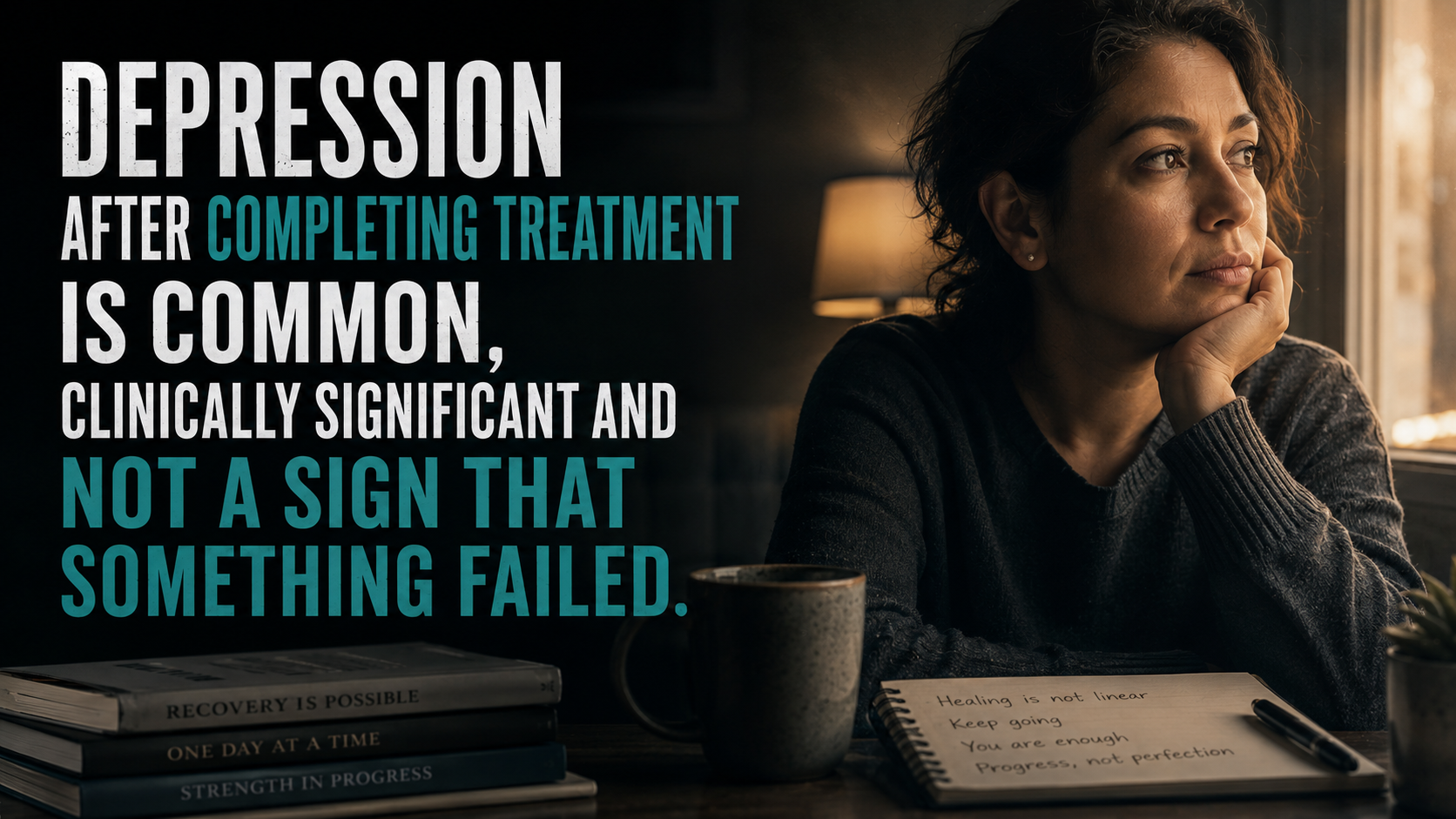
Depression after completing treatment is one of the most common experiences people face in early recovery, and it does not mean you did anything wrong. If you or someone you love feels low, heavy, or empty after finishing a program, that experience is real and it deserves care.
You may have expected to feel relieved, even proud. Instead, a quiet sadness or emptiness settled in, and now you wonder if you failed somehow.
You did not fail. Finishing treatment is a major accomplishment, and the feelings that follow are often part of the healing process, not a sign that it collapsed. Understanding why this happens can ease the fear and shame that so often come with it. With the right support, these feelings can be managed, and help is closer than it may feel right now.
What Is Depression After Completing Treatment?
Depression after completing treatment is a low, heavy, or numb mood that surfaces once a structured program ends and daily life resumes. It is a recognized part of many people’s recovery, not a rare or shameful exception.
During treatment, your days had structure, connection, and constant support. When that framework falls away, the sudden quiet can feel unsettling rather than freeing.
At the same time, your brain and body are still healing. Substance use and untreated mental health conditions change how the brain manages mood, and that recovery takes time.
This is why sadness, emptiness, or exhaustion can appear after a program ends. It is a clinical experience with real causes, and it responds well to compassionate, informed care.
Why Is Depression After Completing Treatment So Common?
Depression after completing treatment is so common because recovery reintroduces stress, routine, and emotion without the daily structure a program provided. The transition back to everyday life can feel overwhelming, even when you have worked hard to get there.
Several things happen at once during this stage. You leave a supportive environment, face old responsibilities, and start managing emotions that substances or symptoms once masked.
That combination can feel like a lot to carry. Feeling low in response is understandable, not a signal that something went wrong.
What Changes When the Structure of a Program Ends?
When the structure of a program ends, the steady rhythm of support, accountability, and connection suddenly loosens. That shift can leave a real gap, even for people who felt ready to move forward.
In treatment, your schedule was full and your support was close. At home, quiet hours and unstructured time can make difficult feelings louder.
This is why building new routines matters so much. Structure gives your day a dependable shape, which helps steady your mood during a vulnerable stretch.
How Does the Brain Still Heal After Treatment?
The brain still heals for weeks and months after treatment, as it works to restore healthy patterns for mood, sleep, and motivation. This ongoing repair means emotions can feel unpredictable for a while.
Substances and untreated conditions affect the brain’s chemistry over time. Rebuilding balance does not happen the moment a program ends.
Feeling low during this period is often part of that repair. Your mind and body are adjusting, and that adjustment deserves patience and support.
How Is Post-Treatment Depression Different From Relapse?
Post-treatment depression is different from relapse because it involves a mood shift, not a return to substance use. Feeling depressed is an emotional experience, while relapse is a behavior, and understanding that difference can ease a great deal of fear.
Many people worry that low mood means they are failing at recovery. In reality, depression and relapse are separate, even though one can increase the risk of the other if left unaddressed.
Recognizing the difference helps you respond with care rather than panic. You can treat the depression directly, which also protects your recovery.
What Does Post-Treatment Depression Look Like?
Post-treatment depression looks like persistent low mood, numbness, or exhaustion that lingers after a program ends. It affects how you feel, not whether you have returned to substance use.
You may notice some of these patterns in yourself or a loved one:
- You feel sad, empty, or emotionally flat most days.
- You struggle to enjoy activities that once brought you comfort.
- You feel tired no matter how much you rest.
- You have trouble concentrating or staying motivated.
- You feel disconnected from people around you.
- You experience guilt or a sense that you are not doing recovery “right.”
Noticing a few of these does not mean recovery is failing. It means your mood needs attention and support.
Why Does Confusing the Two Cause Harm?
Confusing depression with relapse causes harm because it adds shame to an already difficult moment. When you believe low mood equals failure, you may hide it rather than seek help.
That silence is risky. Untreated depression can quietly grow, which raises the very relapse risk you are trying to avoid.
Seeing depression clearly changes that. When you name it accurately, you can address it early, before it deepens.
Why Does Untreated Post-Treatment Depression Raise Relapse Risk?
Untreated post-treatment depression raises relapse risk because low mood can revive the urge to numb emotional pain. When sadness, emptiness, or hopelessness go unaddressed, the coping habits that treatment worked to change can feel tempting again.
Substances once offered temporary relief from difficult feelings. When depression returns and no other support is in place, the pull toward that old relief can grow stronger.
This is not a matter of weakness or willpower. It is a natural response to unaddressed pain, which is exactly why treating the depression matters so much.
Addressing depression early protects your progress. When you have real tools and steady support, difficult emotions become far more manageable, and the risk of returning to substances drops.
How Does Integrated Outpatient Care Address It?
Integrated outpatient care addresses post-treatment depression by treating your mental health and recovery together, within one coordinated plan. Instead of separating the two, this approach recognizes how closely mood and substance use are connected.
Care usually begins with a thorough assessment. This helps providers understand your history, symptoms, and goals so your support fits you rather than a generic template.
From there, treatment blends therapy, skill-building, and connection to help you feel steadier. You practice these tools in daily life, which makes the progress more durable over time.
What Therapies and Support Are Included?
The therapies and support included in outpatient care help you understand your mood and build healthier ways to cope. Several evidence-based approaches often work together.
- Cognitive behavioral therapy helps you notice and reshape the thoughts that keep depression in place.
- Individual counseling gives you a private space to explore emotions and triggers at a comfortable pace.
- Group therapy connects you with others who understand, easing shame and isolation.
- Relapse prevention planning helps you recognize warning signs and respond with confidence.
These pieces reinforce each other. Together, they treat the depression and protect your recovery as parts of the same journey. When mental health and substance use overlap, integrated dual diagnosis care tends to lead to steadier, more lasting results than treating either one alone.
What Flexible Options Fit Around Daily Life?
Flexible outpatient options let you receive real clinical support while continuing to work, study, and care for your family. You do not have to step away from your entire life to get help.
The levels of care range from more intensive support to lighter weekly sessions, each matched to a different stage of recovery. This flexibility lets treatment grow with you.
At Impact Outpatient Program, flexible outpatient and intensive outpatient options help you find the level of support that fits your needs and your schedule.
How Do You Know It Is Time to Seek Support?
You may be ready to seek support if low mood has lingered after completing a program and started to affect your daily life. You do not need to wait for a crisis to take your experience seriously.
Consider reaching out if any of these feel true for you or a loved one:
- Sadness, emptiness, or exhaustion has lasted for two weeks or longer since finishing treatment.
- You have lost interest in activities that once brought you comfort or joy.
- You feel guilt or shame about not doing recovery “the right way.”
- You have noticed the urge to numb difficult emotions returning.
- Your sleep, focus, or motivation has declined since your program ended.
- You feel isolated and unsure where to turn next.
If even one of these resonates, that is reason enough to talk with a professional. Reaching out is not a sign of failure. It is a caring step toward protecting the progress you have already made.
Common Questions Before Starting Treatment
Is it normal to feel depressed after completing treatment? Yes. Feeling low, empty, or exhausted after a program ends is a common part of recovery. It reflects both the loss of daily structure and the brain’s ongoing healing, and it responds well to support.
Does feeling depressed mean I have relapsed? No. Depression is a mood experience, while relapse is a return to substance use. They are separate, though untreated depression can raise relapse risk, which is why addressing it early matters.
Can I get help without returning to a full program? Yes. Outpatient and intensive outpatient options are built for flexibility, so support can fit alongside work, school, and family responsibilities. You can receive meaningful care while living at home.
What if I have both depression and substance use concerns? Integrated treatment can address both at the same time. Treating them together often works better than treating either one alone, because they frequently influence each other.
Take the Next Step Toward Steady Support
Depression after completing treatment is common, clinically significant, and never a sign that something failed. What you are feeling is a real and understandable part of recovery, and it deserves the same compassion and care that got you this far.
You deserve to feel steady, connected, and hopeful about the days ahead. Recognizing that your mood needs support is not a weakness. It is a wise and caring step forward.
If low mood has lingered since your program ended, help is available whenever you are ready. Reach out to Impact Outpatient Program today to learn how our compassionate team can support you or your loved one with clear, personalized care and a path forward built around your needs.