
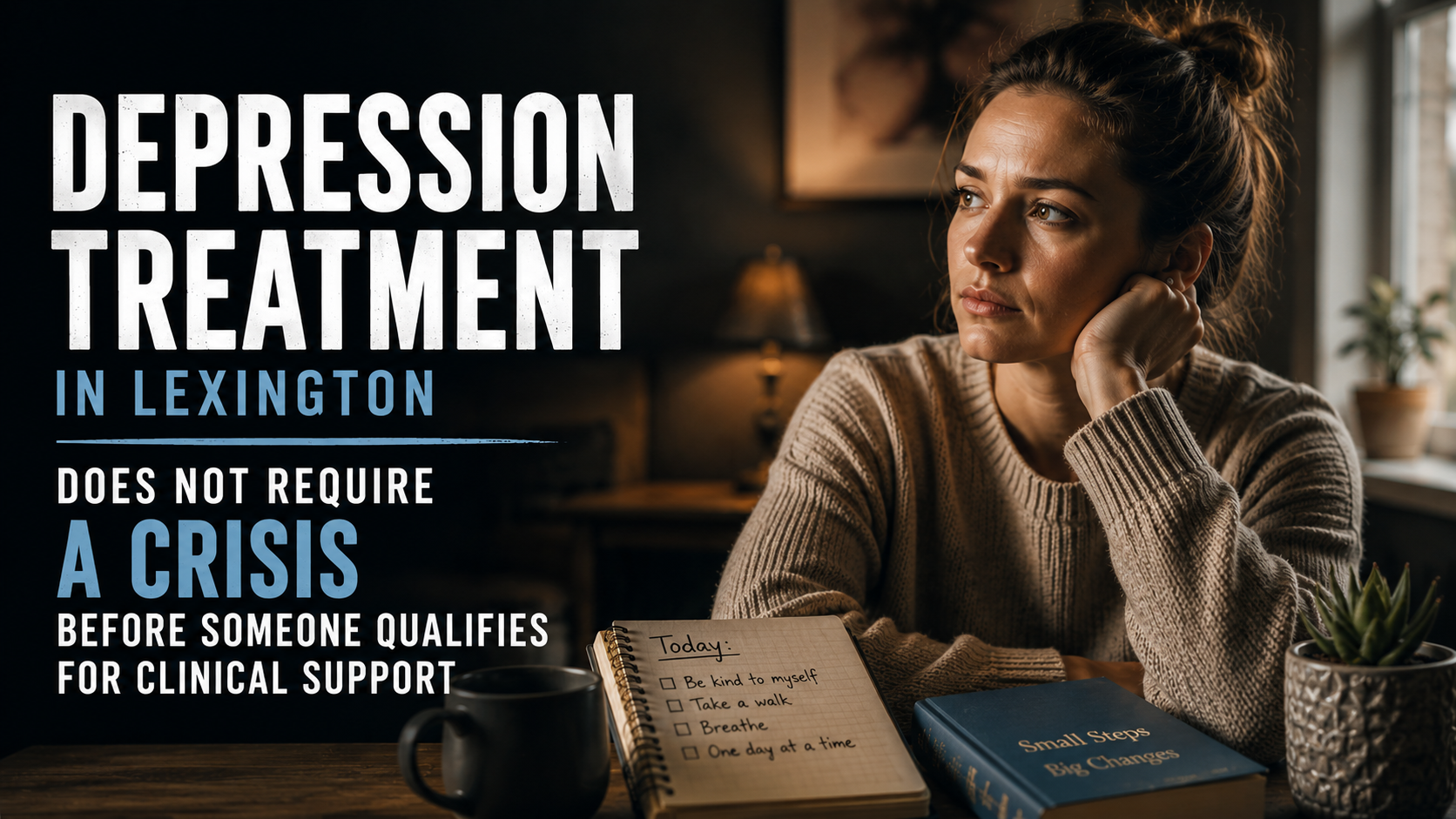
Depression treatment in Lexington is available long before life reaches a breaking point, and you do not need to hit rock bottom to deserve real clinical support. If you have quietly wondered whether what you are feeling is “bad enough” to seek help, that question alone is worth taking seriously.
Many people wait until they can barely function before reaching out. They assume that support is reserved for emergencies, or that their struggle does not count because they are still going to work and caring for others.
That belief keeps too many people suffering in silence. Depression is a treatable medical condition, not a personal failing, and early support often leads to steadier, faster recovery. You are not weak for feeling this way, and you are not alone. Understanding what care actually looks like can make reaching out feel far less intimidating, and help is closer than it may seem right now.
What Does Depression Treatment in Lexington Actually Involve?
Depression treatment in Lexington involves a combination of therapy, skill-building, and, when appropriate, medical support tailored to your specific needs. It is a structured, compassionate process, not a one-size-fits-all program.
Care usually begins with a thorough assessment. This helps providers understand your history, symptoms, and goals so your plan fits you rather than a generic template.
Therapy is often the foundation. Approaches like cognitive behavioral therapy help you notice the thought patterns and habits that keep depression in place, then build healthier responses.
Support also extends into daily life. Rebuilding routines, connection, sleep, and movement can gently restore the energy and motivation that depression tends to drain away.
Why Do You Not Need a Crisis to Qualify for Support?
You do not need a crisis to qualify for support because depression responds best to early, consistent care rather than emergency intervention. Waiting until things feel unbearable often makes recovery harder, not easier.
Depression rarely stays the same size. Left unaddressed, it tends to grow, spread into new areas of life, and pull energy, focus, and hope along with it.
Early support interrupts that pattern. When you reach out sooner, you have more tools, more stability, and more of your daily life still intact to build on.
What Are the Early Signs Worth Addressing?
The early signs worth addressing are the quiet changes that show up long before a crisis. Recognizing them can help you seek support while depression is still easier to treat.
You may notice some of these patterns in yourself or a loved one:
- You feel persistently low, empty, or numb for two weeks or longer.
- You have lost interest in activities and people that once brought you joy.
- You feel exhausted no matter how much you rest.
- You struggle to concentrate, make decisions, or stay motivated.
- You feel irritable, on edge, or disconnected from those around you.
- You have started using alcohol or other substances to cope.
Noticing a few of these does not mean something is wrong with you. It means your mind and body may be asking for support you have not yet been offered.
Why Is Depression a Clinical Condition and Not a Personal Failing?
Depression is a clinical condition because it involves real changes in brain chemistry, mood regulation, and energy, not a lack of willpower or strength. You cannot simply “snap out of it,” and being unable to do so is not a character flaw.
Depression affects how the brain manages mood, motivation, and the ability to feel pleasure. These are biological processes, which is why the condition responds to treatment rather than sheer effort.
Framing depression as a personal failing only deepens shame. That shame often keeps people silent, which delays the very support that could help them feel better.
Seeing depression clearly changes everything. When you understand it as a health condition, seeking help feels like the sensible, caring choice it truly is.
How Does Integrated Care Support Both Depression and Substance Use?
Integrated care supports both depression and substance use by treating them together as connected parts of one story rather than separate problems. This matters because the two so often overlap.
Many people reach for alcohol or other substances to quiet low mood, numbness, or emotional pain. That relief is temporary, and many substances deepen depression once their effects wear off.
This can create a cycle that feels hard to break. Depression fuels substance use, substance use worsens depression, and each one makes the other harder to treat alone.
When both are addressed at the same time, recovery becomes far steadier. Integrated dual diagnosis care treats the emotional pain and the substance use as one coordinated plan, which often leads to more lasting results than treating either one on its own.
What Flexible Outpatient Options Are Available in Lexington?
Flexible outpatient options in Lexington let you receive meaningful clinical support while continuing to work, study, and care for your family. You do not have to step away from your entire life to get help.
Outpatient care offers real structure without requiring you to live at a facility. You attend scheduled sessions and return home afterward, practicing new skills in your everyday environment.
What Do Different Levels of Care Look Like?
The different levels of outpatient care range from intensive daytime support to lighter weekly sessions, each matched to a different stage of recovery. This flexibility lets treatment grow with you.
Here is a simple overview of common options:
- Partial hospitalization offers structured treatment during the day while you return home in the evenings.
- Intensive outpatient care provides several therapy sessions each week, balancing strong support with the flexibility to keep up with daily life.
- Standard outpatient care involves fewer weekly sessions, helping you maintain progress as you build independence.
Many people move through these levels gradually, stepping down as they gain stability. At Impact Outpatient Program, flexible outpatient and intensive outpatient options help you find the level of support that fits your needs and your schedule.
How Do You Know It Is Time to Seek Support?
You may be ready to seek support if depression has started to shape your days more than you would like. You do not need to wait for a crisis, and you do not need permission to take your own experience seriously.
Consider reaching out if any of these feel true for you or a loved one:
- Low mood, numbness, or exhaustion has lasted for two weeks or longer.
- You have lost interest in things that once brought you meaning or joy.
- Your work, relationships, or daily routines have started to suffer.
- You have been managing these feelings alone and want real support.
- You have started using alcohol or other substances to feel better.
- People close to you have gently expressed concern.
If even one of these resonates, that is reason enough to talk with a professional. Reaching out is not an overreaction. It is a caring step toward feeling more like yourself again.
Common Questions Before Starting Treatment
Is my depression serious enough to get help? Yes, if it affects your daily life, mood, or relationships, it is worth addressing. You do not need a crisis to deserve support, and treatment can help with mild, moderate, and severe depression alike.
Do I have to stop working or leave my family to get treatment? No. Outpatient programs are designed for people who need flexible care. You can receive meaningful support while keeping up with work, school, and family responsibilities.
Will I have to take medication? Not necessarily. Many people improve with therapy and skill-building alone. Any conversation about medication happens with a provider who considers your preferences and needs.
What if I have both depression and substance use concerns? Integrated treatment can address both at the same time. Treating them together often works better than treating either one alone, because they frequently influence each other.
Take the Next Step Toward Feeling Like Yourself Again
Depression treatment in Lexington does not require a crisis before you qualify for clinical support, and recognizing that truth can free you or someone you love from years of unnecessary waiting. What you have carried quietly deserves real care, and reaching out early is a sign of strength, not weakness.
You deserve to feel present, connected, and hopeful about the days ahead. Depression is a treatable condition, and meaningful support is available whenever you are ready to take that first step.
If low mood, numbness, or exhaustion has shaped your days, help is closer than you think. Reach out to Impact Outpatient Program today to learn how our compassionate team can support you with clear, personalized care and a path forward built around your needs.