
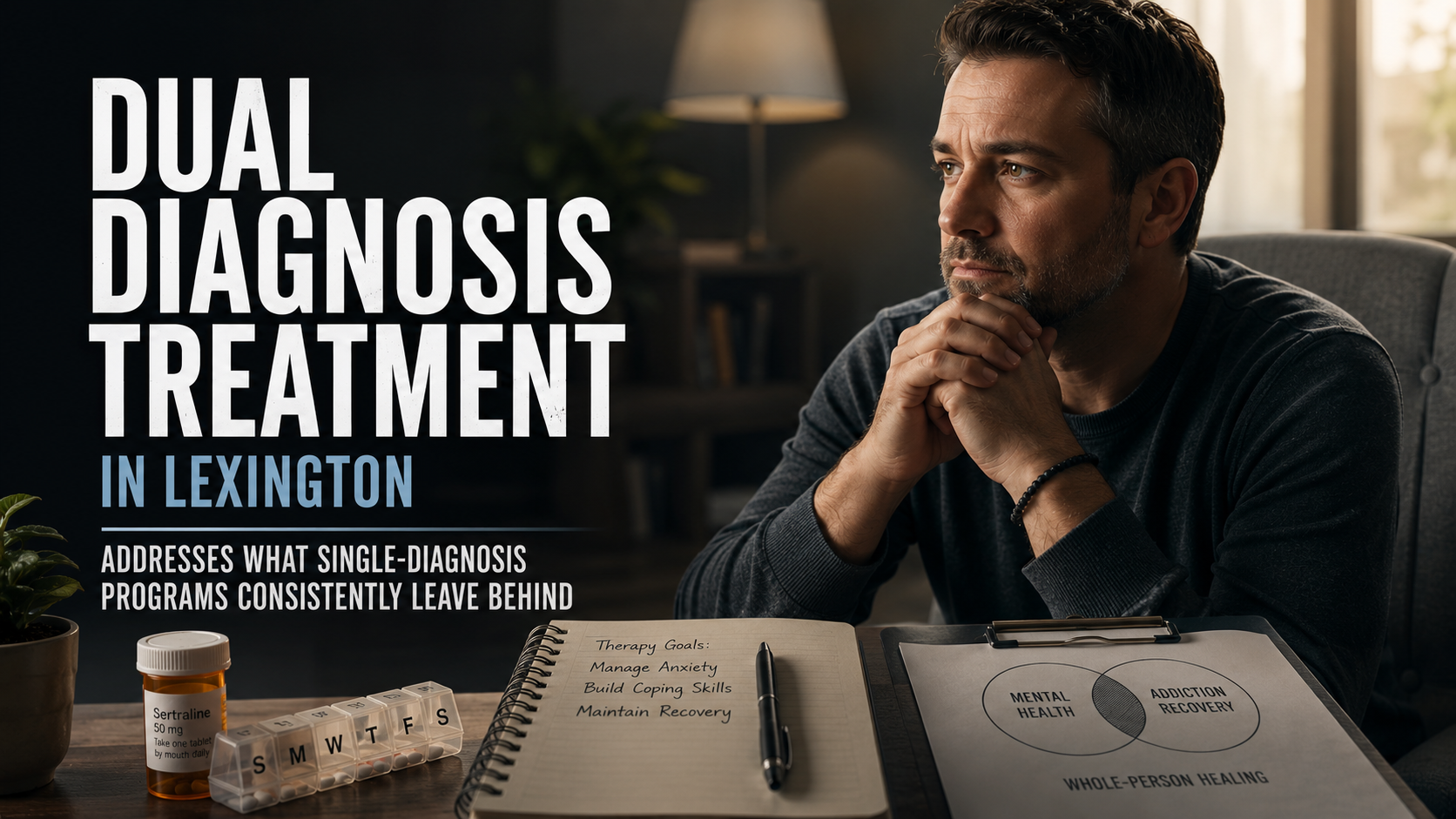
Dual diagnosis treatment in Lexington exists because mental health conditions and substance use so often show up together, feeding each other in ways that separate programs tend to miss. If you or someone you love has completed treatment before only to feel pulled back down, that frustration makes sense.
Maybe the substance use got addressed while anxiety or depression quietly stayed in place. Or maybe the mental health struggle received attention while the drinking or drug use kept undoing every bit of progress.
That cycle is not a personal failure, and it is not a sign that recovery is out of reach. It often means the care did not treat the full picture. Understanding why integrated support works better can help you feel more hopeful about the road ahead, and real help is closer than it may seem.
What Does Dual Diagnosis Treatment in Lexington Actually Mean?
Dual diagnosis treatment in Lexington means addressing a mental health condition and a substance use disorder at the same time, within one coordinated plan. Instead of treating each issue separately, this approach recognizes how deeply the two are connected.
The term “dual diagnosis” simply describes living with both conditions at once. You may also hear it called co-occurring disorders, and it is far more common than most people expect.
For some, anxiety, depression, or trauma came first. Substances may have started as a way to quiet difficult feelings, then created new problems over time.
For others, substance use came first and slowly reshaped mood, sleep, and sense of self. Either way, dual diagnosis care looks at the whole person rather than a single symptom.
Why Do Single-Diagnosis Programs Consistently Fall Short?
Single-diagnosis programs fall short because they treat only one condition while the untreated one keeps pulling the person back. When two struggles are linked, addressing just one leaves a gap where relapse often begins.
Picture treating a fever without looking for the infection causing it. You may feel better briefly, but the root problem remains and the symptoms return.
The same happens in recovery. When substance use is treated but the anxiety beneath it is ignored, the urge to self-soothe usually comes back.
How Does an Untreated Condition Undo Progress?
An untreated condition undoes progress by reactivating the very patterns treatment worked to change. Each condition can trigger, mask, or worsen the other in a steady loop.
Depression can drain the motivation needed to stay in recovery, making substances feel like the only relief. Substances then deepen low mood, which strengthens the urge to keep using.
This is why treating one side alone often feels like running in place. Real, lasting change requires care that addresses both at once.
Who Benefits From Dual Diagnosis Care?
Dual diagnosis care benefits anyone living with both a mental health condition and a substance use disorder, whether the two began together or years apart. You do not need a formal label to benefit from this kind of support.
Many people arrive at treatment unsure which came first. That uncertainty is completely normal, and it does not need to be solved before help can begin.
You might recognize the need for integrated care if any of these patterns feel familiar:
- You use substances to manage anxiety, sadness, or racing thoughts.
- Your mood shifts seem tied to when you drink or use.
- Past treatment focused on only one condition and did not fully help.
- Sleep, focus, or relationships suffer from both mental health and substance use.
- You feel caught in a loop where progress in one area collapses in another.
Recognizing these patterns is not a reason for shame. It is a signal that you deserve care built around the full picture of what you are experiencing.
How Does Dual Diagnosis Treatment Actually Work?
Dual diagnosis treatment works by blending therapy, medical support, and skill-building into one coordinated plan led by a team that understands both conditions. The goal is to help you feel steady while addressing the roots of what you are facing.
Care usually begins with a thorough assessment. This helps providers understand your history, symptoms, and needs so the plan fits you rather than a generic template.
What Therapies Are Commonly Used?
The therapies commonly used in dual diagnosis care help you understand your patterns and build healthier ways to cope. Several evidence-based approaches often work together.
- Cognitive behavioral therapy helps you notice and reshape the thoughts that fuel both distress and substance use.
- Individual counseling gives you a private space to explore trauma, emotions, and triggers at a safe pace.
- Group therapy connects you with others who understand the experience, easing shame and isolation.
- Family education helps loved ones respond with support and healthy boundaries.
These pieces reinforce each other. Together, they treat the mental health condition and the substance use as connected parts of one story.
How Does Medication Fit Into the Plan?
Medication can help when it eases symptoms enough for therapy and daily life to feel manageable. When appropriate, a medical provider may discuss options for anxiety, depression, sleep, or mood.
This is always a personal decision made with professional guidance. The aim is to support stability, not to replace the deeper work of recovery.
At Impact Outpatient Program, care is designed to meet you where you are. Flexible outpatient and intensive outpatient options let you receive meaningful support while staying connected to work, school, and family.
Why Do Mental Health and Substance Use Travel Together So Often?
Mental health and substance use travel together so often because each one can trigger or intensify the other. This connection is not a coincidence, and it is never a personal weakness.
When emotional pain feels overwhelming, substances can seem like a way to cope. That relief is temporary, and it often leaves the underlying pain untouched or even deeper than before.
Trauma adds another layer. Painful memories and a nervous system stuck on high alert can make numbing feel necessary, even when it causes harm.
Because the two are so intertwined, treating them together tends to produce steadier results. Integrated care for co-occurring conditions addresses both needs as one connected plan, so nothing important slips through the cracks.
How Do You Know It Is Time to Seek Dual Diagnosis Support?
You may be ready to seek dual diagnosis support if mental health struggles and substance use keep affecting each other in ways you cannot untangle alone. You do not need to wait for a crisis to reach out.
Consider connecting with a professional if any of these feel true for you or a loved one:
- Efforts to cut back on substances leave anxiety, depression, or trauma symptoms harder to manage.
- Your mental health worsens during or after using, then improves when you pause.
- Previous treatment addressed only one condition and left the other untouched.
- Substances have become your main way to cope with difficult emotions.
- You feel stuck in a cycle where progress in one area keeps collapsing in another.
If even one of these resonates, that is reason enough to talk with a professional. Reaching out is not an overreaction. It is a meaningful step toward relief and stability.
Common Questions Before Starting Treatment
Which condition gets treated first in dual diagnosis care? Both are treated together, not one after the other. Integrated care addresses your mental health and substance use at the same time, because progress in one area supports progress in the other.
Do I need a formal mental health diagnosis before starting? No. A thorough assessment at the start of treatment helps clarify what you are experiencing. You do not need to have everything figured out before reaching out for help.
Can I get dual diagnosis care without pausing my whole life? Yes. Outpatient and intensive outpatient programs are built for flexibility, so support can fit alongside work, school, and family responsibilities.
Will treating my mental health mean I have to take medication? Not necessarily. Many people improve through therapy and skill-building alone. Any conversation about medication happens with a provider who considers your needs and preferences.
Take the Next Step Toward Whole-Person Healing
Dual diagnosis treatment in Lexington exists because mental illness and substance use so rarely travel alone, and treating both together gives you or your loved one a real chance at lasting stability. What has felt like an endless loop can begin to change with compassionate, coordinated support.
You deserve care that sees the whole picture, honors your dignity, and meets you exactly where you are. Recognizing that both conditions need attention is not a weakness. It is the beginning of real progress.
If mental health and substance use have been feeding each other, help is available whenever you are ready. Reach out to Impact Outpatient Program today to learn how our compassionate team can support you or your loved one with clear, personalized care and a path forward built around your needs.