
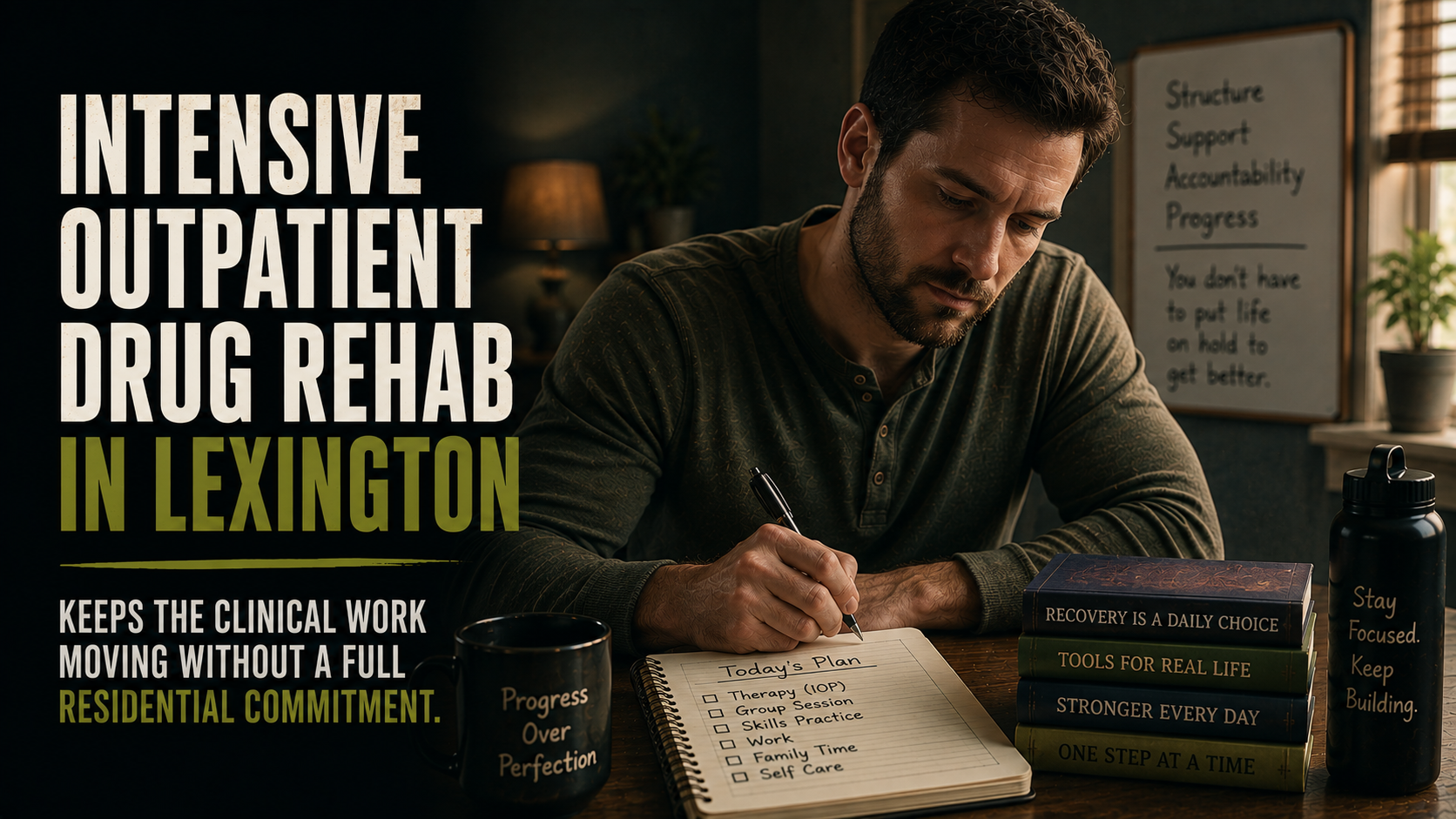
Intensive outpatient drug rehab in Lexington gives you serious, structured clinical care while letting you stay connected to home, work, and the people who matter most. If you or someone you love needs more support than a weekly therapy session but cannot step away from life for weeks at a time, this level of care may be exactly what you have been looking for.
You may have wondered whether real treatment is possible without checking into a facility. That question is fair, and the answer brings a lot of relief.
For many people, intensive outpatient care offers the steady clinical momentum of recovery without pausing everything else. Understanding how it works can make that first step feel far less overwhelming, and support is closer than it may seem right now.
What Is Intensive Outpatient Drug Rehab in Lexington?
Intensive outpatient drug rehab in Lexington is a structured treatment program that provides multiple therapy sessions each week while you continue living at home. It sits between residential care and standard outpatient treatment, offering strong clinical support without requiring an overnight stay.
Instead of moving into a facility, you attend scheduled sessions and return to your own space afterward. This lets you keep working, studying, or caring for your family while still receiving serious care.
An intensive outpatient program, often called an IOP, usually includes several hours of treatment across multiple days each week. That rhythm keeps the clinical work moving steadily rather than stopping and starting.
Care typically blends individual therapy, group sessions, and support for any mental health conditions. Each piece works together to help you build lasting skills in the environment where you actually live.
How Does Intensive Outpatient Drug Rehab in Lexington Differ From Other Levels of Care?
Intensive outpatient drug rehab in Lexington differs from other levels of care mainly in intensity, structure, and whether you live at the facility. Understanding where it fits can help you choose the right starting point for you or a loved one.
Recovery care exists on a spectrum. Each level offers a different balance of support and independence, and the best fit depends on your needs and daily life.
How Is It Different From Residential Treatment?
Intensive outpatient care differs from residential treatment because you live at home rather than staying at a facility around the clock. Residential care surrounds you with support day and night, which suits people who need a fully structured, substance-free environment.
Intensive outpatient care offers strong clinical support during scheduled hours, then trusts you to practice new skills at home. This works well when your living situation feels stable and supportive.
For many people, this balance is a real strength. You get meaningful treatment while staying connected to work, family, and the routines that give life purpose.
How Is It Different From Standard Outpatient Care?
Intensive outpatient care differs from standard outpatient care because it involves more sessions and more clinical structure each week. Standard outpatient treatment usually includes one or two sessions weekly, which fits people who are further along in recovery.
Intensive outpatient care provides several sessions across multiple days. That added structure keeps the work moving during vulnerable early stages when steady support matters most.
Many people move from intensive outpatient care to standard outpatient care over time. This gradual step-down protects progress while building independence. At Impact Outpatient Program®, flexible outpatient and intensive outpatient options help you find the level that fits your needs.
Who Is Intensive Outpatient Drug Rehab Right For?
Intensive outpatient drug rehab is right for people who need real clinical structure but have a stable home environment to return to each day. It fits those who are ready for serious treatment without stepping away from their responsibilities.
This level of care serves many situations, though it is not the right starting point for everyone. Knowing the difference helps you make a confident, informed choice.
You may find intensive outpatient care well suited to your situation if any of these feel true for you or a loved one:
- You have a safe, substance-free place to live during treatment.
- You have completed detox or residential care and are ready to step down.
- Your job, school, or family responsibilities make a residential stay difficult.
- You have supportive people around you who encourage your recovery.
- You need more support than weekly therapy can provide.
Recognizing yourself here is a hopeful sign. It suggests you may be ready for the balance of structure and flexibility that intensive outpatient care offers.
If your home feels unsafe, or if withdrawal poses medical risks, a higher level of care may help first. Choosing the right starting point is a sign of wisdom, not weakness.
How Does Intensive Outpatient Care Treat Mental Health and Substance Use Together?
Intensive outpatient care treats mental health and substance use together by addressing them as connected parts of one story rather than separate problems. This matters because the two so often overlap.
Many people reach for substances to quiet anxiety, depression, or painful memories. That relief is temporary, and many substances deepen those struggles once their effects wear off.
This can create a cycle that feels hard to break. Emotional pain fuels substance use, substance use worsens the pain, and each one makes the other harder to treat alone.
When both are addressed at the same time, recovery becomes far steadier. Untreated emotional pain is one of the most common reasons people return to substances, so treating the whole person protects your progress.
At Impact Outpatient Program, integrated dual diagnosis care treats mental health and substance use within one coordinated plan. This approach often leads to more lasting results than treating either condition on its own.
What Does a Typical Week Look Like in an Intensive Outpatient Program?
A typical week in an intensive outpatient program includes several therapy sessions spread across multiple days, usually for a few hours at a time. This steady rhythm keeps recovery active while leaving room for work, school, and family.
Structure is one of the quiet strengths of this level of care. When your week has a dependable shape, it becomes easier to focus on healing rather than decisions and distractions.
What Kinds of Sessions Are Included?
The sessions included in a typical week blend individual therapy, group therapy, and skill-building focused on real recovery goals. Each type of session serves a different purpose in your care.
A typical week often includes:
- Individual therapy that gives you private space to explore triggers, emotions, and goals.
- Group therapy that offers connection and the comfort of shared experience.
- Skill-building sessions that help you manage cravings, stress, and difficult emotions.
- Mental health support for co-occurring conditions like anxiety, depression, or trauma.
- Relapse prevention planning that helps you recognize warning signs and respond with confidence.
These pieces reinforce each other. Together, they help you build tools you can use long after treatment ends.
How Does the Schedule Fit Around Daily Life?
The schedule fits around daily life by offering sessions at times that work with your responsibilities. Many programs provide morning or evening options so you can keep earning an income and caring for loved ones.
This flexibility is part of what makes intensive outpatient care so practical. You build recovery skills during sessions, then practice them in the real world where they matter most.
Practicing recovery in your actual environment helps those skills hold. When you learn to manage stress at home rather than only in a facility, the progress tends to last.
How Do You Know Intensive Outpatient Care Is the Right Next Step?
You may be ready for intensive outpatient care if you need strong clinical support but can safely return home each day. You do not need to have everything figured out before reaching out.
Consider talking with a professional about this level of care if any of these feel true for you or a loved one:
- You need more support than weekly therapy but cannot commit to residential care.
- You have completed detox or a higher level of care and want to keep the momentum going.
- You have a stable, supportive place to live during recovery.
- You want treatment that fits around work, school, or family responsibilities.
- You are managing both substance use and a mental health condition.
- You feel ready to take an active role in your own healing.
If even one of these resonates, that is reason enough to talk with a professional. Choosing intensive outpatient care is not settling for less. It is stepping into a level of care that trusts your strength and supports your growth.
Common Questions Before Starting Treatment
How many hours a week does intensive outpatient care involve? Intensive outpatient programs usually involve several hours of treatment across multiple days each week. The exact schedule depends on your needs, and your care team will help you find a rhythm that supports both recovery and daily life.
Can I keep working while in an intensive outpatient program? Yes. These programs are designed to fit around work, school, and family responsibilities. Many people attend morning or evening sessions so they can maintain their daily commitments while receiving serious care.
How is intensive outpatient care different from standard outpatient care? Intensive outpatient care includes more sessions and stronger clinical structure each week, while standard outpatient care involves fewer sessions as you build independence. Many people step down from intensive to standard outpatient care over time.
What if I have both substance use and a mental health condition? Integrated treatment can address both at the same time. Treating them together often works better than treating either one alone, because they frequently influence each other.
Take the Next Step Toward Lasting Recovery
Intensive outpatient drug rehab in Lexington keeps the clinical work moving without asking you to leave your whole life behind, and recognizing that option can open a door you may have thought was closed. Recovery does not have to mean choosing between your health and your responsibilities. With the right care, you can pursue both.
You deserve support that respects your strength, honors your commitments, and meets you exactly where you are. Choosing this level of care is not a sign that your struggle is small. It is a sign that you are ready to move forward.
If you or someone you love is ready to build recovery within daily life, help is available whenever you are ready. Reach out to Impact Outpatient Program today to learn how our compassionate team can support you with clear, personalized care and a path forward built around your needs.