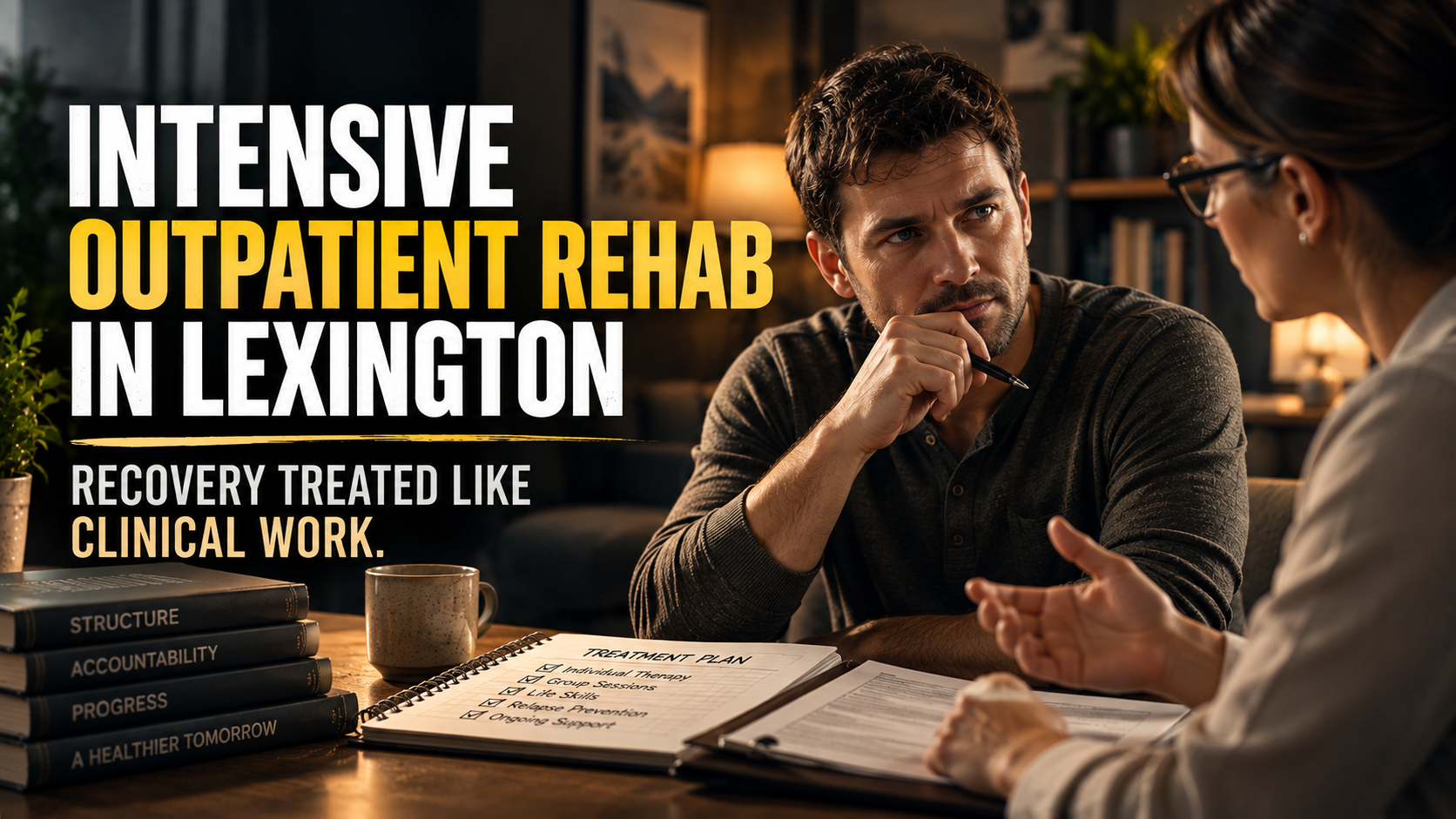
Intensive outpatient rehab in Lexington is designed for people who are ready to show up, do the work and treat recovery as seriously as any other health condition. If you are considering this option for yourself or someone you love, you may feel hopeful and nervous at the same time.
You may have tried to cut back on your own. A weekly counseling appointment may have helped a little but never felt like enough. You might also worry that choosing a more demanding program means admitting things are worse than you hoped.
That worry is understandable, but choosing more structure is not a sign of failure. It is a sign that you are ready to give recovery real time, attention and effort. The right program meets that readiness with clinical care that matches it. You do not have to figure out the next step alone, and support is available whenever you are ready.
What Is Intensive Outpatient Rehab in Lexington?
Intensive outpatient rehab in Lexington is a structured level of addiction and mental health treatment that provides several therapy sessions each week while you continue living at home. It is often called an intensive outpatient program, or IOP.
IOP sits between partial hospitalization and standard outpatient care. The American Society of Addiction Medicine (ASAM) defines adult intensive outpatient treatment as 9 or more hours of structured clinical services each week.
That time is clinical, not casual. Every session follows a treatment plan built from a thorough assessment, and your care team reviews your progress regularly.
What Happens During IOP Sessions?
IOP sessions combine group therapy, individual counseling and skill-building focused on the patterns that keep substance use going. Most intensive outpatient rehab in Lexington includes a mix of these approaches:
- Group therapy helps you practice honest communication with peers who understand what recovery asks of you.
- Individual counseling gives you private time to work on personal triggers, goals and history.
- Cognitive behavioral therapy (CBT) teaches you to notice and reshape the thoughts that lead toward use.
- Dialectical behavior therapy (DBT) skills help you manage intense emotions without turning to substances.
- Relapse prevention planning prepares you for high-risk situations before they happen.
- Family sessions help loved ones understand recovery and support it in healthy ways.
Each piece has a purpose. Together, they help you build new responses to stress, cravings and difficult emotions.
Why Does Intensive Outpatient Rehab in Lexington Ask You to Treat Recovery Like Clinical Work?
Intensive outpatient rehab in Lexington asks you to treat recovery like clinical work because progress comes from consistent participation, honest reporting and practice between sessions. The structure works best when you engage with it fully.
Think of it like physical therapy after an injury. Showing up to appointments matters, yet the exercises you complete at home are what rebuild strength.
What Does Active Engagement Look Like?
Active engagement looks like attending every session, completing assignments and telling your care team the truth about cravings or setbacks. In practice, it often means:
- You arrive on time and ready to participate.
- You complete homework such as thought records or coping plans.
- You share slips, close calls and hard days instead of hiding them.
- You try new skills in real situations and report what worked.
None of this requires perfection. It requires willingness.
Why Is Honesty So Valuable in IOP?
Honesty is valuable because your care team can only adjust your plan based on what they know. A reported craving is useful clinical information, not a mark against you.
Many people in recovery carry shame about setbacks. In a supportive program, sharing that information leads to more help, not judgment.
How Is IOP Structured Week to Week?
Many programs offering intensive outpatient rehab in Lexington meet three to five days a week, with sessions lasting a few hours each. Daytime and evening tracks often make it possible to keep working, attending school or caring for family.
A typical week might include:
- Three or more group therapy sessions focused on skills and processing.
- One individual counseling session to review personal goals.
- Regular check-ins on cravings, mood and sleep.
- Family or psychiatric appointments as your plan requires.
The length of participation varies. Many people attend for several weeks to a few months, then step down as stability grows. Your team bases that timing on progress, not a fixed calendar.
How Does Living at Home Help Recovery?
Living at home helps because you practice new skills in the same places where triggers actually appear. A stressful workday or a tense family dinner becomes something real to bring back to group.
That real-world practice is one of the biggest strengths of intensive outpatient rehab in Lexington. It also means your home needs to be reasonably safe and supportive of recovery.
How Does Intensive Outpatient Rehab in Lexington Compare to Other Levels of Care?
Intensive outpatient rehab in Lexington offers more structure than standard outpatient care and less than partial hospitalization or residential treatment. Here is a simple comparison:
- Partial hospitalization program (PHP) provides treatment most of the day, several days a week, with evenings at home.
- Intensive outpatient program (IOP) provides 9 or more hours of weekly treatment around daily responsibilities.
- Standard outpatient care usually means one or two sessions a week for people with steadier footing.
When Is Standard Outpatient Not Enough?
Standard outpatient care may not be enough when cravings, mood symptoms or past setbacks call for more frequent clinical contact. A single weekly appointment leaves many days without support.
For people in that position, intensive outpatient rehab in Lexington closes the gap with more contact and more accountability.
When Is a Higher Level of Care Safer?
A higher level of care is safer when withdrawal could be dangerous, home feels unsafe or someone is having thoughts of suicide. Alcohol and benzodiazepine withdrawal in particular may require medical detox first.
If you are in crisis, call or text 988 or call 911 right away. Once you are stable, a caring team can help you move into flexible outpatient programs that match your needs.
How Does Dual Diagnosis Care Fit Into IOP?
Dual diagnosis care fits into IOP by treating substance use and mental health conditions like anxiety, depression or trauma together in one plan. Many people use alcohol or drugs to quiet emotional pain, and that pain often returns once use stops.
When those conditions go untreated, they can quietly pull recovery backward. Treating them on separate tracks with separate providers can leave gaps.
When intensive outpatient rehab in Lexington includes integrated dual diagnosis care, one team addresses both conditions with a shared picture of your needs. Psychiatric evaluation and medication management can support stability when appropriate.
Medication-assisted treatment (MAT) may also be part of care for opioid or alcohol use disorders. It is always a shared decision between you and your provider.
Is Intensive Outpatient Rehab in Lexington Right for You?
Intensive outpatient rehab in Lexington may be right for you if you want strong clinical support and are ready to commit several days a week to recovery. Consider these signs as you weigh your next step:
- You have tried weekly counseling or quitting alone and want more structure.
- You can commit to attending sessions several days each week.
- Your home environment is safe enough to support recovery between sessions.
- You are not at risk of dangerous withdrawal, or you have already completed medical detox.
- You are managing both substance use and a mental health condition.
- You are stepping down from residential or partial hospitalization care and want continued support.
If several of these feel true, a conversation with an admissions team can clarify your fit. If you are still unsure, that is okay. An assessment exists to answer that question with you.
Common Questions Before Starting Treatment
How many hours a week is IOP? Most adult programs provide 9 or more hours of structured treatment each week. Your exact schedule depends on the program and your treatment plan.
Can I keep working during intensive outpatient rehab in Lexington? Yes, many people do. Evening and flexible tracks are designed to fit around work, school and family responsibilities.
What if I miss a session or have a setback? Tell your care team as soon as possible. Setbacks are treated as information, and your plan may adjust to give you more support.
Does insurance cover IOP? Many insurance plans include coverage for intensive outpatient treatment, though benefits vary. An admissions team can help verify your coverage before you begin.
Take the Next Step Toward Focused Recovery
Intensive outpatient rehab in Lexington is built for people who are ready to give recovery real structure, honesty and effort. It offers the clinical depth of a serious program while letting you stay connected to home, work and family.
Your readiness matters, and it deserves care that matches it. Recovery takes time, and with the right support, steady progress is possible.
If you are ready to treat recovery like the important work it is, reach out to Louisville Addiction Treatment Center today. Our compassionate team can answer your questions, review your options and help you build a path forward around your needs.