
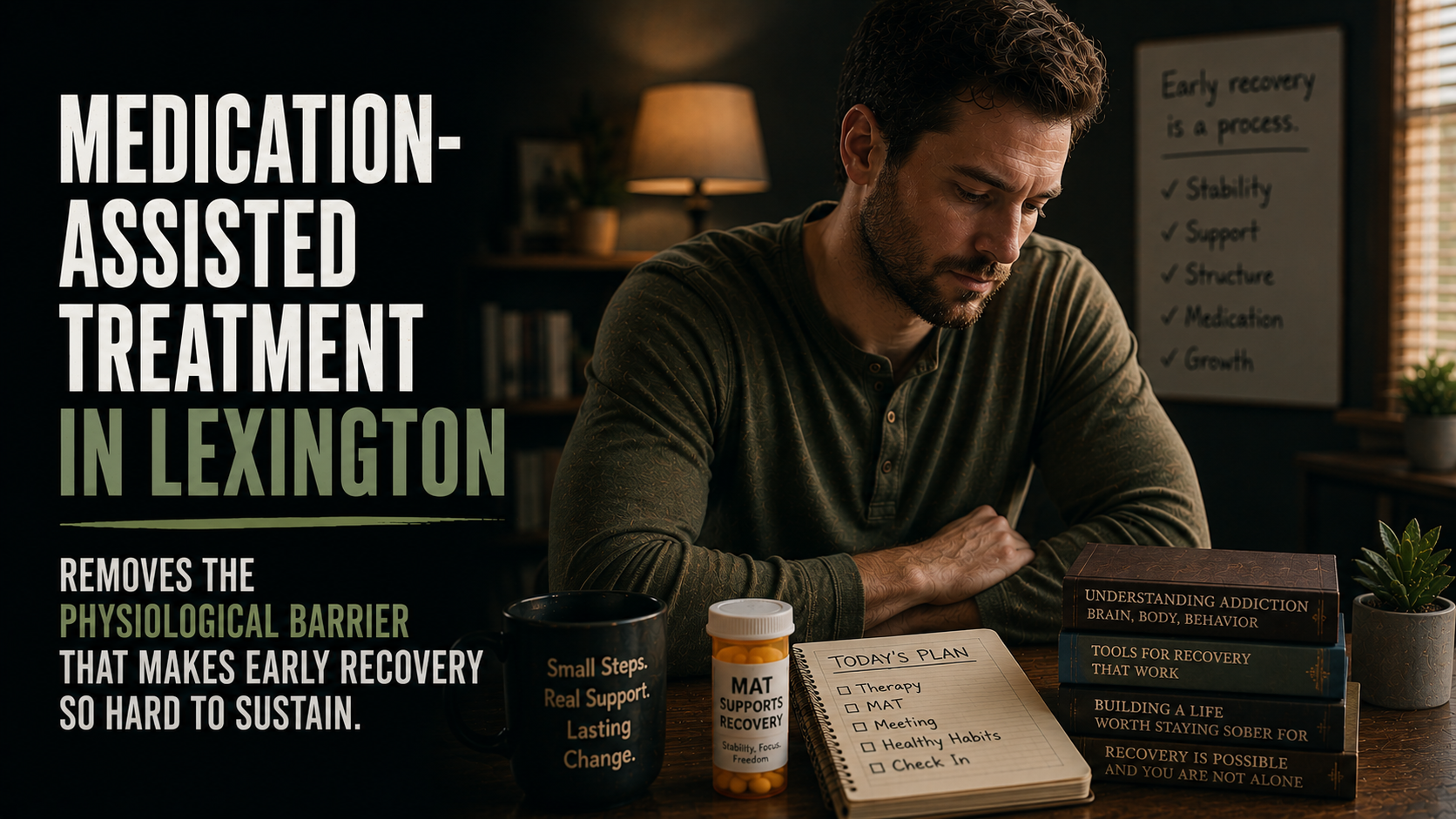
Medication-assisted treatment in Lexington gives you a way to steady your body during early recovery, when cravings and withdrawal can make even a strong commitment feel impossible to hold. If you or someone you love has tried to stop using opioids or alcohol only to be pulled back by physical symptoms, that struggle is not a failure of willpower.
You may have promised yourself this time would be different. Then the sickness, the cravings, and the restlessness set in, and staying the course felt beyond reach.
That experience is not weakness. It is biology. When substances change how the brain and body function, the earliest days of recovery come with real physical barriers that determination alone cannot always overcome. The encouraging truth is that those barriers can be treated. With the right medical support, early recovery becomes far more manageable, and lasting change becomes possible. Understanding how this care works can ease your fear, and help is closer than it may feel right now.
What Is Medication-Assisted Treatment in Lexington?
Medication-assisted treatment in Lexington is an evidence-based approach that combines FDA-approved medications with counseling and support to treat opioid and alcohol use disorders. It addresses both the body and the mind, rather than expecting willpower to carry the entire weight of recovery.
The medications work by easing withdrawal symptoms and reducing cravings. This gives your brain time to begin healing while you focus on the deeper work of recovery.
Counseling and therapy are just as central to this approach. Medication creates stability, and therapy helps you understand your triggers, build coping skills, and rebuild daily life.
Think of it like a cast for a broken bone. The cast provides support and stability while the real healing happens underneath, over time.
How Does Medication-Assisted Treatment Work Physiologically?
Medication-assisted treatment works physiologically by acting on the same brain systems that substances have disrupted, but in safer, more controlled ways. This helps restore enough balance for the brain to begin repairing itself.
Opioids and alcohol change how the brain manages reward, stress, and pain. Over time, the brain adapts and comes to rely on the substance just to feel steady.
When the substance is removed, that balance collapses. The result is withdrawal, intense cravings, and a nervous system in distress, all of which make early recovery so hard to sustain.
What Do the Medications Actually Do?
The medications used in this approach ease withdrawal and cravings by gently steadying the brain’s chemistry. Each one works a little differently, and a provider matches the option to your needs.
- Some medications reduce cravings and withdrawal without producing the intense effects of the original substance.
- Others block the substance’s effects, so using offers no reward.
- Certain options help lessen the urge to drink or make drinking feel less rewarding.
The goal is never to replace one dependence with another. It is to quiet the physical noise of cravings and withdrawal so you can fully engage in recovery.
Why Does This Give the Brain Time to Heal?
This approach gives the brain time to heal because it removes the constant physical crisis that drives a return to substance use. When your body is not in survival mode, your mind can focus on real change.
Healing the brain’s reward and stress systems takes weeks and months, not days. Medication supports you through that vulnerable stretch, so early setbacks are less likely to derail your progress.
Why Is Early Recovery So Hard Without This Support?
Early recovery is so hard without this support because withdrawal and cravings create physical barriers that sheer determination cannot always overcome. The brain, adapted to the substance, sends powerful signals demanding it back.
These signals are not a sign of a weak character. They are survival responses, as urgent as hunger or thirst, and they can feel overwhelming.
For many people, this is exactly where recovery stalls. The desire to change is real, yet the body’s reaction makes staying the course feel impossible.
What Does This Physical Barrier Feel Like?
The physical barrier of early recovery feels like a wave of symptoms that pull you back toward using. Recognizing these can help you understand that what you feel is expected, not a personal failing.
- Intense cravings that seem to fill your whole mind
- Nausea, body aches, sweating, or shaking
- Anxiety, restlessness, or irritability
- Trouble sleeping or exhaustion that never lifts
- A deep sense that using is the only way to feel normal again
When these symptoms are eased, the space they occupied can be filled with healing instead. That is the quiet strength of this kind of care.
Who Benefits From Medication-Assisted Treatment?
People with opioid or alcohol use disorders benefit most from medication-assisted treatment, especially when cravings and withdrawal have made previous attempts to stop feel impossible. It is a recognized, effective option, not a last resort.
You do not need to have tried everything else first. This approach can be a strong, informed starting point for many people.
You may find this care especially helpful if any of these feel true for you or a loved one:
- You have tried to stop before but were pulled back by withdrawal or cravings.
- You feel physically ill or anxious when you go without the substance.
- You need more of the substance now than you once did to feel the same effect.
- Cravings make it hard to focus on work, family, or daily life.
- You are managing both substance use and a mental health condition.
Recognizing yourself here is not a reason for shame. It is a sign that a medical, whole-person approach could help you find steadier ground.
How Does Medication-Assisted Treatment Address Co-Occurring Mental Health Conditions?
Medication-assisted treatment addresses co-occurring mental health conditions by pairing physical stability with care for anxiety, depression, trauma, and other struggles. This matters because substance use and mental health so often travel together.
Many people use substances to quiet emotional pain. When cravings ease, that underlying pain often becomes clearer, and it needs its own attention.
Treating only the physical side leaves part of the story untouched. Untreated emotional pain is one of the most common reasons people return to substances after early progress.
When both are addressed together, recovery becomes far steadier. Integrated dual diagnosis care treats the substance use and the mental health condition as connected parts of one plan, which tends to lead to more lasting results than treating either one alone.
At Impact Outpatient Program®, care is designed to meet you where you are. Flexible outpatient and intensive outpatient options let you receive medical support and therapy while staying connected to work, school, and family.
How Does Flexible Outpatient Care in Lexington Support the Full Journey?
Flexible outpatient care in Lexington supports the full journey by combining medication, therapy, and different levels of care that adjust as you grow stronger. You do not have to step away from your entire life to get help.
Outpatient care offers real clinical structure without a residential stay. You attend scheduled sessions, receive medical support, and return home to practice new skills where you actually live.
What Do the Levels of Care Look Like?
The levels of outpatient care range from more intensive daily support to lighter weekly sessions, each matched to a different stage of recovery. Many levels also incorporate medication-assisted treatment to help manage withdrawal symptoms and reduce cravings. This flexibility lets treatment grow with you.
- Partial hospitalization offers structured treatment during the day, often including medication-assisted treatment, while you return home in the evenings.
- Intensive outpatient care provides several therapy sessions each week, and may combine medication-assisted treatment with counseling to balance strong support with flexibility.
- Standard outpatient care involves fewer weekly sessions, where medication-assisted treatment may continue as you build independence.
Many people move through these levels gradually, stepping down as they gain stability. Medication-assisted treatment can play an important role at every stage of this journey. At Impact Outpatient Program, flexible outpatient and intensive outpatient options including medication-assisted treatment help you find the level of support that fits your needs and your schedule.
How Do You Know It Is Time to Seek Support?
You may be ready to seek support if cravings and withdrawal keep standing between you and the recovery you want. You do not need to reach a crisis point to deserve compassionate, professional care.
Consider reaching out if any of these feel true for you or a loved one:
- You have tried to stop using opioids or alcohol but were pulled back by physical symptoms.
- Cravings feel too strong to manage through willpower alone.
- Withdrawal has made previous attempts at recovery feel impossible to sustain.
- You want a medical, evidence-based approach that treats the whole person.
- You are managing both substance use and a mental health condition.
- You want treatment that fits around your work, school, or family.
If even one of these resonates, that is reason enough to talk with a professional. Reaching out is not a sign of failure. It is a wise, hopeful step toward reclaiming your health and your future.
Common Questions Before Starting Treatment
Does using medication mean I am not truly in recovery? No. Medication-assisted treatment is a recognized, evidence-based path to recovery. The medication steadies your brain chemistry so you can fully engage in therapy and rebuild your life, which is exactly what recovery involves.
Will I be on medication forever? Not necessarily. Treatment timelines are personal and made with professional guidance. Some people use medication for a shorter period, while others benefit from longer support, and your care team will help you find what fits your needs.
Can I keep working while receiving this care? Yes. Outpatient programs are designed for flexibility, so treatment can fit around work, school, and family. Many people attend sessions at times that work with their daily commitments.
What if I have both substance use and a mental health condition? Integrated treatment can address both at the same time. Treating them together often works better than treating either one alone, because they frequently influence each other.
Take the Next Step Toward Lasting Recovery
Medication-assisted treatment in Lexington removes the physiological barrier that makes early recovery so hard to sustain, and recognizing that truth can free you or someone you love from years of shame and setbacks. This is a medical, whole-person approach, not a shortcut, and it gives your body and mind the support they need to heal.
You deserve care that treats the whole person, honors your dignity, and meets you exactly where you are. Needing more than willpower is not a weakness. It is a wise and hopeful first step.
If cravings and withdrawal have stood in the way of the recovery you want, help is available whenever you are ready. Reach out to Impact Outpatient Program today to learn how our compassionate team can support you or your loved one with clear, personalized care and a path forward built around your needs.