
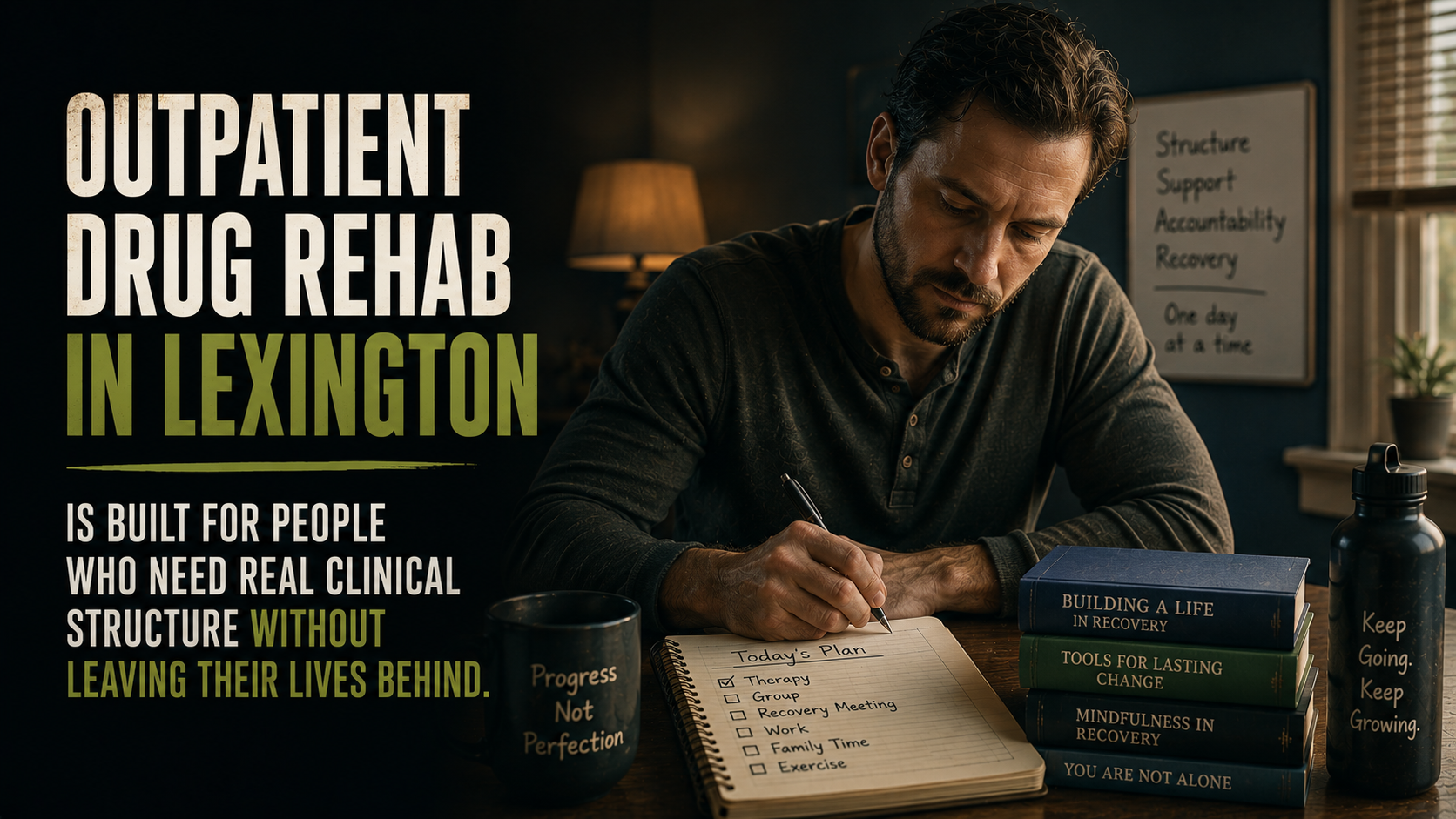
Outpatient drug rehab in Lexington gives you real clinical support while letting you stay connected to work, family, and the daily life you have built. If you or someone you love has put off getting help because stepping away for weeks feels impossible, that hesitation makes complete sense.
You may have responsibilities you cannot simply pause. A job that pays the bills. Children who count on you. A home that needs tending.
Those obligations are real, and they do not have to stand in the way of recovery. Effective treatment does not always require leaving everything behind. For many people, structured outpatient care offers a way to heal while still showing up for the life that matters to them. Understanding how this kind of care works can make that first step feel far less daunting, and support is closer than it may seem right now.
What Is Outpatient Drug Rehab in Lexington?
Outpatient drug rehab in Lexington is a level of care that provides structured treatment while you continue living at home and meeting daily responsibilities. Instead of staying at a facility, you attend scheduled therapy sessions and return to your own space afterward.
This approach blends professional support with real-world practice. You work on recovery during sessions, then apply what you learn in the environment where you actually live, work, and connect with others.
Care usually includes individual therapy, group sessions, and support for any mental health conditions. The exact schedule depends on your needs, ranging from a few hours each week to more intensive daily programming.
Because it fits around your life, this care lets you keep working, studying, or caring for your family. That flexibility is one of its greatest strengths.
Why Does Outpatient Drug Rehab in Lexington Offer Real Clinical Structure?
Outpatient drug rehab in Lexington offers real clinical structure because it follows an evidence-based treatment plan built around measurable goals, not casual check-ins. This is serious, professional care that happens to fit into your daily life.
The word “outpatient” sometimes leads people to assume the care is lighter or less thorough. In practice, it can be deeply structured and clinically rigorous.
Your treatment is guided by trained professionals who track your progress over time. Each session builds on the last, moving you steadily toward stability and lasting change.
What Does Clinical Structure Actually Look Like?
Clinical structure looks like a coordinated plan with regular therapy, clear goals, and consistent accountability. It gives your recovery a dependable shape rather than leaving it to chance.
A structured outpatient plan often includes:
- Scheduled individual therapy sessions focused on your specific triggers and goals
- Group therapy that offers connection and shared understanding
- Support for co-occurring conditions like anxiety, depression, or trauma
- Skill-building for managing cravings, stress, and difficult emotions
- Regular check-ins that keep your care team involved and responsive
Each of these pieces works together. The result is meaningful care that holds you accountable while respecting the life you are trying to protect.
How Does Outpatient Care Let You Keep Your Daily Life?
Outpatient care lets you keep your daily life by scheduling treatment around your work, school, and family commitments. You attend sessions at set times, then return to your regular routine.
This means you can continue earning an income, caring for loved ones, and staying present for the people who depend on you. Recovery becomes part of your life rather than a pause from it.
There is real value in practicing recovery where you live. When you build coping skills in your actual environment, those skills tend to hold more firmly over time.
Who Is Outpatient Drug Rehab a Good Fit For?
Outpatient drug rehab is a good fit for people who have a stable living environment and enough support to practice recovery outside a facility. It works best when your daily surroundings feel safe enough to build on.
You may find this level of care well suited to your situation if any of these feel true for you or a loved one:
- You have a stable, substance-free place to live.
- You have completed detox or a higher level of care and are ready to step down.
- Your work, school, or family responsibilities make residential treatment difficult.
- You have supportive people around you who encourage your recovery.
- You feel ready to take an active role in your own healing.
Recognizing yourself here is a hopeful sign. It suggests you may be ready for the structure and flexibility that outpatient care provides.
What Levels of Outpatient Care Are Available in Lexington?
The levels of outpatient care available in Lexington range from intensive daytime programming to lighter weekly support, each matched to a different stage of recovery. This flexibility lets treatment grow with you.
Understanding these options can make the path forward feel clearer and less overwhelming. Here is a simple overview:
- Partial hospitalization offers structured treatment during the day while you return home in the evenings, providing significant clinical support.
- Intensive outpatient care provides several therapy sessions each week, balancing strong support with the flexibility to work or care for family.
- Standard outpatient care involves fewer weekly sessions, helping you maintain progress as you build independence.
Many people move through these levels gradually, stepping down as they gain confidence and stability. At Impact Outpatient Program®, flexible outpatient and intensive outpatient options help you find the level of support that fits your needs and your schedule.
How Does Outpatient Rehab Address Mental Health and Substance Use Together?
Outpatient rehab addresses mental health and substance use together by treating them as connected parts of one story rather than separate problems. This matters because the two so often overlap.
Many people reach for substances to quiet anxiety, depression, or painful memories. That relief is temporary, and many substances deepen those struggles once their effects wear off.
This can create a cycle that feels hard to break. Emotional pain fuels substance use, substance use worsens the pain, and each one makes the other harder to treat alone.
When both are addressed at the same time, recovery becomes far steadier. Integrated dual diagnosis care treats the emotional pain and the substance use within one coordinated plan, which often leads to more lasting results than treating either one on its own.
How Do You Know Outpatient Drug Rehab Is the Right Next Step?
You may be ready for outpatient drug rehab if you have enough stability at home and want to build recovery within your real life. You do not need to have everything figured out before reaching out.
Consider talking with a professional about outpatient care if any of these feel true for you or a loved one:
- You have a safe, supportive place to live during recovery.
- You have completed detox or another program and want to continue care.
- You need treatment that fits around work, school, or family.
- You feel ready to take an active role in your own recovery.
- You are managing both substance use and a mental health condition.
- Stepping away from your life for weeks feels impossible right now.
If even one of these resonates, that is reason enough to talk with a professional. Choosing outpatient care is not settling for less. It is stepping into a level of care that trusts your strength and supports your growth.
Common Questions Before Starting Treatment
Is outpatient drug rehab as effective as residential treatment? Outpatient care can be highly effective, especially when your home environment supports your progress. Practicing recovery in real life helps build durable skills, and ongoing support strengthens your ability to handle challenges over time.
Can I keep working while in outpatient treatment? Yes. Outpatient programs are designed to fit around work, school, and family responsibilities. Many people attend sessions in the morning or evening so they can maintain their daily commitments.
How is intensive outpatient different from standard outpatient care? Intensive outpatient care involves more sessions each week and provides stronger clinical support, while standard outpatient care includes fewer sessions as you build independence. Your care team helps you choose the right level for your needs.
What if I have both substance use and mental health concerns? Integrated treatment can address both at the same time. Treating them together often works better than treating either one alone, because they frequently influence each other.
Take the Next Step Toward Lasting Recovery
Outpatient drug rehab in Lexington is built for people who need real clinical structure without walking away from the lives they have worked hard to build. Recovery does not have to mean choosing between your health and your responsibilities. With the right care, you can pursue both.
You deserve support that respects your strength, honors your commitments, and meets you exactly where you are. Choosing outpatient care is not a sign that your struggle is small. It is a sign that you are ready to move forward.
If you or someone you love is ready to build recovery within daily life, help is available whenever you are ready. Reach out to Impact Outpatient Program today to learn how our compassionate team can support you with clear, personalized care and a path forward built around your needs.