
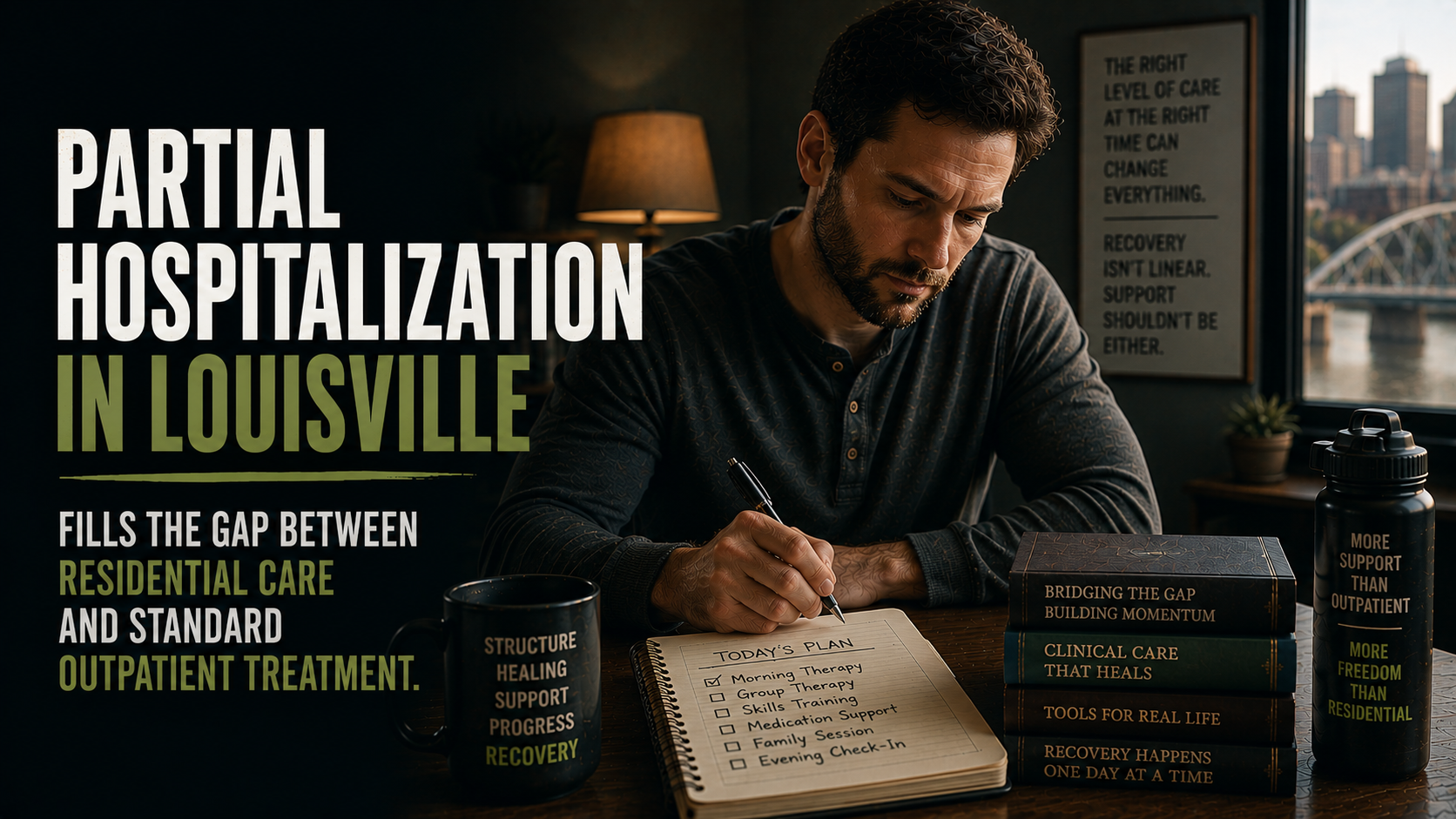
Partial hospitalization in Louisville fills an important space for people who need more support than weekly therapy offers but do not require a full residential stay. If you or someone you love is caught between those two options, that in-between feeling can be confusing and stressful.
Maybe standard outpatient care feels too light for what you are facing. Or maybe residential treatment feels like more than you can commit to right now.
You are not stuck, and you are not alone. There is a level of care designed for exactly this moment. Understanding how it works can help you feel more confident about your next step, and support is closer than it may feel right now.
What Is Partial Hospitalization in Louisville?
Partial hospitalization in Louisville is a structured treatment program that provides intensive clinical care during the day while you return home each evening. It offers many of the same supports as residential treatment, without requiring you to stay overnight at a facility.
A partial hospitalization program, often called a PHP, usually runs for several hours a day, multiple days each week. This gives you steady, focused care while keeping you connected to home and family.
Care typically blends individual therapy, group sessions, and support for any mental health conditions. Medical support may also be part of the plan when appropriate.
Think of it as a full day of healing followed by a night in your own space. You get serious clinical structure while sleeping in your own bed and staying close to the people who support you.
How Does Partial Hospitalization in Louisville Differ From Residential Care?
Partial hospitalization in Louisville differs from residential care mainly in where you spend your nights and how much daily structure you need. Residential treatment surrounds you with support around the clock, while a partial hospitalization program provides intensive daytime care and lets you return home afterward.
Both offer strong clinical support. The key difference is that residential care removes you from your daily environment completely, while partial hospitalization keeps you connected to it.
When Does Residential Care Make More Sense?
Residential care makes more sense when a person needs a fully controlled, substance-free environment day and night. This level of support helps when home feels unsafe or when withdrawal requires close medical supervision.
Some people need that constant structure to stay steady in early recovery. Living at a facility removes daily triggers and offers immediate support at any hour.
There is no shame in needing that level of care. Choosing the right starting point is a sign of wisdom, not weakness.
When Is Partial Hospitalization a Better Fit?
Partial hospitalization is a better fit when you have a stable, supportive home to return to each night. It works well when you need intensive care but can safely practice recovery skills at home in the evenings.
This balance offers a real advantage. You receive serious treatment during the day, then apply what you learn in your actual environment.
For many people, that daily practice strengthens recovery. Skills tend to hold more firmly when you build them where you truly live.
How Does Partial Hospitalization Differ From Standard Outpatient Treatment?
Partial hospitalization differs from standard outpatient treatment mainly in the amount of time and clinical structure involved. A partial hospitalization program provides several hours of care most days of the week, while standard outpatient treatment usually involves one or two sessions weekly.
That difference in intensity matters. Standard outpatient care suits people who are further along in recovery and need lighter support to maintain progress.
Partial hospitalization offers much more. It provides the kind of daily structure that helps during vulnerable stages, when steady support makes the biggest difference.
Many people move through different levels of care over time. At Impact Outpatient Program®, flexible outpatient and intensive outpatient options help you step down gradually as you gain stability and confidence.
Who Benefits Most From Partial Hospitalization in Louisville?
People who need intensive support but have a stable home environment benefit most from partial hospitalization in Louisville. It serves those who require more than outpatient therapy yet do not need a residential stay.
This level of care fits many situations. Knowing whether it matches your needs can help you make a confident, informed choice.
You may find partial hospitalization well suited to your situation if any of these feel true for you or a loved one:
- You have completed detox or residential care and are ready to step down.
- You need daily clinical support but have a safe place to sleep each night.
- Standard outpatient therapy feels too light for what you are facing.
- You are managing both substance use and a mental health condition.
- You have supportive people at home who encourage your recovery.
- You want serious treatment while staying close to family.
Recognizing yourself here is a hopeful sign. It suggests this level of care could offer the balance of structure and connection you need.
If your home feels unsafe, or if withdrawal poses medical risks, a higher level of care may help first. That choice reflects self-awareness, not failure.
What Does a Typical Day in a Partial Hospitalization Program Look Like?
A typical day in a partial hospitalization program follows a structured schedule of therapy, skill-building, and support, usually across several hours. This steady rhythm helps you focus on healing while keeping the day predictable and manageable.
Structure is one of the quiet strengths of this level of care. When your day has a dependable shape, it becomes easier to concentrate on recovery instead of decisions and distractions.
What Kinds of Sessions Are Included?
The sessions in a typical day blend individual therapy, group therapy, and practical skill-building focused on real recovery goals. Each type of session plays a different role in your care.
A typical day often includes:
- Individual therapy that gives you private space to explore triggers, emotions, and goals.
- Group therapy that offers connection and the comfort of shared experience.
- Skill-building sessions that help you manage cravings, stress, and difficult emotions.
- Mental health support for co-occurring conditions like anxiety, depression, or trauma.
- Relapse prevention planning that helps you recognize warning signs and respond with confidence.
These pieces reinforce one another. Together, they help you build tools you can carry long after the program ends.
How Does Returning Home Each Night Help?
Returning home each night helps by letting you practice new skills in the environment where you actually live. Instead of only discussing coping strategies, you test them in real situations.
This daily practice builds genuine confidence. Each evening at home becomes a chance to apply what you learned that day.
Staying close to family also matters. Support from loved ones can strengthen your recovery, and being present for them can restore a sense of purpose.
How Does Partial Hospitalization Address Co-Occurring Conditions?
Partial hospitalization addresses co-occurring conditions by treating mental health and substance use together, as connected parts of one story. This matters because the two so often overlap.
Many people reach for substances to quiet anxiety, depression, or painful memories. That relief is temporary, and many substances deepen those struggles once their effects wear off.
This can create a cycle that feels hard to break. Emotional pain fuels substance use, substance use worsens the pain, and each one makes the other harder to treat alone.
When both are addressed at the same time, recovery becomes far steadier. Untreated emotional pain is one of the most common reasons people return to substances, so treating the whole person protects your progress.
At Impact Outpatient Program, integrated dual diagnosis care treats mental health and substance use within one coordinated plan. This approach often leads to more lasting results than treating either condition on its own.
How Do You Know It Is Time to Seek Support?
You may be ready for partial hospitalization if you need intensive daily care but can safely return home each night. You do not need to have everything figured out before reaching out.
Consider talking with a professional about this level of care if any of these feel true for you or a loved one:
- You have completed detox or residential care and want to keep the momentum going.
- Weekly therapy no longer feels like enough for what you are facing.
- You need strong clinical structure but have a stable place to sleep.
- You are managing both substance use and a mental health condition.
- Daily support would help you feel steadier during early recovery.
- You want serious treatment that keeps you close to family.
If even one of these resonates, that is reason enough to talk with a professional. Reaching out is not a sign of failure. It is a caring step toward steadier ground.
Common Questions Before Starting Treatment
How is partial hospitalization different from intensive outpatient care? Partial hospitalization involves more hours of care each week, usually several hours a day for most of the week. Intensive outpatient care provides fewer sessions, which makes it a common next step as you gain stability.
Can I keep up with family responsibilities during a PHP? You return home each evening, so you can stay connected to family. Because the daytime schedule is intensive, though, many people arrange support for daytime responsibilities during this stage.
How long does partial hospitalization last? The length varies based on your needs, progress, and goals. Some people stay for a few weeks before stepping down to a lighter level of care, and your treatment team will help you find the right timeline.
What if I have both substance use and a mental health condition? Integrated treatment can address both at the same time. Treating them together often works better than treating either one alone, because they frequently influence each other.
Take the Next Step Toward Lasting Recovery
Partial hospitalization in Louisville fills the gap between residential care and standard outpatient treatment, giving you intensive support while keeping you close to home. This level of care offers real structure and healing without asking you to leave your entire life behind.
You deserve support that meets you exactly where you are, honors your needs, and treats you with genuine compassion. Choosing this level of care is not a sign that your struggle is too big or too small. It is a sign that you are ready to move forward.
If you or someone you love needs more than outpatient therapy but less than a residential stay, help is available whenever you are ready. Reach out to Impact Outpatient Program today to learn how our compassionate team can support you with clear, personalized care and a path forward built around your needs.