
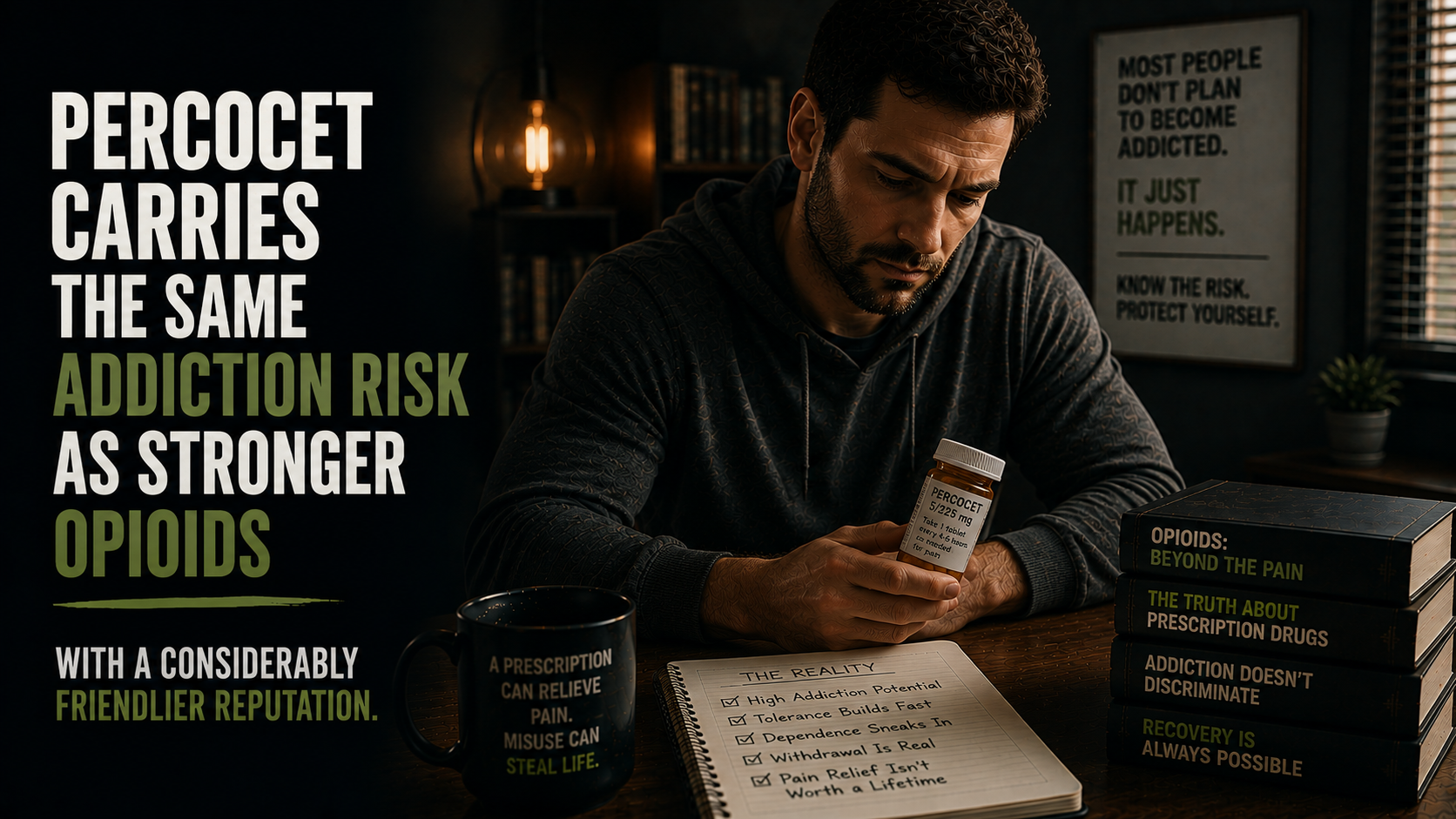
Percocet addiction risk is often underestimated because this medication feels safer than the stronger opioids people tend to fear, yet it carries the very same dangers. If you or someone you love has come to rely on Percocet in ways that feel hard to control, that experience is far more common than most people realize.
You may have started taking it exactly as prescribed after surgery, an injury, or a painful procedure. It helped, and it came from a doctor you trusted, so it felt safe.
That trust makes sense, and it is also part of what makes this medication so easy to underestimate. Percocet is a real opioid with real risks, even though its reputation feels gentler. Understanding how that gap forms can replace confusion with clarity, and support is closer than it may feel right now.
What Is Percocet and Why Does Its Reputation Feel So Safe?
Percocet is a prescription pain medication that combines an opioid called oxycodone with acetaminophen, the same ingredient found in many over-the-counter pain relievers. That familiar second ingredient is part of why the medication feels safer than it is.
Doctors prescribe Percocet to manage moderate to severe pain, often after surgery, injuries, or dental work. When taken as directed for a short time, it can offer real relief.
The reputation problem starts with perception. Because Percocet is common, prescribed widely, and paired with an everyday pain reliever, many people picture it as mild.
That mental image is misleading. The oxycodone in Percocet is a powerful opioid, closely related to the substances people rightly worry about.
Why Does Percocet’s Friendly Reputation Hide Its Real Addiction Risk?
The Percocet addiction risk is hidden because its friendly reputation makes people lower their guard around a genuinely powerful opioid. When something feels safe, you are far less likely to watch for warning signs.
Stronger opioids carry a fearsome reputation that keeps many people cautious. Percocet does not always inspire that same caution, even though it works on the brain in the same way.
How Does Perception Shape Behavior?
Perception shapes behavior by influencing how carefully people use a medication. When a substance feels mild, you may take an extra dose during a rough day without a second thought.
Each small decision feels reasonable on its own. Taking one more pill for pain, or using it a little longer than planned, rarely feels like a turning point.
Those choices add up quietly. The friendly reputation removes the sense of alarm that might otherwise prompt a pause, which is exactly how the Percocet addiction risk grows unnoticed.
Why Is a Common Prescription Easy to Underestimate?
A common prescription is easy to underestimate because familiarity feels like safety. Millions of people take Percocet each year, so it can seem routine rather than risky.
That commonness creates a false sense of security. If so many people use it, the reasoning goes, how dangerous could it really be?
The truth is that widespread use does not lower the Percocet addiction risk. It simply means more people are exposed to a medication whose dangers are easy to overlook.
How Does Dependence Develop From a Legitimate Prescription?
Dependence develops when the brain and body adapt to Percocet over time, even when it is taken exactly as prescribed. This adaptation is a normal biological response, not a moral failing or a sign of weakness.
At first, the medication eases pain and works as intended. With continued use, though, the brain begins to adjust to the presence of the opioid.
Over days and weeks, the body may need more of the medication to feel the same relief. This is called tolerance, and it is often the first quiet step toward dependence.
Why Does the Slow Onset Go Unnoticed?
The slow onset goes unnoticed because the changes happen gradually enough to blend into daily life. A dose that once controlled your pain may slowly feel like something you cannot manage without.
You might notice discomfort, restlessness, or unease when a dose is late. It can be easy to interpret that as your original pain returning rather than a sign of dependence.
Because the shift is so gentle, many people do not recognize it until they try to stop. That moment of difficulty is often the first real clue.
Key takeaway: Dependence can form even when you follow every instruction, because your body naturally adapts to the opioid over time.
What Is the Connection Between Percocet and Opioid Brain Chemistry?
The connection is that Percocet affects the brain the same way stronger opioids do, by altering its reward and pain systems. The oxycodone in Percocet binds to opioid receptors, which changes how you experience both relief and pleasure.
When those receptors are activated, the brain releases a surge of chemicals tied to reward. This is far stronger than what ordinary daily activities produce.
With repeated use, the brain tries to protect itself. It reduces its own natural production of these chemicals, so more of the medication is needed to feel steady.
Why Does This Make Stopping So Hard?
Stopping becomes hard because the brain has come to rely on the opioid to feel balanced. When the medication is removed, that balance collapses, and withdrawal symptoms can follow.
Withdrawal can include body aches, nausea, anxiety, restlessness, and powerful cravings. These experiences are not a matter of weak willpower. They are the body reacting to a real chemical shift.
This is why recovery from Percocet is about biology and support, not personal strength alone. The pull toward using again can feel as urgent as hunger or thirst.
What Are the Warning Signs of Percocet Addiction?
The warning signs of Percocet addiction show up in your body, your habits, and your relationship with the medication. Recognizing them early can open the door to compassionate, supportive care.
You may notice some of these patterns in yourself or a loved one:
- You need more of the medication than before to feel the same relief.
- You feel anxious, achy, or unwell when a dose is late or missed.
- You take Percocet more often, or in higher amounts, than prescribed.
- You run out of your prescription earlier than expected.
- You continue using it even after the original pain has eased.
- You feel worried about running out or refilling in time.
- You hide how much you use or feel defensive when someone asks.
Noticing a few of these does not mean something is wrong with you. It means your body and mind may be signaling a need for support you have not yet received.
How Is Percocet Connected to Broader Opioid and Mental Health Concerns?
Percocet is connected to broader opioid concerns because dependence on it can sometimes lead people toward other, stronger opioids. When a prescription ends or tolerance grows, some individuals seek relief elsewhere, which raises the risk of encountering more dangerous substances.
This progression is not inevitable, and it is never a sign of bad character. It reflects how powerfully opioids reshape the brain over time.
Mental health also plays a central role. Many people who develop a dependence on Percocet are also managing anxiety, depression, or trauma beneath the surface.
Why Does Treating Both Together Matter?
Treating both together matters because addressing the substance use alone often leaves the emotional pain untouched. When anxiety, depression, or trauma go unaddressed, they can quietly fuel a return to opioids.
Pain, both physical and emotional, is often part of the story. Someone may have started Percocet for physical pain, then found it also numbed stress or difficult feelings.
When mental health and substance use overlap, treating them at the same time works best. Integrated dual diagnosis care addresses the opioid dependence and the emotional pain beneath it as connected parts of one story, which often leads to steadier, more lasting results.
How Does Integrated Outpatient Care Help With Percocet Addiction?
Integrated outpatient care helps by treating Percocet dependence and any co-occurring mental health conditions together, within one coordinated plan. Instead of focusing only on the medication, this approach looks at the whole person.
Care usually begins with a thorough assessment. This helps providers understand your history, health, and goals so your plan fits you rather than a generic template.
From there, treatment blends therapy, skill-building, and, when appropriate, medical support. You practice new tools in your daily life, which helps the progress hold over time.
What Therapies Support Recovery?
The therapies that support recovery help you understand your patterns and build healthier ways to cope. Several evidence-based approaches often work together.
- Cognitive behavioral therapy helps you notice and reshape the thoughts that fuel cravings and stress.
- Individual counseling gives you a private space to explore triggers, pain, and emotions at a safe pace.
- Group therapy connects you with others who understand, easing shame and isolation.
- Relapse prevention planning helps you recognize warning signs and respond with confidence.
These pieces reinforce one another. Together, they treat the opioid dependence and any underlying struggles as connected parts of one journey.
What Flexible Options Fit Around Daily Life?
Flexible outpatient options let you receive real clinical support while continuing to work, study, and care for your family. You do not have to step away from your entire life to get help.
The levels of care range from more intensive daytime support to lighter weekly sessions, each matched to a different stage of recovery. This flexibility lets treatment grow with you.
At Impact Outpatient Program®, flexible outpatient and intensive outpatient options help you find the level of support that fits your needs and your schedule.
How Do You Know It Is Time to Seek Support?
You may be ready to seek support if Percocet has started to feel harder to manage than it once did. You do not need to reach a crisis point to take your experience seriously.
Consider reaching out if any of these feel true for you or a loved one:
- You need more of the medication than before to feel the same relief.
- You feel unwell, anxious, or achy when you go without a dose.
- You keep using Percocet even after your original pain has eased.
- You have tried to cut back but found it harder than expected.
- You worry about running out or refilling your prescription in time.
- You are managing both Percocet use and a mental health condition.
If even one of these resonates, that is reason enough to talk with a professional. Reaching out is not a sign of failure. It is a caring, courageous step toward steadier ground.
Common Questions Before Starting Treatment
Can I become addicted to Percocet even if I take it as prescribed? Yes. Dependence can develop with regular use over time, even when you follow every instruction. This is a normal biological response to an opioid, not a sign of misuse or wrongdoing.
Is Percocet really as risky as stronger opioids? The oxycodone in Percocet is a powerful opioid that affects the brain the same way stronger substances do. Its friendlier reputation does not lower the risk, which is exactly why it is so easy to underestimate.
Is it safe to stop taking Percocet on my own? It is best to make any changes with professional guidance. Stopping suddenly can bring uncomfortable withdrawal symptoms, and a provider can help you reduce use safely while supporting your comfort and health.
What if I use Percocet to cope with stress or emotional pain? Integrated treatment can address both the substance use and the mental health condition at the same time. Treating them together often works better than treating either one alone, because they frequently influence each other.
Take the Next Step Toward Lasting Recovery
The Percocet addiction risk is just as real as that of stronger opioids, and its friendlier reputation is part of what makes it so easy to overlook. Understanding that truth can lift the weight of shame from you or someone you love, because this is a medical concern, not a personal failing.
You deserve care that treats the whole person, honors your dignity, and meets you exactly where you are. Recognizing that something has shifted is not a weakness. It is a wise and hopeful first step.
If Percocet has started to feel harder to manage than it once was, help is available whenever you are ready. Reach out to Impact Outpatient Program today to learn how our compassionate team can support you or your loved one with clear, personalized care and a path forward built around your needs.