
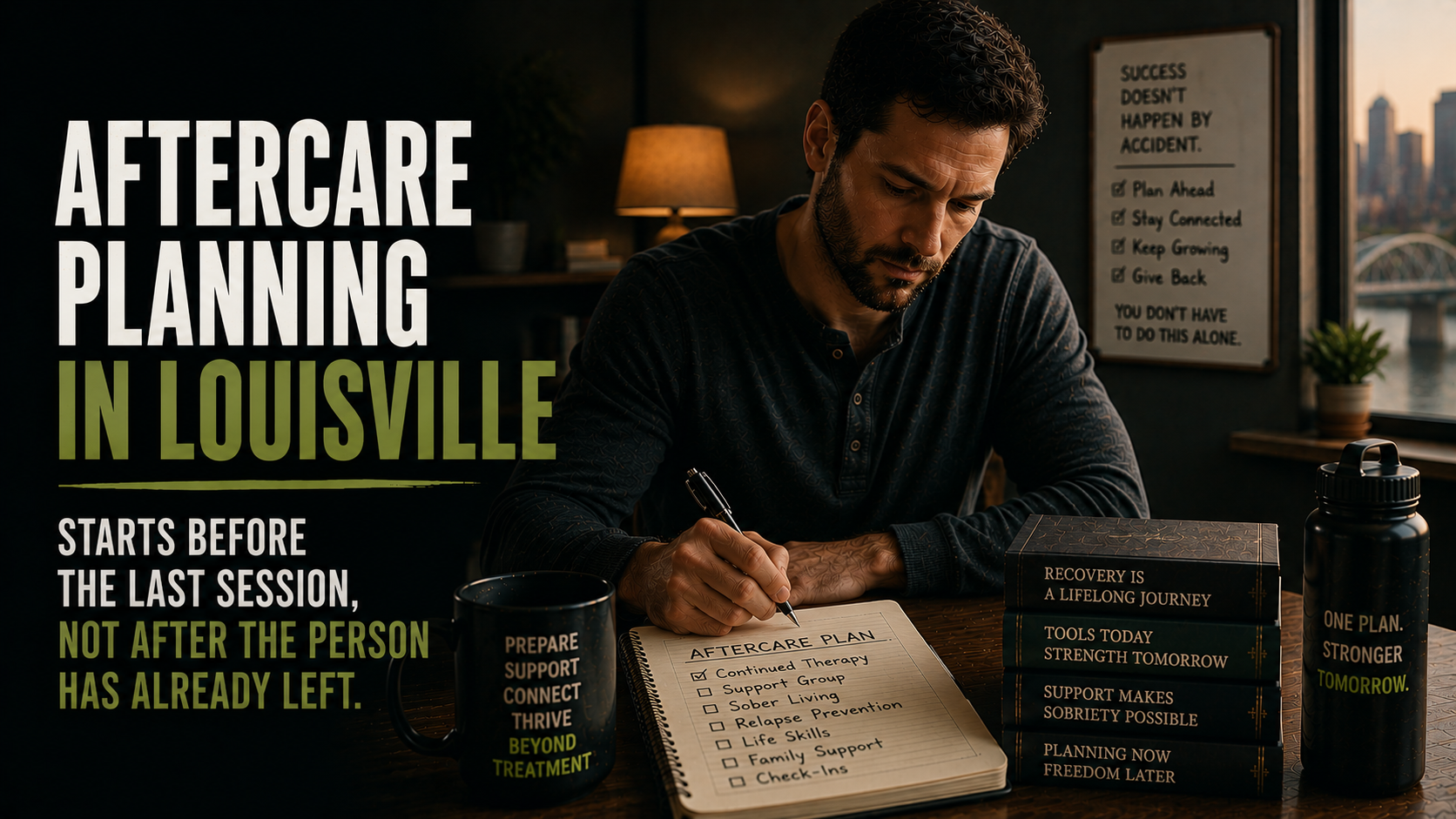
Aftercare planning in Louisville works best when it begins early in treatment, long before the final session arrives. If you or someone you love is nearing the end of a program, the thought of what comes next can feel unsettling.
You may worry about returning to old routines, facing familiar stress, or losing the daily support that has felt so steady. Those worries are completely understandable.
Here is the reassuring truth. A strong plan for life after treatment does not get thrown together at the last minute. It is built gradually, woven into care from early on, so the transition home feels supported rather than sudden. Understanding why this timing matters can ease a great deal of fear, and help is closer than it may feel right now.
What Is Aftercare Planning in Louisville?
Aftercare planning in Louisville is the process of preparing for ongoing support before a treatment program ends, so recovery continues smoothly into daily life. It is a thoughtful, intentional part of care, not an afterthought.
Aftercare refers to the support that continues once formal treatment wraps up. This can include therapy, support groups, relapse prevention strategies, and connection to your care team.
Good aftercare planning maps out these pieces in advance. It answers practical questions about where you will turn for support, how you will handle triggers, and what your first weeks at home will look like.
Think of it like preparing for a long trip. You would not wait until the moment you leave to figure out your route. You plan the path first, so the journey feels steady and clear.
Why Does Aftercare Planning in Louisville Start Before the Last Session?
Aftercare planning in Louisville starts before the last session because a smooth transition depends on preparation, not last-minute decisions. When a plan is already in place, leaving a program feels like a step forward rather than a drop into the unknown.
The final days of treatment are busy and emotional. Trying to build a support system in that short window often leaves important gaps.
Starting early gives you time to make thoughtful choices. You can explore options, ask questions, and shape a plan that truly fits your life.
How Does Early Planning Protect Your Progress?
Early planning protects your progress by making sure support is ready the moment you need it. Recovery does not pause when a program ends, so your support should not either.
When aftercare is arranged in advance, there is no anxious scramble to find help. You already know your next appointment, your support group, and who to call on a hard day.
This continuity keeps your momentum alive. Instead of starting over, you carry the skills and stability you built directly into everyday life.
What Happens When Planning Waits Too Long?
Waiting too long to plan often leaves people facing daily life without a safety net. The structure and support disappear all at once, and old stressors return quickly.
Without a plan, small challenges can grow into larger setbacks. A tough week may feel overwhelming when there is no clear place to turn.
This is not about willpower or effort. It is simply that recovery is easier to sustain when support is already in place, waiting for you.
What Does a Strong Aftercare Plan Include?
A strong aftercare plan includes ongoing therapy, peer support, relapse prevention strategies, and practical guidance for daily life. Each piece works together to keep you steady as you rebuild routines and relationships.
The goal is a plan built around your specific needs, not a generic checklist. What supports one person may look different for another, and that is exactly how it should be.
A well-rounded aftercare plan often includes the following:
- Ongoing therapy that helps you process new challenges and reinforce healthy coping skills.
- Support groups that keep you connected to people who understand your journey.
- Relapse prevention planning that helps you recognize triggers and respond with confidence.
- Mental health support for any co-occurring conditions like anxiety, depression, or trauma.
- Practical guidance on work, housing, relationships, and daily structure.
- Regular check-ins that keep your care team involved and responsive.
These pieces are not extras. They form the scaffolding that holds recovery steady while your new foundation grows stronger.
Who Should Be Involved in Aftercare Planning?
The people involved in aftercare planning include your care team, you, and often the loved ones who support you. Recovery is rarely a solo effort, and a good plan reflects that.
Your care team brings clinical insight. They understand your history, your triggers, and the tools that have helped you most, so they can shape support around what actually works for you.
Your voice matters just as much. You know your daily life, your responsibilities, and what feels realistic, so your input keeps the plan grounded and doable.
How Can Family Support Strengthen the Plan?
Family support strengthens the plan by surrounding you with understanding at home. When loved ones learn how to respond with calm and encouragement, the whole household becomes a source of steadiness.
Family involvement can include education about recovery, guidance on healthy boundaries, and open conversations about how to help. This support can make the return home feel far less isolating.
Not everyone has family nearby, and that is okay. Supportive friends, mentors, or peers from a group can play this role too, offering the connection that helps recovery hold.
How Does Aftercare Connect to Earlier Levels of Care?
Aftercare connects to earlier levels of care by extending the same treatment plan through gradually lighter, more flexible stages. Recovery works best as a step-down process, not a sudden stop.
Many people move through several levels of support as they gain stability. Each stage offers a little more independence while keeping meaningful care in place.
What Does a Typical Step-Down Path Look Like?
A typical step-down path moves from more intensive support toward greater independence, one manageable stage at a time. This gradual approach prevents the shock of losing all structure at once.
Common stages along the way include:
- Partial hospitalization provides structured daytime treatment while you return home in the evenings.
- Intensive outpatient care offers several therapy sessions each week alongside work or family life.
- Standard outpatient care involves fewer weekly sessions as you build confidence and routine.
- Aftercare and alumni support keep you connected to your recovery community long term.
At Impact Outpatient Program®, flexible outpatient and intensive outpatient options let you move through these stages at a pace that fits your life. This steady progression protects the work you have already done.
When mental health and substance use overlap, integrated dual diagnosis care continues through aftercare too, so both needs stay addressed as one connected plan.
How Do You Know It Is Time to Start Aftercare Planning?
You may be ready to start aftercare planning if you are in treatment now or approaching the end of a program. The best time to begin is early, well before your final session.
You do not need to wait until things feel uncertain to prepare. Planning ahead is a sign of strength and foresight, not doubt.
Consider prioritizing a clear aftercare plan if any of these feel true for you or a loved one:
- You are currently in treatment and want a smooth path back to daily life.
- You feel anxious about losing the structure and support of a program.
- You have experienced a setback before after leaving treatment without a plan.
- You want continued connection with people who understand recovery.
- You are managing both a mental health condition and substance use.
- You are returning to an environment that carries stress or old triggers.
If even one of these resonates, that is reason enough to talk with your care team. Building a plan early is a practical, proven way to protect the progress you have worked so hard to achieve.
Common Questions About Aftercare Planning
When should aftercare planning begin? Aftercare planning should begin early in treatment, not at the very end. Starting sooner gives you time to make thoughtful choices and ensures support is ready the moment your program ends.
How long does aftercare last? Aftercare length varies based on your needs, progress, and goals. Some people stay connected for a few months, while others continue for a year or longer, and your care team will help you find the right timeline.
Can I start aftercare planning if I finished treatment somewhere else? Yes. Many people begin aftercare after completing a program elsewhere. A thorough assessment helps a new care team understand your history and build support around your specific needs.
Does aftercare include mental health support? Yes. Aftercare often includes support for co-occurring conditions like anxiety, depression, or trauma. Treating mental health and substance use together tends to lead to steadier, more lasting results.
Take the Next Step Toward Lasting Support
Aftercare planning in Louisville works best when it starts before the last session, not after someone has already walked out the door. A thoughtful plan turns the transition home into a supported step forward rather than a leap into the unknown.
You deserve continued care that honors the effort it took to get this far. With the right plan in place, life after treatment can feel steadier, clearer, and far less isolating.
If you or someone you love is preparing for life after a program, help is available whenever you are ready. Reach out to Impact Outpatient Program today to learn how our compassionate team can support you with clear, personalized aftercare planning and a path forward built around your needs.