
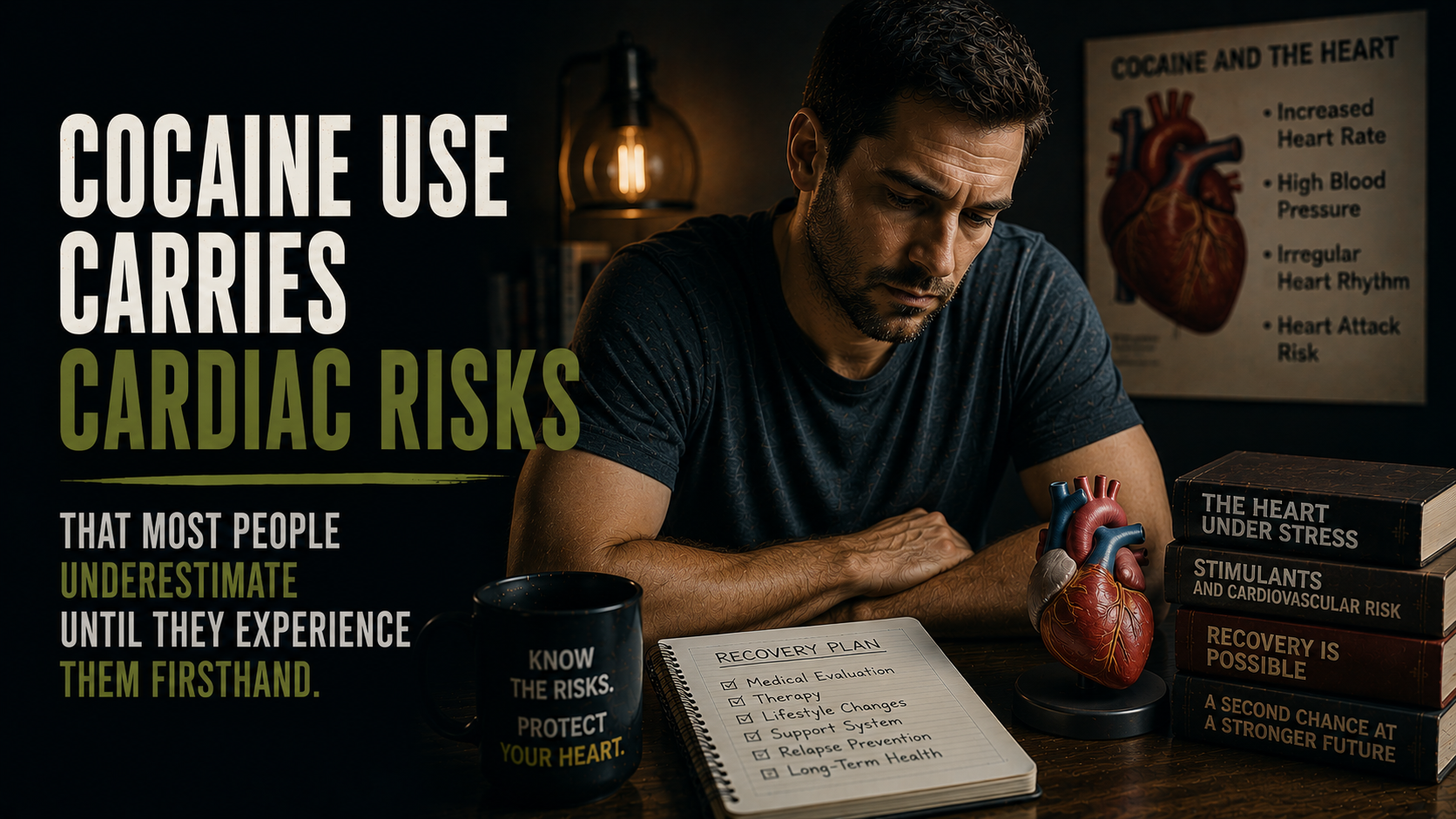
Cocaine use cardiac risks are far more serious and far more immediate than most people realize, and many only discover this truth after a frightening chest pain or a trip to the emergency room. If you or someone you love uses cocaine, this is not meant to scare you. It is meant to help you understand what your heart may be going through.
You might feel healthy. Your workouts, your energy, and your day-to-day life may seem completely normal. That is part of what makes these dangers so easy to overlook.
The heart, though, keeps a quiet record. Cocaine puts real strain on it every single time, even when nothing feels wrong. Understanding how this works is not about judgment or fear. It is about giving you clear, honest information so you can protect your health and make choices that feel right for you. You are not alone in this, and support is closer than it may seem right now.
What Are the Cocaine Use Cardiac Risks You Should Know About?
Cocaine use cardiac risks include heart attack, irregular heartbeat, high blood pressure, and long-term damage to the heart muscle. These effects can happen to anyone who uses cocaine, regardless of age, fitness level, or how often they use.
Cocaine forces the heart to work much harder than it should. It speeds up your heart rate while tightening blood vessels, which means your heart pumps faster against greater resistance.
That combination is dangerous. It raises the risk of serious problems even in young, otherwise healthy people who have never had heart trouble before.
How Does Cocaine Affect the Heart So Quickly?
The drug affects the heart within minutes by spiking heart rate and blood pressure at the same time. This sudden surge can overwhelm the cardiovascular system, sometimes with very little warning.
When blood vessels narrow, the heart receives less oxygen even as it demands more. This mismatch can trigger chest pain or, in some cases, a heart attack.
These reactions are not limited to heavy or long-term use. A single occasion can be enough to cause a cardiac emergency in some people.
Why Do So Many People Underestimate These Risks?
Most people underestimate these risks because the damage often happens silently, long before any symptoms appear. You can feel completely fine while cocaine quietly strains your heart and blood vessels.
This false sense of safety is common. When nothing hurts and life feels normal, it is easy to assume there is no harm being done.
Does Feeling Healthy Mean Your Heart Is Safe?
Feeling healthy does not mean your heart is safe from cocaine’s effects. Cardiovascular damage can build gradually, without obvious signs, until it reaches a crisis point.
Many people picture heart problems as something that only affects older adults or those with existing conditions. Cocaine changes that picture entirely.
Young people in their twenties and thirties have experienced heart attacks tied to cocaine use. Their outward health offered no protection, because the strain was happening on the inside.
Why Is Occasional Use Still Dangerous?
Occasional use is still dangerous because each instance places sudden stress on the heart. There is no guaranteed “safe” amount, and the risk does not depend on how regularly a person uses.
The unpredictable nature of cocaine adds to the danger. The same amount that felt fine one time can trigger a serious reaction the next.
This is why so many people are caught off guard. They assume that moderation protects them, when in reality the heart faces real risk with every use.
What Are the Warning Signs of Cocaine-Related Heart Problems?
The warning signs of cocaine-related heart problems include chest pain, a racing or irregular heartbeat, shortness of breath, and dizziness. These symptoms can appear during use or in the hours that follow.
Recognizing these signs early can save a life. If you or someone nearby experiences them, treat the situation as a medical emergency and call for help right away.
Watch for symptoms like these:
- Chest pain, tightness, or pressure that may spread to the arm, jaw, or back
- A heartbeat that feels rapid, pounding, or irregular
- Shortness of breath or difficulty catching your breath
- Dizziness, lightheadedness, or fainting
- Nausea or a cold sweat that comes on suddenly
- A sense of anxiety or impending doom
These signs deserve immediate attention. Do not wait to see if they pass, because heart emergencies can worsen very quickly.
What Long-Term Damage Can Cocaine Do to the Heart?
Long-term cocaine use can weaken the heart muscle, stiffen arteries, and increase the risk of chronic heart disease. Over time, these changes can affect how well the heart pumps blood throughout the body.
Repeated strain takes a toll. The heart is a muscle, and forcing it to overwork again and again can leave lasting harm.
How Does Cocaine Affect Blood Vessels Over Time?
Cocaine affects blood vessels over time by making them stiffer and more prone to damage. This can raise blood pressure and increase the likelihood of blockages that lead to serious events.
Healthy blood vessels are flexible, expanding and relaxing as blood flows through them. Cocaine interferes with that flexibility, which forces the heart to work harder for the long haul.
The encouraging news is that the body has a remarkable ability to heal. Reducing or stopping use gives your heart and blood vessels a chance to recover and grow stronger over time.
How Are Cocaine Use, Addiction, and Mental Health Connected?
Cocaine use, addiction, and mental health are deeply connected, and each one can influence the others. For many people, cocaine use begins as a way to cope with stress, anxiety, depression, or difficult emotions.
That relief never lasts. Cocaine can deepen anxiety and low mood once it wears off, which often drives the urge to use again.
This creates a cycle that feels hard to break. Emotional pain leads to use, use worsens the pain, and the pattern tightens with each turn.
Why Does Treating Both Together Matter?
Treating both the substance use and the mental health condition together matters because addressing only one leaves the other in place. When the emotional pain beneath cocaine use goes untreated, lasting recovery becomes far harder to reach.
Many people who use cocaine also live with anxiety, depression, or trauma. These conditions are not signs of weakness, and they deserve real, compassionate care.
When both are addressed at the same time, recovery becomes far steadier. Integrated dual diagnosis care treats the cocaine use and the mental health condition as connected parts of one story, which often leads to more lasting results than treating either one alone.
At Impact Outpatient Program®, care is designed to meet you where you are. Flexible outpatient and intensive outpatient options let you receive meaningful support while staying connected to work, school, and family.
How Do You Know It Is Time to Seek Support?
You may be ready to seek support if cocaine use has started to affect your health, your heart, or your peace of mind. You do not need to wait for a cardiac emergency to take your health seriously.
Consider reaching out if any of these feel true for you or a loved one:
- You have experienced chest pain, a racing heart, or other symptoms after using cocaine.
- You have tried to cut back or stop but found it harder than expected.
- You use cocaine to manage stress, anxiety, sadness, or difficult emotions.
- You feel worried about the effect cocaine may be having on your body.
- People close to you have expressed concern about your health or your use.
- You are managing both cocaine use and a mental health condition.
If even one of these resonates, that is reason enough to talk with a professional. Reaching out is not a sign of failure. It is a caring, courageous step toward protecting your heart and your future.
Common Questions Before Starting Treatment
Can cocaine really cause a heart attack in a young, healthy person? Yes. Cocaine can trigger a heart attack even in young people with no history of heart problems. It spikes heart rate and blood pressure while narrowing blood vessels, which can overwhelm the heart regardless of age or fitness.
Will my heart heal if I stop using cocaine? In many cases, yes. The body has a strong ability to recover, and reducing or stopping cocaine use gives your heart and blood vessels a chance to heal over time. A medical provider can help you understand your specific situation.
Is occasional substance use safer than regular use? Occasional use still carries real cardiac risk. Each instance places sudden strain on the heart, and there is no guaranteed safe amount. Serious reactions can happen even the first time.
What if I use cocaine to cope with anxiety or depression? Integrated treatment can address both the cocaine use and the mental health condition at the same time. Treating them together often works better than treating either one alone, because they frequently influence each other.
Take the Next Step Toward a Healthier Heart
Cocaine use cardiac risks are real, serious, and often silent, but understanding them puts real power back in your hands. What feels harmless today may be quietly straining your heart, and recognizing that truth is a wise and caring first step.
You deserve to feel healthy, steady, and hopeful about the days ahead. Your heart can heal, your mind can find relief, and lasting recovery is possible with the right support.
If cocaine use has started to worry you or someone you love, help is available whenever you are ready. Reach out to Impact Outpatient Program today to learn how our compassionate team can support you with clear, personalized care and a path forward built around your needs.